“. . . if so say, I will.” Huh? I will?! No, it’s supposed to be I do! That’s what I went over in my mind; that’s what I rehearsed. Well, I want to do this, so I need to respond: I Will.
I’ll admit, I was nervous. There were absolutely no second thoughts about my bride, my soon-to-be wife. No, it was the process of the wedding itself. I honestly don’t know why the wedding made me so nervous; it was relatively small, with family and some good friends. I think it had to do with my need to have everything go well. I don’t know that I needed perfection, but I wanted it to be without problem.
It went off without a hitch. We’ve lived happily ever after. The end!! (Haha)
Marriage is an institution ordained by God; or so the Bible says. The concept of marriage between two people didn’t exist, though, during the hunter/gatherer period of human history, as people congregated in tribal communities. Relationships among community members were fluid, with individual members taking on roles to support the community as a whole. Procreation was important to the future of the community; sometimes the relationships might have been informally monogamous, sometimes ad hoc in nature.

The earliest record of marriage, however, dates back more than four millennia to Mesopotamia. They were often arranged, or formed, as a means of social and economic survival. It wasn’t until the Middle Ages that the notion of romantic love became a motivation for marriage. Even then, stories abounded of star-crossed lovers who were forbidden to marry because of traditions – think Romeo and Juliet. It was not until women achieved a greater sense of equality that their choices were given more credence. Someone suggested the women’s right to vote as a milestone, or benchmark, turning point; women became equal in a sense of citizenry (albeit not in terms of work and pay!).
When I proposed one evening over dinner at the Peppercorn Duck Club, I was met with an uncomfortable pause – sort of a “I’ll get back to you later” kind of pause. In reality, it was the element of surprise. I’m certainly happy I didn’t do one of those crazy stunts like proposing at a baseball game and having it shown on the park’s Jumbotron! (Of course, there were no Jumbotrons back then.)
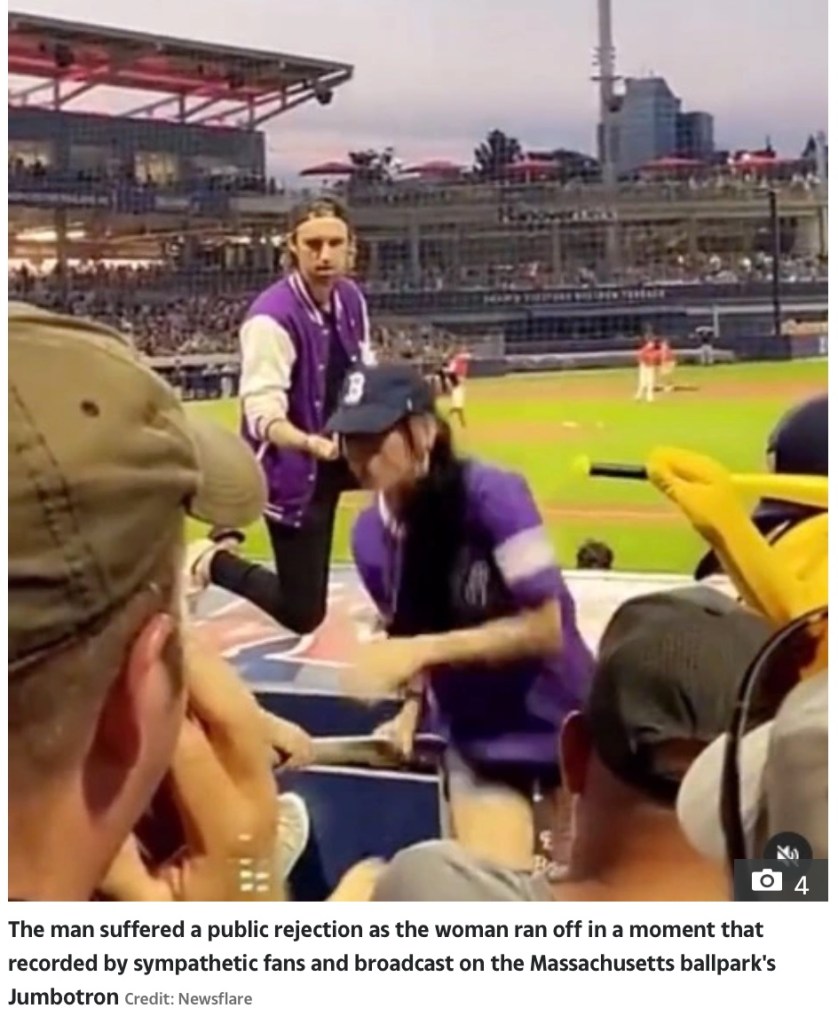
What is it about our culture’s ideas about love, romance and marriage that allowed the phenomenon to gain traction in the first place? “Romantic comedies,” Chloe Angyal wrote for Buzzfeed in 2015, “teach us that the truer a true love is, the grander and more public the public grand gesture will be.”
From a New York Times article about Jumbotron proposals
For better, or for worse, I’m not a Jumbotron kind of guy. Jumbotron or not, she said yes, which led to that surprising request for me to say I will instead of the expected I do.
Michael Jackson’s sang that if you want to change, you need to look at “The Man In The Mirror.” Marriage is one of those major life mirrors.
Mirrors can be funny things. I remember going to local carnivals and standing before a mirror that made me look tall and narrow; another made me look short and wide; and yet another distorted my body shape with extreme unnatural curves. Life mirrors are different: they provide the opportunity to assess, evaluate, and grow.
Successful marriages require growth, and growth requires work.
The work of a gardener doesn’t end with planting a seed. The soil needs to be prepared each year before planting. The seeds need nourishment through fertilizer and water. Weeds need to be removed for healthy growth and a good yield.The weeds of a marriage often come from misunderstandings, poor communication. Fortunately, the mirror Nancy holds up for me enables me to see how my communication patterns, habituated early in life, can create barriers to understanding when they do not fully consider her perspective. While this is Communication 101 in a general sense, it is vital to a successful marriage.
It’s a pity that genealogy research cannot adequately report more of the qualitative characteristics of your ancestors – for example, great-great-great Granddad was a man of few words, and they generally came out in intimidating anger when he spoke in words rather than grunts. And great-great Grandma was passive-aggressive because of his communication style. Early family life forms the basis of your communication style and influences patterns with others as you progress through life.
This is now my life’s work. I have time and a strong interest. I’m retired and no longer worry about meetings, presentations, promotions. I’m still a parent, but of a young man, not a boy; he has his own life and makes his own decisions. My role – to counsel if asked (though I really want to say . . . ! ).
So now I get to spend time gazing into the mirror, assessing changes that could improve my life and relationship. Seemingly a Sisyphean task, it’s worth the effort because each trip up that hill makes me a better husband and a better man.
Happy Anniversary, Nancy. I love you.


What a beautiful discussion of marriage and communication. Love forever.
Enjoyed, The wedding song!
LikeLike