There’s an old saying: Life’s like a roll of toilet paper – the closer you get to the end, the faster it goes.
The saying resonates more with each passing day. But the perception of time’s increasing speed is shared by many. Let’s face it, 2020 was a lost year. We kept better track of the number of Covid infections and deaths than we did the days and weeks and months. It was a slog of a year.
But 2021 is different. The differences began to emerge in the spring as more people were vaccinated, and they began venturing out more because they felt safer. The days accelerated during the summer. How many of you heard, or commented on date markers? I can’t believe it’s already the 4th of July! or It’s Labor Day! What happened to August?! or Today’s Halloween! I need to run to the store to get candy!
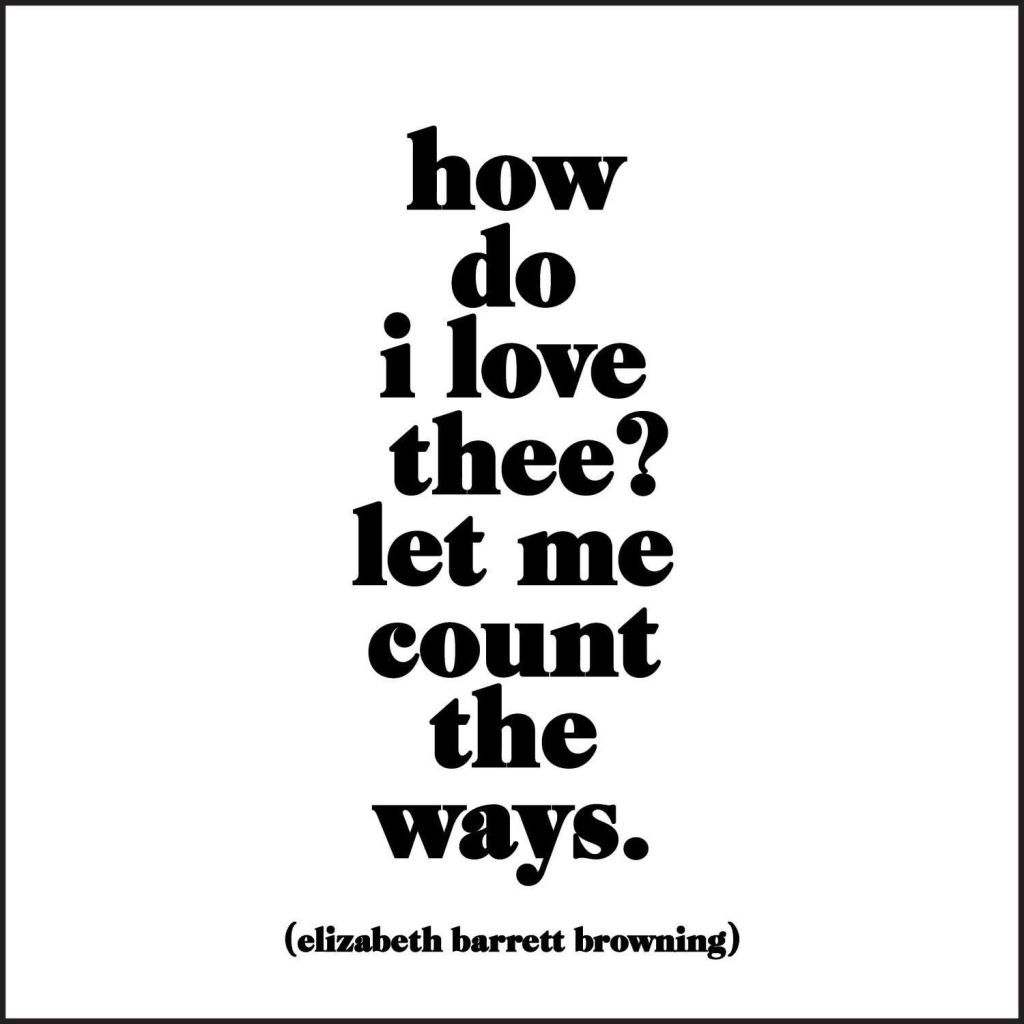
As I’m gorging on leftover Halloween candy, I ponder how we experience time? The Victorian poet Elizabeth Barrett Browning asked and answered, “How do I measure time? Let me count the ways.” A slight misappropriation of the sonnet, but certainly counting is one way. Sixty seconds in a minute; sixty minutes in an hour; sixty hours – oops! – twenty-four hours in a day; three-hundred-sixty-five days in a year.
There’s an anomaly in there, though. Based on the orbit of the Earth around the Sun – the basis for the Tropical Year – each year averages 365.2422 days. Yikes! What to do? In 45 BC, Julius Caesar ordered that the Roman calendar more consistently align with a Tropical Year, creating 365.25 days per year, with a leap day every 4th year to catch up on the ¼-day missing from each year. Pope Gregory XIII made slight adjustments to the Julian calendar to account for the difference between Caesar’s 365.25 days and the approximate 365.2422 days in the Tropical Year. The resulting Gregorian calendar is used throughout most of the world.
As humans, though, we measure time in many other ways. How many Native American story renditions have you heard based on a Lunar calendar – “Many moons ago . . .”? Indigenous people throughout North America and Europe associated each month’s full moon with the significant events in their lives. For example, the Harvest Moon occurs in the fall and is associated with the harvest season. Other full moons include the Strawberry Moon in June when the berries begin to ripen in North America. Personally, I prefer January’s Wolf Moon because it gives me an excuse to howl. A Blue Moon is not associated with a particular seasonal event; it is the 13th full moon of the year, which would make it a second full moon in a given month. About once every 19 years, February has a Black Moon – no full moon – and January and March each have two full moons, causing two Blue Moons in that year.
When I was consulting, I traveled 100% of the time. I frequently was in multiple time zones each week. Once when I was on a project in Florida, I called one of my staff for an update on her project. I was alarmed to learn that she still was at the hotel, so I began to grill her; finally, she pointed out that she was in Seattle, and that it was 6:30 in the morning there. Oops!
If you wanted to “turn back the hands of time,” it was occasionally possible in the US before 1883 because we had 144 time zones in the continental US. The differences weren’t a problem before the advent of telecommunications and faster rail travel; as trains became faster, some would arrive at the destination at a time that was earlier than their departure time. Though use of the standard time zones began in 1883 to facilitate rail schedules, it was 1918 before the federal government officially established them into law.
I wasn’t on the project, but the consulting firm had one where the plant was rather large and straddled the Eastern and Central time zone boundary. The company had to standardize shift time for its employees within its plant (or if I had worked there, I might have clocked in on Central time and clocked out on Eastern time!). Which reminds me . . . Daylight Savings Time!
When I was traveling across time zones, I suffered from sleep deprivation, and that was before we talked about sleep deprivation. I always estimated that it took me up to a week to adjust my body to a different time zone. Daylight Savings Time has a similar effect on me. I joke that I’m okay with the extra hour of sleep when we “fall back” – revert to Standard Time in November – but I don’t sleep longer; I wake up at the “new” 6:00 instead of the “old” 7:00. Again, it takes me about a week to adjust.
Seven days in a week. The traditional workweek still is considered Monday through Friday. I think it says a lot that we are so dissatisfied with our work that we are “Working for the Weekend,” as Loverboy pointed out in song. TGIF – Thank God It’s Friday – became a rallying cry, and the name of a restaurant chain (I loved their loaded potato skins!). Wednesday is “hump day,” as in over the hump in the middle of the week. More people die of heart attacks on Monday – first workday of the week – than any other day in the US; by contrast, the greatest number of deaths due to accidents occurs on the weekends. I suppose that if we survive Monday, we’re safer being at work than out having fun on the weekends!

While we measure life in hours, days, and years, that form of measuring is simply a way of chronicling. Our lives are most importantly a continuum of experiences, and we can only truly experience them in the present moment. H. G. Wells noted, “We must not allow the clock and the calendar to blind us to the fact that each moment of life is a miracle and mystery.” Albert Einstein observed, “The only reason for time is so that everything doesn’t happen at once.”
The esoteric nature of life as a movement through a series of present moments will surely show up in a future blog.
“Time is a sort of river of passing events, and strong is its current; no sooner is a thing brought to sight than it is swept by and another takes its place, and this too will be swept away.” ~ Marcus Aurelius
 Mike's Fountain Pen
What a timely essay on time😊
LikeLike
What a timely blog. The moons are so intriguing. Love the t-shirt picture.
LikeLike