I’ve Been Thinking . . . About “I Will”

“. . . if so say, I will.”  Huh?  I will?!  No, it’s supposed to be I do!  That’s what I went over in my mind; that’s what I rehearsed.  Well, I want to do this, so I need to respond:  I Will.

I’ll admit, I was nervous.  There were absolutely no second thoughts about my bride, my soon-to-be wife.  No, it was the process of the wedding itself.  I honestly don’t know why the wedding made me so nervous; it was relatively small, with family and some good friends.  I think it had to do with my need to have everything go well.  I don’t know that I needed perfection, but I wanted it to be without problem.

It went off without a hitch.  We’ve lived happily ever after.  The end!!  (Haha)

Marriage is an institution ordained by God; or so the Bible says.  The concept of marriage between two people didn’t exist, though, during the hunter/gatherer period of human history, as people congregated in tribal communities.  Relationships among community members were fluid, with individual members taking on roles to support the community as a whole.  Procreation was important to the future of the community; sometimes the relationships might have been informally monogamous, sometimes ad hoc in nature.

The earliest record of marriage, however, dates back more than four millennia to Mesopotamia.  They were often arranged, or formed, as a means of social and economic survival.  It wasn’t until the Middle Ages that the notion of romantic love became a motivation for marriage.  Even then, stories abounded of star-crossed lovers who were forbidden to marry because of traditions – think Romeo and Juliet.  It was not until women achieved a greater sense of equality that their choices were given more credence.  Someone suggested the women’s right to vote as a milestone, or benchmark, turning point; women became equal in a sense of citizenry (albeit not in terms of work and pay!).

When I proposed one evening over dinner at the Peppercorn Duck Club, I was met with an uncomfortable pause – sort of a “I’ll get back to you later” kind of pause.  In reality, it was the element of surprise.  I’m certainly happy I didn’t do one of those crazy stunts like proposing at a baseball game and having it shown on the park’s Jumbotron!  (Of course, there were no Jumbotrons back then.)
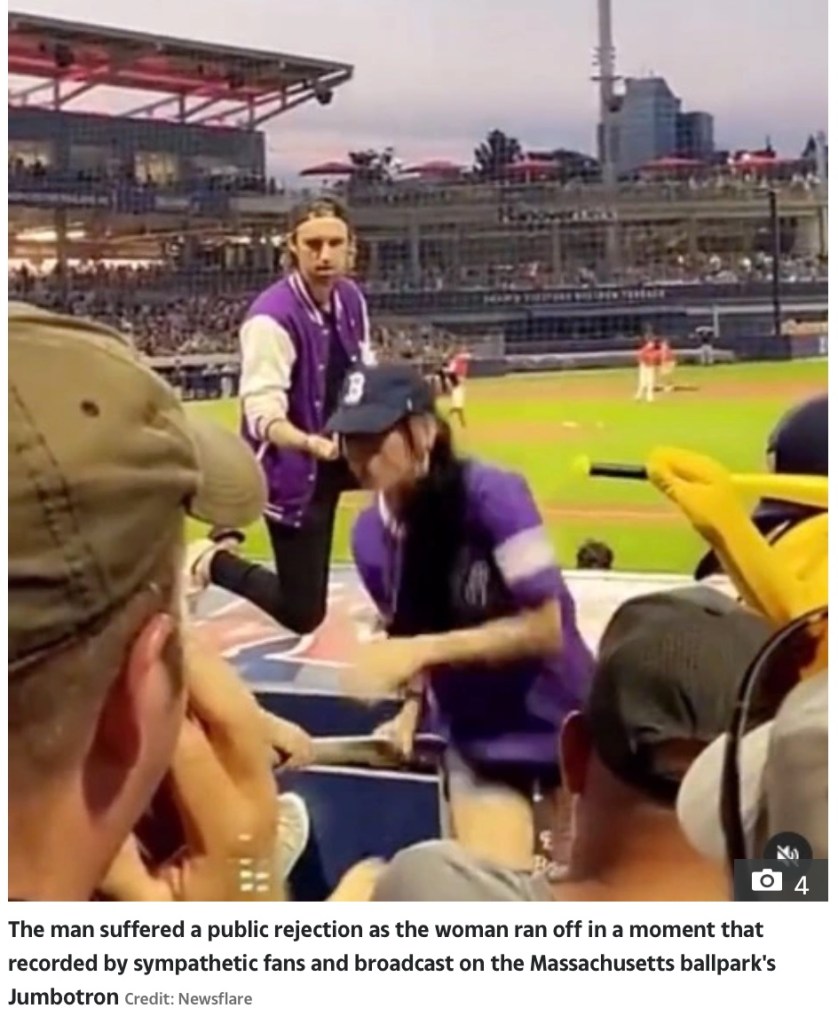
Ouch! That’s gotta hurt! – from The U.S. Sun

What is it about our culture’s ideas about love, romance and marriage that allowed the phenomenon to gain traction in the first place? “Romantic comedies,” Chloe Angyal wrote for Buzzfeed in 2015, “teach us that the truer a true love is, the grander and more public the public grand gesture will be.” 

From a New York Times article about Jumbotron proposals 

For better, or for worse, I’m not a Jumbotron kind of guy.  Jumbotron or not, she said yes, which led to that surprising request for me to say I will instead of the expected I do.

Michael Jackson’s sang that if you want to change, you need to look at “The Man In The Mirror.”  Marriage is one of those major life mirrors.

Mirrors can be funny things.  I remember going to local carnivals and standing before a mirror that made me look tall and narrow; another made me look short and wide; and yet another distorted my body shape with extreme unnatural curves.  Life mirrors are different:  they provide the opportunity to assess, evaluate, and grow.

Successful marriages require growth, and growth requires work.

The work of a gardener doesn’t end with planting a seed.  The soil needs to be prepared each year before planting.  The seeds need nourishment through fertilizer and water.  Weeds need to be removed for healthy growth and a good yield.The weeds of a marriage often come from misunderstandings, poor communication.  Fortunately, the mirror Nancy holds up for me enables me to see how my communication patterns, habituated early in life, can create barriers to understanding when they do not fully consider her perspective.  While this is Communication 101 in a general sense, it is vital to a successful marriage.
It’s a pity that genealogy research cannot adequately report more of the qualitative characteristics of your ancestors – for example, great-great-great Granddad was a man of few words, and they generally came out in intimidating anger when he spoke in words rather than grunts.  And great-great Grandma was passive-aggressive because of his communication style.  Early family life forms the basis of your communication style and influences patterns with others as you progress through life.

This is now my life’s work.  I have time and a strong interest.  I’m retired and no longer worry about meetings, presentations, promotions.  I’m still a parent, but of a young man, not a boy; he has his own life and makes his own decisions.  My role – to counsel if asked (though I really want to say . . . ! ).

So now I get to spend time gazing into the mirror, assessing changes that could improve my life and relationship.  Seemingly a Sisyphean task, it’s worth the effort because each trip up that hill makes me a better husband and a better man.

Happy Anniversary, Nancy.  I love you.
I’ve Been Thinking . . . About Gratitude

Our AirBnb in Naples was a single-level cinder block and stucco duplex – a common technique in the area we stayed in.  Given the propensity for utilizing residences for rentals – particularly short-term – evidence of remodeling a single house into a duplex was not uncommon.

Somewhat less common, but sprinkled throughout the area, were houses on pilotis, or what I would call stilts for want of a more commonly descriptive term.  The houses literally are setting on top of what look like 6” x 6” or 8” x 8” posts or concrete columns, much as an elevated deck might have supporting it “back home.”  It is sometimes referred to as Keys style construction and seemingly is intended to keep the structure above water in the event of a hurricane wave surge.

We were walking the dogs along the street one morning.  An elderly woman was climbing the steps of one of the stilt houses that was open below.  The design varied in that it appeared to be octagonal and the steps went up the side of the structure, making a 90-degree turn at a landing halfway up.  I called out to ask if she was the owner.  Affirming, she explained that her husband, Don(name changed), built it.  An elderly man with a cane was shuffling up the street; it was Don.

Don and Betty(name changed) have been married 51 years – a second marriage for both.  Don is 92 (it would be impolite to ask Betty’s age).  He was a successful homebuilder in the New England area, having built more than 300 homes; hence he built his stilt house.  Considering Don’s background as a builder, I casually mentioned that our son is a graduate in architecture.

We had a pleasant conversation about building houses, where they live in New England, living in Florida in the winter.  They have a son and grandchildren living in Naples and they told us about recently going to watch their grandson play basketball.  Don wanted to pat the dogs, which he seemed to enjoy throughout our brief visit.

Near mid-day we were looking at a possible place to stay on next year’s trip.  We learned of a condo complex from a snowbird who has been staying there for years.  An elderly man (there are a lot of elderly people in south Florida . . . but, of course, I was not one of them ) was getting out of his car to visit the pool.  We asked if he lived there.  Yes.

Coincidentally, Heinz, like Don, was 92.  As a mnemonic for remembering his name, he said with a grin, if his last name was “57” he’d be a rich man.  He offered to take us into the pool area and show us around.  I noted as we walked to the pool that he moved easily, without tell-tale signs of his age.  This stood out for me because my mother, who lived to 94, was similarly able to move freely about into her early 90s.

The pool was busy – busier than any other pool area we had seen in other complexes.  It seemed that everyone we encountered knew Heinz; he introduced us as if we were old friends.  He was spry and engaging in those brief conversations, always mentioning something relevant to each individual we met – how did your daughter’s surgery go; when are the grandchildren going to visit this year; and so on.

During our tour, we learned that Heinz had escaped the Holocaust as a boy.  The Nazi Third Reich implemented and accelerated harassment and economic restrictions against Jews.  Heinz’ father anticipated more dire circumstances in Germany and fled with his family to avoid it.  Heinz’ wife, whom he met and married after immigrating to the US, was a survivor of Auschwitz, where about a million Jews were systematically murdered; in all, the Holocaust resulted in the deaths of more than six million Jews.

We told Heinz we were sorry for his experience.  With all sincerity and humility, he told us, Don’t feel sorry for me.  I survived.  I have had a good life.  I wake up each morning looking forward to another day.  My wife and I had a long, happy marriage (she died five years ago from a head injury sustained in a fall).  I have the opportunity to share the horrors of the Holocaust at the Holocaust Museum and Cohen Education Center, and my wife also used to share her experience surviving Auschwitz.  I have had a good life, not one to be sorry for.  

Heinz was a refugee who came to America following the war to begin a new life.  He met his wife, also a refugee.  They built their lives through hard work and sacrifice and eventually moved to Naples where they bought a condo at the lower end of the price spectrum.  They enjoyed their lives; they knew all too well the travesties that can take them away.

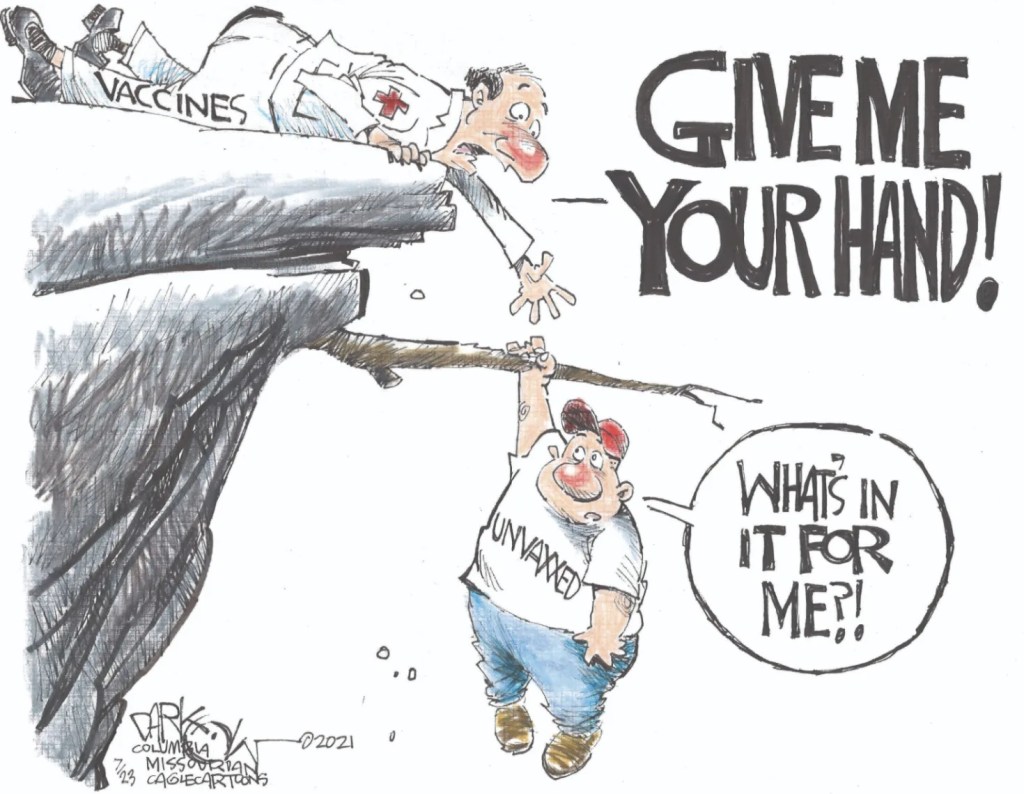
As I reflect on our time with Heinz, I’m reminded of numerous recent comparisons of mask mandates to Nazi fascist rule; of vaccines to Nazi medical experiments on Jewish prisoners; of federal and state legislators sharing the stage with white supremist groups.  I wonder if these events conjure up frightful memories for Heinz.  If they do, it didn’t show, it didn’t diminish his gratitude and enthusiasm for the life he’s made.  I’m grateful that I was able to spend time with this man.

A small workbook, “Start With Gratitude,” introduces its reader to the link between happiness and gratitude:  Do you want to be happy too?  Be grateful. ¶. Practicing gratitude is one of the simplest and most effective things you can do to transform your life.  Research shows that people who regularly take time to notice things they are grateful for enjoy better sleep, better relationships, greater resolve towards achieving goals, show more compassion and kindness, and are overall happier.

Heinz said he woke up each morning looking forward to another day – that’s gratitude!

When we walked the dogs that evening before dinner, we saw Don shuffling up the street; no sign of Betty.  He stumbled a little in his haste to cross the street when he saw us.  We assumed he wanted to pat the dogs again since he seemed to enjoy it that morning.  As we approached with the dogs, he told us to get the dogs away because he might fall.  Reasonable, given his lack of stability on his feet.

Instead of wanting to see the dogs, though, he really wanted to see me.  He mumbled some when he spoke; it took me a minute to understand that he wanted my business card.  I reminded him that I’m retired and don’t have a business card.  He wanted my name and phone number – he said he might have a job for our son.

When we visited in the morning, we had the benefit of Betty being able to casually interpret some of what Don said.  Without Betty, and because of the mumbled speech, Nancy and I never fully understood the job.  It had something to do with a specific project of designing a remodel of a house he owned in New England to create a place for him to live.

Rather unexpectedly, he launched into a diatribe:  I can’t stand my wife.  She makes my life miserable.  Every day I wake up and can’t stand it.  I’m worth $20 million.  Her daughter is a lawyer and I think she’s trying to take my money away from me.  I’m 92 but I think I have a few years left.  I don’t want to spend them like this.  I hate each day I’m with her.  I want to get away from her and her daughter who’s trying to take my money.

The contrast to our pleasant conversation in the morning was shocking.  In the morning, we met a pleasant man with some limited mobility and mumbled speech who wanted to pat our dogs.  In the evening, we ran into a bitter, angry man who seemingly had lived half a century in misery.  We clearly cannot assess whether he’s worth $20 million, but whatever the amount, his fear of losing control of that money to his wife of 51 years and her daughter from a previous marriage was dominating his life – the misfortune of fortune.

A single day illustrated opposing ends of a continuum.  One end featured Don, a 92-year-old who was miserable in seemingly every waking minute.  He was a successful builder who had become a multi-millionaire.  He has a winter home in Naples that almost certainly is worth well more than half-a-million dollars; he has a summer home in a relatively pricey area of New England.  Despite his success, despite his financial and material wealth, he hated his life.

Heinz lived at the other end of that continuum.  Also 92, he was physically and mentally able.  He survived the Holocaust.  He married a woman who survived Auschwitz, and whom he loved until her unfortunate death; his admiration of her was obvious in his comments.  He lives in the small condo he and his wife bought 20 years ago – a condo worth less than half of Don’s stick house.  Yet despite his lack of obvious wealth, Heinz was a rich man who woke up each morning looking forward to the day.

I’ve Been Thinking . . . About Super Bowl Commercials

We’re out of town on a trip.  Some friends from “home” are in the same “out of town” we are so we went to their house for a Super Bowl party.  Of those gathered, perhaps half said they were only interested in the commercials (this being an older crowd, unfamiliar with the half-time performers, none said they were interested in that).  As a rule, for Super Bowl parties, probably half assert that they are interested only in the commercials . . . unless, of course, the hometown team is playing.

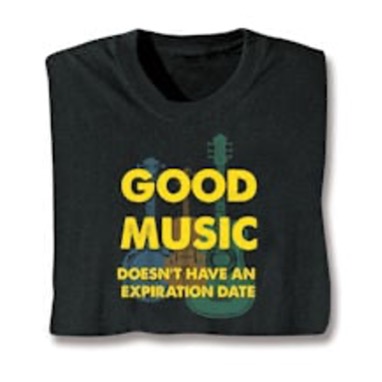
Yes, I wore my shirt with this graphic to watch the game!

The game turned out more interesting than I anticipated.  I joked with one friend before the game that I heard it had been canceled due to lack of interest.  Whatever your interest, or lack of, in the game, the half claiming they were interested in the commercials reminded me of past Super Bowl commercials I thought were particularly good.

One of my perennial favorites is the commercial that launched the Apple Macintosh.  Full disclosure:  I’m a Mac guy, and my first personal computer was the original Macintosh that defined the future of personal computers.

The commercial aired during the 1984 Super Bowl.  It is Orwellian in tone, seizing upon the popular novel’s theme of total control by a ubiquitous power.  It is a dramatic story told in a minute.  The Super Bowl was the only time Apple paid for the ad, yet it has been shown countless times over the years because it consistently ranked among the top ten for more than two decades . . . or until the proliferation of top lists by anyone with a blog!!

Apple’s introduction of the Macintosh in 1984 marked a dramatic change in personal computing – the Graphic User Interface, or GUI (pronounced gooey).  Prior microcomputers generally used a command structure; Microsoft’s Disk Operating System, or DOS, was the most prevalent.  The Mac OS created graphic images that, when clicked using a “mouse,” told the computer what to do.

Apple, however, did not invent the GUI.  Xerox is generally credited with that:  researchers at the Xerox Palo Alto Research Center developed GUI-functional computers.  Xerox corporate management was more focused on their successful copiers and moving into laser printers and didn’t invest in making the Xerox Alto into a marketable desktop machine.

With that in mind, this commercial had Brother Dominic introducing the new Xerox copier.  It demonstrates the value of the technology in a context that builds on the humor inherent in the situation.

The Pittsburgh Steelers went from worst to first during the 70s.  “Mean” Joe Greene was the anchor of the defense – known as the “Steel Curtain” – that dominated opposing teams.  During Greene’s playing career with Pittsburgh, the Steelers won four Super Bowls.

Greene didn’t appreciate the moniker “Mean,” insisting that it detracted from him as being a nice person; his playing style, however, was intense and intimidating, and in today’s game, would almost surely result in numerous “unnecessary roughness” penalties and league fines.  His Coke commercial, that was shown during the 1980 Super Bowl, demonstrated that even “Mean” Joe Greene had a softer side.

When I was in college, one brand stood out to me and my fraternity, TKB (Tappa Kegga Bud).  A close second to coffee, Budweiser was my drink of choice. 🙂 Occasionally, I could stretch for Michelob.  And when Heineken was on sale and I could rub two fives together, I carried a case to the checkout.  This stage in my life created an affinity for Budweiser . . . and Budweiser came through in the Super Bowl ad category!

Budweiser was such a dominant brand that they focused on unique ways to reinforce the brand instead of trying to build brand awareness; ergo, their ads focused on memorable events and symbols of the brand, such as the Clydesdale horses.  The first of the following ads built on the perception that the implementation of “instant replay” reviews were slowing down the game.

In addition to humor, Budweiser ads could tug at your heartstrings by incorporating feel-good stories involving dogs. This one resonates with me in an additional way since we moved my parents-in-law from the farm into town.  My father-in-law was only going to take one of his hound dogs with him and give the rest of his dogs away.  As we were driving to their new home in town with the last trailer load, I looked into my sideview mirror, and saw Frank’s bird dog looking back at me.  He sensed that something was awry, so he jumped onto the trailer when we finished loading.  Rather than getting lost, however, he earned his place as the second dog Frank got to keep at the new place.

When puppies become adults, they assume important roles, as demonstrated by the iconic Dalmatian.

And if you are going to incorporate zebras and dogs, why not add a donkey to the mix.

Super Bowl parties are festive, it’s easy to fit into a crowd around a common event, it’s a good time for a date.

Another full disclosure:  I’m a dog person, not a cat person.  But I loved the irony of this EDS (Electronic Data Systems, the company founded by two-time Presidential candidate Ross Perot) commercial incorporating cats.  Information technology was changing rapidly, and I believe that the cats represented the disparate data components and platforms, and the cowboys represented EDS’s system for moving them along toward a common goal.

For decades, one of the more popular radio programs was Paul Harvey’s news and commentary, particularly his “The Rest of the Story.”  Harvey’s sonorous delivery of down-to-earth issues provided captivating listening.

I mentioned that my father-in-law was a farmer, so I vicariously understood the life of a farmer . . . and knew that this son-in-law didn’t want to be one!  Ram Trucks used a Paul Harvey segment on farmers in one of its commercials.

“Man — despite his artistic pretensions, his sophistication, and his many accomplishments — owes his existence to a six inch layer of topsoil and the fact that it rains.” ~ Paul Harvey

https://www.azquotes.com/author/6359-Paul_Harvey

We’ve seen puppies, horses, zebras, donkeys, and cats.  How could we not include one with a kid!  I love this Volkswagen commercial.

I’m sure that you have some of your personal favorites.  Go ahead:  do a search for Super Bowl commercials on YouTube and see what you find.  I hope you’ll enjoy revisiting some that you forgot you enjoyed.  Feel free to send a link to your favorite back to me. I can say, I enjoyed reviewing these; and I skipped some others, such as Pepsi® and Doritos®.

I’ve Been Thinking . . . About Age and Ages

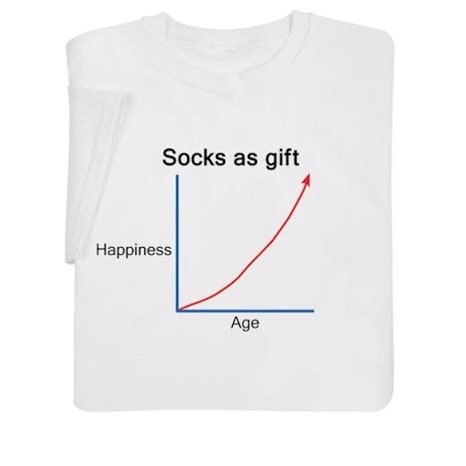
Christmas is over.  The artificial tree packed safely in its box for another year.  Santa’s flown back to the North Pole to supervise elves making toys for next year.  And I’m still waiting for my socks.

My son asked me what I wanted for Christmas and the first thing out of my mouth was socks.  I worked hard to come up with a list because I usually shrug and point out that I really don’t need anything.  So socks was my list . . . and I even explained what kind of socks and where he might be able to get them.  So much for the hours spent constructing that Christmas list!

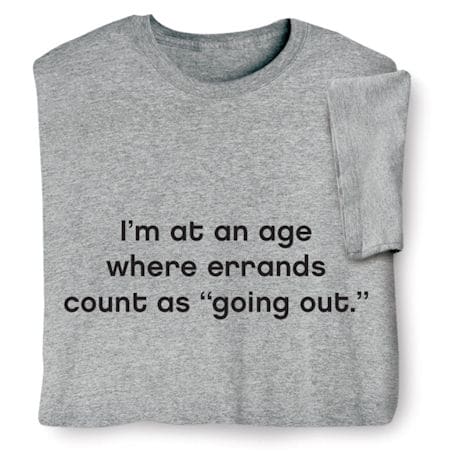
I’m at an age, though, when I don’t need anything (except lower prescription prices through Medicare).  Note that I said need, not want.  I have reined in my wants – I might still want stuff, but we have downsized, and anytime a little devil whispers a want in my ear, I ask myself if I want it enough to move it (it’s amazing how much stuff you’re willing to return to the universe when you’re moving . . . particularly if you’re downsizing!). 

Many in my generation want stuff.  Makes sense.  We’re Baby Boomers.  We grew up during the huge population and economic post-war boom.  To fuel that economic boom, companies created new products to meet our every need and desire, and marketers framed messages to help us understand that we had those needs.

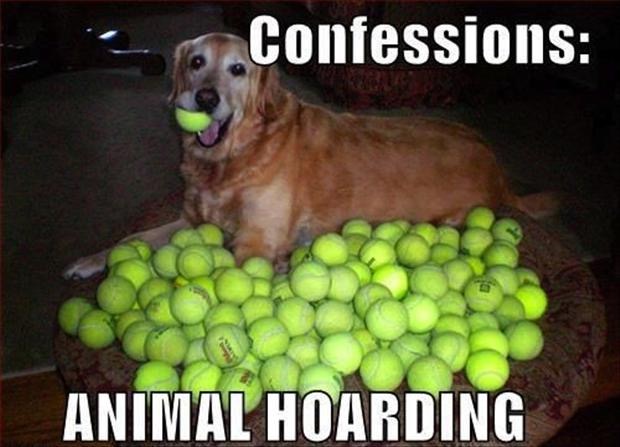
One contributing factor to Boomers’ desire for stuff was that our parents led by example.  They threw away nothing!  They were . . . hoarders.  They survived the Great Depression; they never knew when something might be useful, so best to keep it.

We had neighbors years ago who were about my parents’ age.  Hoarders.  I came to the realization when their youngest son filled three large dumpsters with their stuff and had it hauled away while they were on a cruise.  When they returned, they didn’t even notice that three dumpster-loads of their stuff were missing from their house!  Seriously.  They discovered it when they received a bill from the trash hauler; and they asked us to verify that the dumpsters had indeed been there.

They weren’t like the people on the show “Hoarders.”  Our neighbors were neat, clean, orderly people.  They organized their stuff mostly in their basement, on shelves with aisles.  They hoarded out of a sense that, whatever the item was, it might serve a legitimate purpose in the future.

My mom was a hoarder, but she hoarded antiques.  She had them organized in our basement.  We finally convinced her to open a shop to free up space in the house.  It turned out to be a good thing for all concerned.  (Mom generally had the living area filled with antique furniture.  One time – and my mom never disputed this story – my brother and I were sitting on an antique sofa when a woman came to the house and bought it.  We had to get up from watching our show and carry it out and load it on top of the woman’s car!)  (And, yes, Mom knew a couple of the people who appraised on the Antiques Roadshow.)

Don’t get me wrong.  Not all Boomers’ parents were hoarders, especially to the degree depicted in that awful show; but the Great Depression left an indelible mark on many people who struggled and scraped their ways through.  They tended to be folks at the lower end of the economic spectrum, so when the post-war economic boom began, they wanted in!
A great deal has been said about the different generations.  As we progressed through the various lifestyle stages, everything was Boomer ThisBoomer That – we were a population, sociological, and economic boom; but that didn’t prevent us from screwing up a lot of stuff . . . little things like the environment!

Of course, then we groused about Gen X, which is odd because they really didn’t have a lot of impact.  Now, the Millennials: there’s a generation to scratch your head over.  They and Gen Z/iGen tend to share characteristics, particularly their transition years.

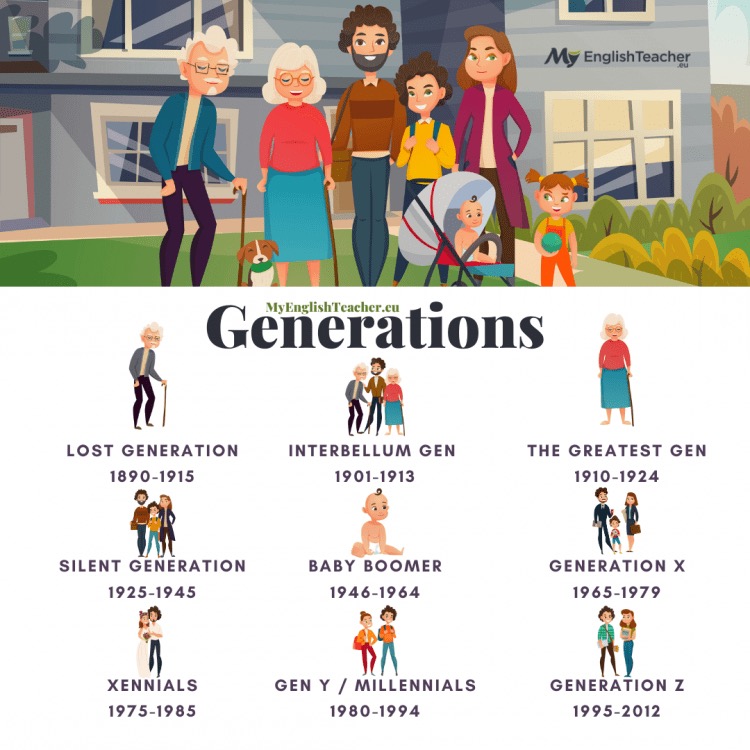
I included a graphic from MyEnglishTeacher.eu, that illustrates the different generations.  One can quibble with the years – and I had not heard of the Interbellum Gen – but it’s a nice graphic summary.

I also have included a video clip segment from a training video by Morris Massey.  I enjoyed seeing his first video, which he made in the 70s, when he used “salty” language and wore a leisure suit!  He is a very lively presenter, so be prepared to listen closely.  I particularly like his premise, reflected in the title, “What You Are is Where You Were When . . . (You Were Ten).” 

He runs down numerous milestone events that occurred over the past several decades, and if you think of some of those from the perspective of a ten-year-old, you can see how your life could be influenced.

Interestingly, one event that Massey elaborates on in his video clip is the assassination of John F. Kennedy, which coincidentally occurred when I was ten . . . sitting in Mrs. Klute’s 4th grade class when Principal Snyder announced the news to the school over its PA system.

This short clip from Kennedy’s 1961 inauguration speech underscores the sense of hope and possibility.  His was a unifying voice.  Regrettably, I fear that one of his most iconic lines – “Ask not what your country can do for you, ask what you can do for your country” – has been turned on its head in the 60 years since.

My son had the misfortune of a dad stuck in 70s music.  He was forced to listen to it when he worked at my Baskin Robbins and when he rode in the car with me.  I mixed it up in the car sometimes by playing smooth contemporary jazz.

Let’s be real:  pop/rock music of the late 60s through the 70s produced some great music.  An entirely new generation was introduced to the body of work with “Guitar Hero,” since they had to use so much of the guitar playing from that period.

After suffering through my music preferences for years, my son finally thanked me for the experience because his music interests were more diverse . . . and he says he still listens to my Spotify mix occasionally.

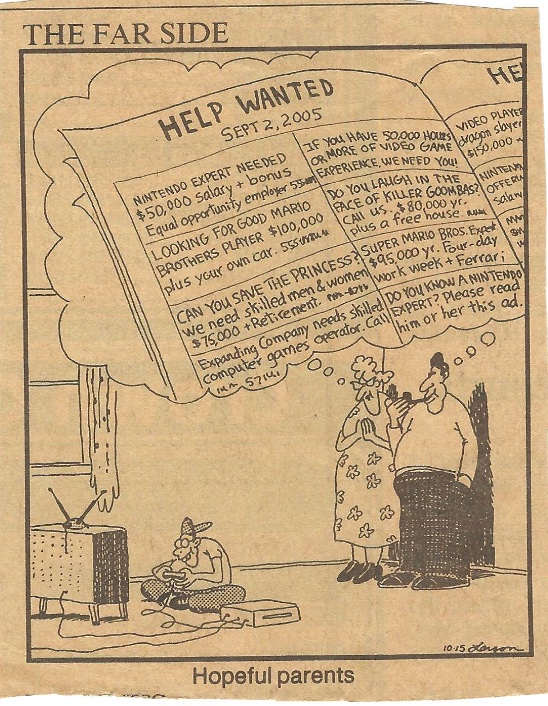
Something my son holds against me, though, is that I wouldn’t let him spend more time playing video games.  Honestly, I thought, beyond some occasional recreation use, it would be detrimental to spend too much time playing games.  He needed to go outside and play with friends, read books, study Latin!  I just didn’t see a future in it.  Little did I know that at some point in the future, people would pay money to sit in their homes watching someone else play computer video games!

Granted, it’s like football, where only about 400 players of the 1000s who play football in college, get drafted or invited to try out for an NFL team.  But it still boggles my mind that there are people making five- and six-figure incomes playing video games as a spectator sport.

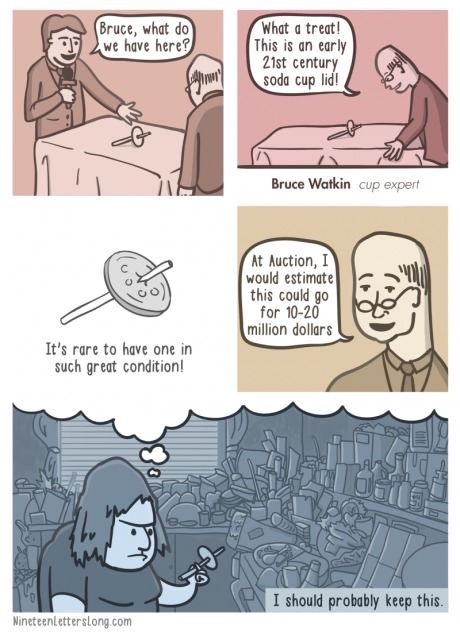
This is a comic I clipped in the 80s. See? I knew it would come in handy one day!

And what about Influencers?!  Seriously?!  People get paid for what?  A friend told me about a young female reality star who was capturing her farts in a jar and selling them.  Yeah, you read that right.

I’ve never known him to lie, but we do BS each other occasionally.  I did a quick search.  It’s true, but she had to put a lid on her business (pun intended) because of a work-related injury – she had to go to the hospital for severe intestinal cramps.  I wonder if she qualifies for worker compensation; I wonder if she knows what work comp is.

AppleNews recently curated a BuzzFeed piece, “Boomers Are Sharing Things That Gen Z’ers And Millennials Will Never Understand And It’s Mostly True, TBH.”  A few things on the list bear mentioning, and I can attest to their honesty with my personal twist.

People smoked anywhere and everywhere:  hospitals, movie theaters, public transportation.  I was a smoker at the time, but even I thought it absurd to designate a nonsmoking area on an airplane.  As soon as the No Smoking light went off, so many smokers lit up that the cabin was instantly shrouded in a smokey fog.

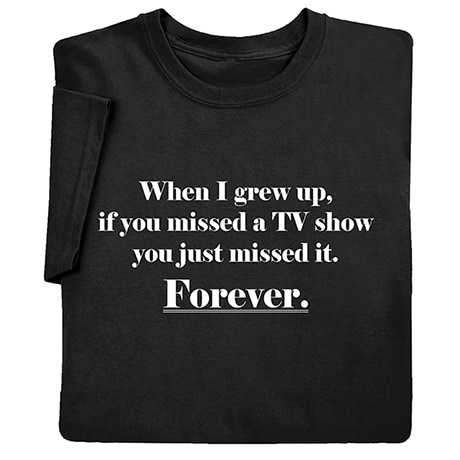
There were three TV networks with shows to choose from; and if you were able to receive UHF channels, you might get the local PBS station.  You had to watch the programs at the time they were broadcast – no VCR, DVR, streaming, play on demand – if you missed it, you had to hope it made it into the summer rerun schedule.

I still miss Blockbuster.  They began by renting VHS copies of movies; but not a lot of people had players, so you could check one out to take home and hook up to your TV (came in its own little carrying case).

Cameras used film.  And you had to take the film to a processor and pay to get prints.  You took your best shot, not your best 100, to get the picture you wanted.  Digital photography changed things dramatically.  Now, if none of the 100 or so shots you took came out quite the way you wanted, edit it . . . on your phone!

Speaking of digital photography and cell phone cameras . . . am I ever grateful those weren’t around when I was in college!!!!!

Many differences exist within and between generations – they always have and always will.  The complexities of global evolution grow.  World hunger.  Fifty years ago, concerns grew about global capacity for food production to support the growing world population; six billion people was estimated to be the practical limit.  The world’s population in 1970 was 3.7 billion; it is 7.8 billion in 2020 – more than doubling the last half century.  Hunger still a problem?  Yeah.

Consider the rate of change in technology.  Apple Computer introduced the Apple II in 1977; the same year, NASA launched the Voyager space ships.  Apple’s technology and product line has change dramatically, but the Voyager’s has the same computer processor it was launched with.  Its computer has 69 KB of memory; my iPhone has 128 GB of memory – that’s 69 kilobytes in a spaceship compared to 128 million kilobytes in my pocket.  When I bought my first car in high school, I added an 8-track tape player, which would hold about a dozen songs per tape; all the Voyager’s scientific data is encoded on an 8-track tape.

The magnitude of these changes is unheard of.  I no longer need to consider stopping at a gas station for directions; Google Maps will give them to me turn by turn.  I used a card catalog to find a printed book in the library while the current generation has more information available at the stroke of a few keys than is contained in the entire Library of Congress, with its 34 million holdings.

Boomers grew up with the Korean War then Vietnam.  Not to be outdone, Millennials experienced during their formative years the first enemy attack on American soil – 9/11 – and lived the next 20 years with the country engaged in war; Gen Z have lived their entire lives during that/those wars.  I won’t try to count all the armed conflicts when we were involved to protect the innocent and keep the peace (one simile I ran across, Fighting for Peace is like Screwing for Virginity).

Young adults today don’t need to do things the way we did back in my day – it’s probably not possible because the capacity no longer exists in that form.  They are forging new ways based on new circumstances and new knowledge in the world.  Much as I hesitate to admit that the old ways don’t always apply today, we need to accept new approaches, encourage them, and move on together.  Albert Einstein is often credited with saying, Insanity is doing the same thing over and over again and expecting different results.

I’ve Been Thinking . . . About Age

We moved Mom into a senior living facility when she was about 92.  It wasn’t because of any infirmaries that might inhibit her; quite the opposite – she insisted on continuing activities like descending a narrow set of steps to the basement two or three times a day to do laundry (she loved to do laundry!).  It wasn’t because of any cognitive decline; she played bridge competitively three or four days a week.  And she still drove!

Living in the apartment was a love/hate situation for her.  She longed for the greater sense of independence she associated with living in her home longer than a half-century.  By contrast, she felt comfort in having others around, though she complained that she couldn’t find enough good bridge players to a decent game.  She enjoyed the other activities that were just part of living there, such as talent shows starring the other residents.

She complained occasionally that she didn’t know anyone.  After humoring this complaint for a while, I pointed out that every time I visited her for lunch, she would share with me the life story of practically every person who passed our table.

After another theme of grousing, I reminded her that we had kept her house so she could return if the apartment didn’t work out.  “Well, to tell you the truth, I would prefer to be in the house so I could piddle around during the day, but I prefer the apartment at night because there is someone here 24/7 in case I have a problem at 3 in the morning.”  “How many times have you called at 3 in the morning?”  “Well, none.”  The next night she called the front desk at 3 in the morning complaining that she had fallen asleep in her recliner and couldn’t get up!

I always got a kick from the irony when she referred to others in the facility as an old woman or old man.  This was coming from my 92-year-old mother so I would ask, somewhat puzzled, how old the person was.  “Oh, she’s 78.”  To my mom’s credit, most people were incredulous when she admitted her age.
The average life expectancy in the US is about 80, with males being about 78 and females being about 82.  Hmm.  In hopes of living longer , I checked different sources:  life insurance estimates, IRA investment groups, the United Nations, the US CDC, and even the CIA (who knew!).  Unfortunately, I couldn’t find a source who said I would live longer!

Drilling down, I discovered that I could gain about a year, on average, by moving across the state line to the neighboring state.  If I were going to move to add years, though, Hawaii is number one, and I could gain a couple of years.

But let’s face it – I’m getting old(er).  I can only hope that however long I live, I’ll be like my mother, pointing to people younger the me, and referring to them as old!
I met some old high school buddies yesterday.  One of them summed up the nearly half century since high school:  remember when we all wanted to date [insert a name from your past] in high school?  And now we’re comparing our Medicare plans?!
Have you ever . . .?  Hmm.  Note to self:  return to this when you remember whatever.
My son read a series of seven numbers to me the other day – some code to verify that I was indeed the rightful person to access some site.  He began to repeat the number, but I beat him to it and recited the string of numbers as I was keying it in.  He was impressed.

Growing up, we had to dial phone numbers.  So if I wanted to call my friend Steve, or Jeff, or anyone else, I needed to commit their number to memory to avoid looking it up each time in the phone book.  The phone numbers when I was growing up were seven digits.

The format when I was a kid was two letters and five numbers.  The two letters designated the city or town where the switch was located.  For example, I grew up in the small community of Gladstone, and our phone number was GL2-2413.  The 2 following GL came from the A in GLAdstone when the phone companies were forced to seven-digit dialing to keep up with growth.  Eventually, the letters were converted to the dial numbers on the phone, so GL2 became 452.

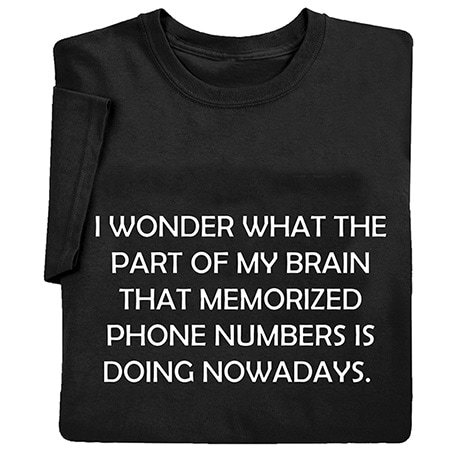
Out of necessity, then, I became quite good at remembering phone numbers.  Now I have most people I know in my phone contacts.  I don’t need to remember their phone numbers . . . and I don’t!  I’ll probably forget my own over time as I continue to send new contacts a text so they will have my phone number.
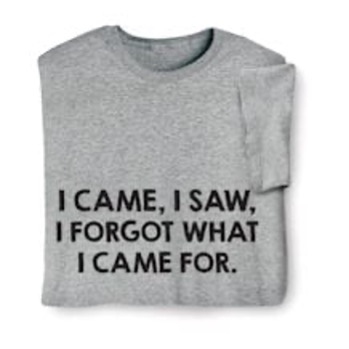
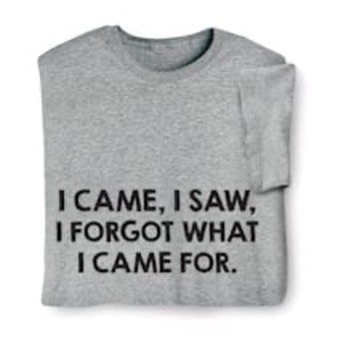
As I said, I came back to this one.  Sometimes I walk into a room and forget why.

“Most mothers entering the labor market outside the home are naive. They stagger home each evening, holding mail in their teeth, the cleaning over their arm, a lamb chop defrosting under each armpit, balancing two gallons of frozen milk between their knees, and expect one of the kids to get the door.” ~ Erma Bombeck

Mothers are masters of multitasking.  You’ve seen it:  a mother holding a small child on one hip, stirring a pot on the stove with her free hand, while having a conversation on the phone cradled in her neck and shoulder.  Can I do that?  Not on your life.  Instead of meatballs, the spaghetti probably would be served with a phone.

Work was different.  To accomplish all that I thought I needed to, I would multitask.  For example, I might be engaged in a phone conversation, and possibly listening to someone in my office, while also trying to read a report or write a memo.

On reflection, I probably could have done better had I focused on one activity at a time.  I also have concluded that it might have been disrespectful to some of the people I tried to interact with, not giving them my full attention.  I know that I sometimes feel discounted if the person I’m talking to is simultaneously texting/tweeting/Instagramming!

I’m retired.  When I multitask now, it’s generally because I’m trying to do something, or talk to someone, during my nap time!
I was fairly active when the Covid crisis hit in 2020.  That changed!  Before Covid, we met family and friends, ate at restaurants, went to movie theaters, played pickleball.  Seven of us went to Las Vegas in early February.  By mid-March, we ceased all those activities.

We stayed in, grateful for our new storm door so we could sit in lawn chairs in our entryway and watch neighbors we hadn’t seen before walk dogs we hadn’t seen before.  We met with family and friends virtually (are you ready to give up Zoom?).  We streamed Netflix and Prime to the point of addiction; binge-watching became our evening activity.  We listened to the silence as planes were taken out of service; the area’s international airport became a giant jet parking lot.

When friends asked what and how I was handling stay-at-home requirements, I told them about new goals I set: (1) shower and dress before lunch; (2) at least one nap daily; (3) watch at least three episodes of whatever I was bingeing; and so on.  I also admitted that I was increasingly falling short on meeting that first goal.

Being vaccinated and boosted gives us a greater sense of freedom, but we still wear masks at indoor public places.  We play pickleball more regularly because it’s easy to distance and the indoor courts are large and airy, and we can play outdoors in good weather.

We went to our first movie at a theater; we knew this theater would be underutilized, and sure enough, only four other people were watching the new James Bond movie at the matinee showing.

We meet friends and family that we know are vaccinated and boosted, and we eat in restaurants that have rearranged their seating for greater distance.  But even this freedom ebbs and flows with area Covid outbreaks – currently, most of the area hospitals are virtually at capacity (a recent Topeka Capitol-Journal article reported that Kansas hospitals are “rationing care”).

I don’t know what normal will look like post-pandemic . . . or even if there will be a clearly demarcated post-pandemic.  I have experienced significant change over the course of my life – from a party-line rotary dial phone to a cell phone that performs as a camera, stereo, and so much more; from doing long-division by hand to calculators that are programmed with advanced mathematical functions.

Normal has always been fluid, evolutionary.  What we have now seems more like a slap-in-the-face reset.  I can’t wait for the evolution to resume.
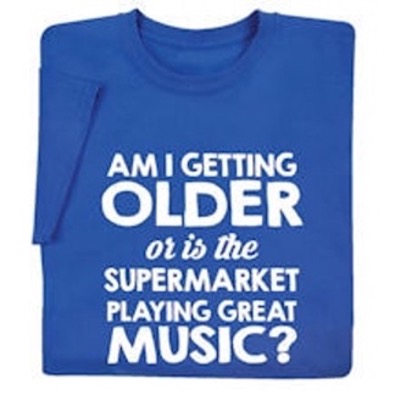
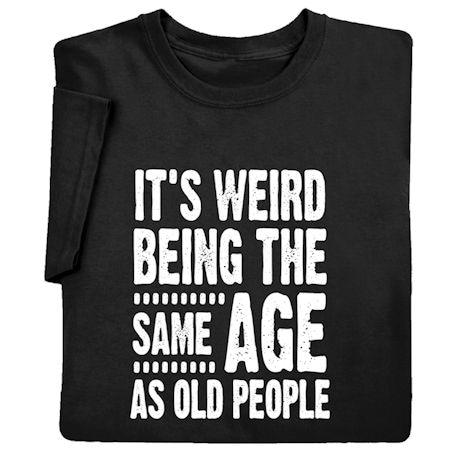
There is just more truth in this t-shirt than I care to admit!
I’m glad I remembered to come back to this.  I suspect all of us has experienced that momentary lapse when we walk into a room and forget why we came.  I’ll admit, my incidents seem to be mounting!

Just this morning I was looking for a hoodie that I recently washed.  It wasn’t in my clothes closet.  It wasn’t in the entry closet.  It wasn’t still in the dryer.  I finally recalled hanging it over the rocker in the master bedroom in case I needed it quickly when I needed to take out the puppy during the night.  I put it on and was zipping it as I walked from the bedroom to the living room, and my thoughts returned to wondering where I put that hoodie.  Sheesh.

A good friend’s wife told me about a time my friend was going through the house, apparently in search of something.  When she asked, he told her he couldn’t find his glasses.  She pointed out that he had one pair hanging from the collar of his t-shirt and another pair pulled up above his forehead; which pair did he want?

Episodes of memory loss – e.g., why did I come into this room – are a normal outcome of aging.  Stress also can affect your memory, and chronic stress correlates with memory decline.  Are you aware of any stressful situations that have lasted for the past couple of years (psst, in case you forgot, it’s the Covid pandemic!)?

I like one suggestion for remembering things:  make a list.  The problem is, I can’t remember where I left the list.
You’ve probably seen a bumper sticker that reads, “I’m spending my kid’s inheritance.”  I have a friend who jokingly tells his kids, that based on his financial projections, if he has a nickel left, he miscalculated.  Another friend hopes his last check bounces.  None of my friends nor I feel that way, but it summarizes this notion that we have worked hard to save for a future that we are now living.  We want that future to affect our progeny in positive ways, but our time is growing shorter.

One of my mom’s close friends was a member of the Red Hat Society.  The Society was inspired by the poem, “Warning,” by Jenny Joseph; it begins, “When I am an old woman, I shall wear purple, with a red hat which doesn't go and doesn't suit me.”

Kathleen epitomized the ideal of the Red Hat Society.  She was engaging and a genuinely nice person.  She also was strong and independent; and anyone who tried to control her be damned.

As we age, to the extent that we can accept and enjoy our independence, our perspective on life evolves.  Mom beat the actuarial projections and died when she was 94, and many of her siblings likewise beat their statistical projections.  I might have that maternal family gene that contributed to an extended life.

I look at the life expectancy today, though, and I can see a projected sunset turn into dark night.  While it is nothing more than a statistical, actuarial calculation – a number – it’s a reminder to get the best out of life.

The popular Welsh poet, Dylan Thomas wrote a poem that is perhaps his most popular.  I have included two different readings/recitations; if you prefer to hear only one, try the one by Rodney Dangerfield – the conclusion at the end of the clip is quite apropos!

I’ve Been Thinking . . . About New Year’s

Christmas is past, and we are set to begin a new year.  Have you ever noticed that the holiday celebrating the start of a new year is always written in a possessive form?  New Year’s. Had I not drawn attention to it, you might not have noticed. We celebrate a new year, but the holiday is distinctly referred to as New Year’s.  Perhaps it is simply from years of referring to New Year’s Eve and New Year’s Day – which would be possessive – that we simply became accustomed to distinguishing it in its possessive form.  Pure conjecture on my part.

My significant early recollections of New Year’s came after I could drive myself to parties.  Back then, before global warming had noticeably changed weather patterns for those of us not in the climate science community, it was frequently quite cold and often snowy.  Snow-slick roads became increasingly difficult with each new party I hopped to.  By the time I was in college – and a veteran partier – I began referring to New Year’s Eve as “amateur night,” and I would be more cautious, even staying in one year with near blizzard conditions.

I once attended the ultimate New Year’s Eve party – Times Square.  I was on a consulting project in New Jersey, about an hour’s drive from New York City.  Two other staff members and I drove to the city for the celebration.  We dropped off the female member of our trio, who was staying with friends, and the other guy and I managed to get a room at a hotel our company used for most of its staff on New York projects.

Throngs of people packed together for blocks.  We positioned in the area of an on-the-street reporter.  The camera spotlights came on periodically, the reporter reported, someone was interviewed, and we might have been visible standing in the background.  Three specific things stand out in my memory.

First, a group of about six adolescents formed a “train” and would weave through the crowd.  That stands out because, as they passed my colleague, they picked his pocket.  They only got a folded piece of paper with some notes he had made.  But I was struck by how quickly one of the young men was able to reach up under my colleague’s overcoat, under his suit coat, and into his front pant pocket as the “train” snaked through the crowd.  Of course, my colleague realized a hand had gone into his pant pocket, but the crowd had closed in behind the “train” before he could react.

Second, as the crowd chanted the countdown to midnight, I realized that we got to the “Happy New Year” cheer before the ball had completed its full descent, and with nearly two seconds remaining on the official countdown clock.  I have noticed since that this is normal, and not just at Times Square.  Try it.  Put something in the microwave and turn away when the timer hits 10 seconds.  Do your countdown.  There will be so many times that you are early or late, that when you occasionally count zero simultaneously with the ding of the microwave, you’ll become giddy . . . well, maybe not giddy.

Third, the danger of all the people at Times Square stood out, but not in terms of muggings (nor even the occasional pickpocket).  Within minutes after midnight, hundreds of thousands of people wanted to leave for nightclubs, parties, etc.  Police had sawhorse style blockades to restrict and divert movement.  Unfortunately, these barriers created artificial bottlenecks.  As people slowed to funnel through the passages, those behind pressed harder against those in front of them.  I worried that if someone fell they could be trampled to death.  A guy a few feet from me stumbled; I reached out to hold him up, but the undulation of the crowd torqued my arm and shoulder.  I realized that it would be difficult to fall – the crowd would literally carry you along.

When someone occasionally expresses a wish that they could celebrate New Year’s at Times Square, I admit that I’ve done it, checked it off a list I didn’t have.  And I am emphatic that I have absolutely no interest in repeating the experience.

Despite its tradition of revelry, one New Year’s introduced a degree of concern – Y2K.  We became aware of a computer code issue with the potential of shutting down societies around the globe.  The transition from 1999 to 2000 (Y2K) posed a unique problem for legions of computer programs.  In its infancy, computer data processing and storage capacity were at a premium; hence, computer programs were written to minimize storage needs.  Virtually all programming was being written to chronicle events in the 20th century.  All dates, then, were 19xx (e.g., 1959, the year Grace Hopper’s work helped create COBOL).  Since all dates were 19xx, the 19 was dropped to save memory, so 1959 was expressed as 59.

With the introduction of the year 2000, every line of computer code which assumed a two-digit year in 19xx would suddenly think it was 1900, not 2000.  If you were born in 1960, instead of being 40 years old, for example, you would be a negative 60; that does not compute!  (Even my mother would not lie about her age by such a large margin!  When my son was about 14, he asked my age one day.  After reflecting on my answer, he asked how Grandma could be younger than me.)

The alarming concern prompted many dire predictions.  There were people, for example, who cashed out their bank accounts for fear that banks would shut down.  Some hoarded food, flashlights, and batteries.  Some bought generators.  The federal government passed the Year 2000 Information and Readiness Disclosure Act to monitor and coordinate efforts to address the problem.  Old COBOL programmers made boodles of money correcting code.

Major TV networks reported on progress.  On New Year’s Eve, they began showing celebrations around the globe, beginning with those closest to the International Date Line.  You’re reading this – we survived.  Computer technology has become so pervasive in the years since that new Fords were described a few years ago as rolling computers, and now we cannot buy new cars for wont of computer chips.  Y2K crisis averted, but we need to work on this supply chain issue!

Having lived through many a New Year’s, and being revelried-out, I am more contemplative and curious.  How did January 1st become New Year’s Day?  History.com provided some background:

  • The earliest recorded festivities in honor of a new year’s arrival date back some 4,000 years to ancient Babylon. For the Babylonians, the first new moon following the vernal equinox—the day in late March with an equal amount of sunlight and darkness—heralded the start of a new year.
  • [I]n 46 B.C. the emperor Julius Caesar introduced the Julian calendar, which closely resembles the more modern Gregorian calendar that most countries around the world use today. …  As part of his reform, Caesar instituted January 1 as the first day of the year, partly to honor the month’s namesake: Janus, the Roman god of beginnings, whose two faces allowed him to look back into the past and forward into the future. Romans celebrated by offering sacrifices to Janus, exchanging gifts with one another, decorating their homes with laurel branches and attending raucous parties.

It seems that in my younger days I followed at least one of the traditions introduced nearly two millennia ago – I attended some “raucous parties”!  My goal now is to watch on TV the Times Square ball drop at midnight, 11:00 central time!

As with every celebration, traditions abound.  From special meals to particular parties to special places with a giant ball of Waterford crystal that slowly descends.  One interesting tradition is a kiss at midnight and the singing of “Auld Lang Syne.”  Its attraction is surely its call to look back, to remember your friends and the past you have shared, as you prepare to step into a new future defined by the new year.

Choral Scholars of University College Dublin

I’ve Been Thinking . . . About Christmas Traditions

The mother decided it was time to teach her teenaged daughter the secrets of preparing the family ham.  It was the centerpiece of their Christmas dinner, and the teen was captivated by the idea of participating in a generational legacy; and she was excited to impress her grandmother, who had taught her mother the secrets she was about to pass on.

The teen learned first how to cut off the ends of the ham.  Next, the spices that went into a mixture for basting.  Cooking the ham on a low heat of 225° for six hours in the covered roasting pan, basting the ham every hour.  Removing the lid and broiling the top of the ham for about ten minutes at the end to sear in the juices.  Topping the ham with pineapple rings when it is removed from the oven.

When the ham was finished, the teen admired her work.  But she began to wonder about one of the steps – she asked her mother why they cut off the ends of the ham.  Her mother was stumped.  Finally, she said they should ask Grandma when she arrived.  When asked, Grandma seemed puzzled, considered the question as she went through the process in her mind.  She had an AHA! moment seeing the large roasting pan drying on the counter.  She always had to cut off the ends because her pan was too small.

We all have traditions that we follow, perhaps none more so than Christmas.  As a boy, my family went out to find the perfect tree.  For several years, we would go to a Christmas tree farm (that is now a housing subdivision), search for and cut down the “perfect” tree, and ride in an old hay wagon back to the office where we would tie the tree on top of the car.  We couldn’t finish decorating it until my older sister was there because she did NOT approve of my tinsel-hanging, which involved tossing up handfuls at a time; she hung each strand of tinsel individually.  The effect was beautiful, but the process torturous for a young boy!

Nancy and I recently ventured to Branson to see the lights and Christmas parade at Silver Dollar City.  The area has a strong Christian presence, and we saw many references, such as “Christ – ‘Tis the reason for the season.”  So, what is the history of Christ and Christmas?

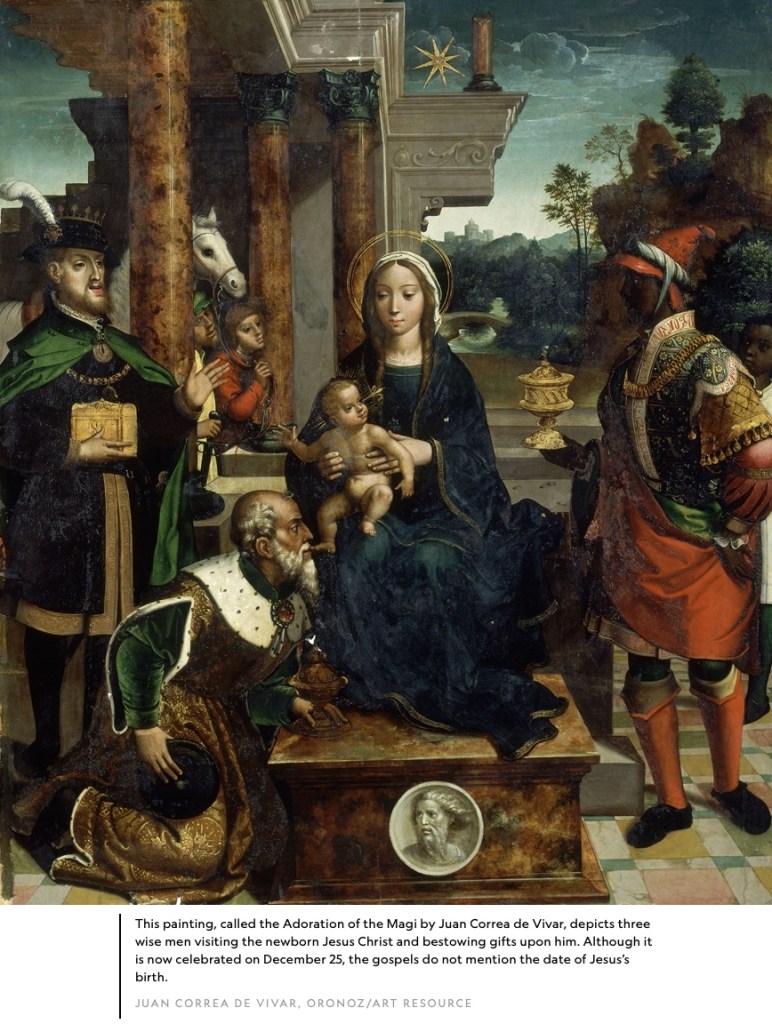
In the spirit of Christmas, Apple News recently curated a brief National Geographic article highlighting changes in Christmas traditions over time.  I have included some here; all the excerpts are italicized.Laden with tradition and brimming with festivity, the Christian holiday, observed in most of the world on December 25, celebrates the birth of Jesus Christ in Bethlehem. …  The Christian gospels do not mention the date of Jesus’ birth, known as the Nativity.  They do tell the story of his immaculate conception and humble birth.  …  Historians disagree on how December 25 became associated with Christmas.  However, by A.D. 336, Christmas was celebrated by the Christian church in Rome on that day, which coincided with the Roman winter equinox festival of Saturnalia.

I was worried the first Christmas after I got married, but it was unwarranted.  Nancy’s family’s tradition was to celebrate on Christmas Eve, while my family celebrated on Christmas Day.  The solution – we would spend a few days with Nancy’s family, culminating in a celebration with them Christmas Eve, then head to my family’s house Christmas morning.

My family liked to disguise and misdirect on presents as if it were part of a game.  Very secretive.  I learned, however, that my sister – the older one I mentioned before – was quite accomplished at opening wrapped gifts, seeing what was in them, and re-wrapping them so well that her work was undetectable.  Not fair.

Nancy’s family lived on a farm in a small town and were very practical about gift-giving.  I learned the hard way that there was no secrecy.  Her mom took us to Walmart to shop.  At one point Nancy said we would like a set of flannel sheets, so her mom put a package of flannel sheets in the cart.  In all good humor, but still to Nancy’s chagrin, I told my mother-in-law that she couldn’t buy the sheets with us there; she needed to sneak back and buy them later so it would be a surprise.  She replaced the sheets to the shelf . . . and we got nothing from her for Christmas!

In fun, years later I finally helped create a new tradition.  Nancy’s sister’s family moved to the area and Thanksgiving and Christmas holidays moved with them; after all, it’s where all the grandchildren were!  One year I had been perusing the Lands’ End catalog.  With planning, intention, and a gleam in my eye, I marked pages with Post-it® notes that included specific items I would like, along with size, color, and other pertinent details.

Following Thanksgiving dinner, and after my sister-in-law’s family had gone home, I sat on the sofa between my mother- and father-in-law, Lands’ End catalog in hand.  I began flipping to pages with Post-it® notes and pointing out things that I thought would make a great gift, look good on me, something I could really use, and so on.  I approached it in a fun and funny way.  My parents-in-law had as much fun as I did.  It became a new tradition.  Every year, thereafter, I would review the catalog, and before she left, my mother-in-law would smile and surreptitiously give Nancy some money and tell her to buy one of the things I had highlighted.

Family, friends, regions, cultures.  Traditions create a fabric for our lives even when we don’t think of them as such. From oral traditions dating back hundreds, even thousands, of years that are now translated into children’s fairy tales to a Lands’ End Christmas gift guide dating back two or three decades, we find meaning and purpose.

What are some of your favorite traditions?  Those things without which Christmas wouldn’t seem special.  Gathering to watch A Christmas Carol or National Lampoon’s Christmas Vacation?  Shopping to find the perfect gift to put under the tree?  Preparing the Christmas ham?

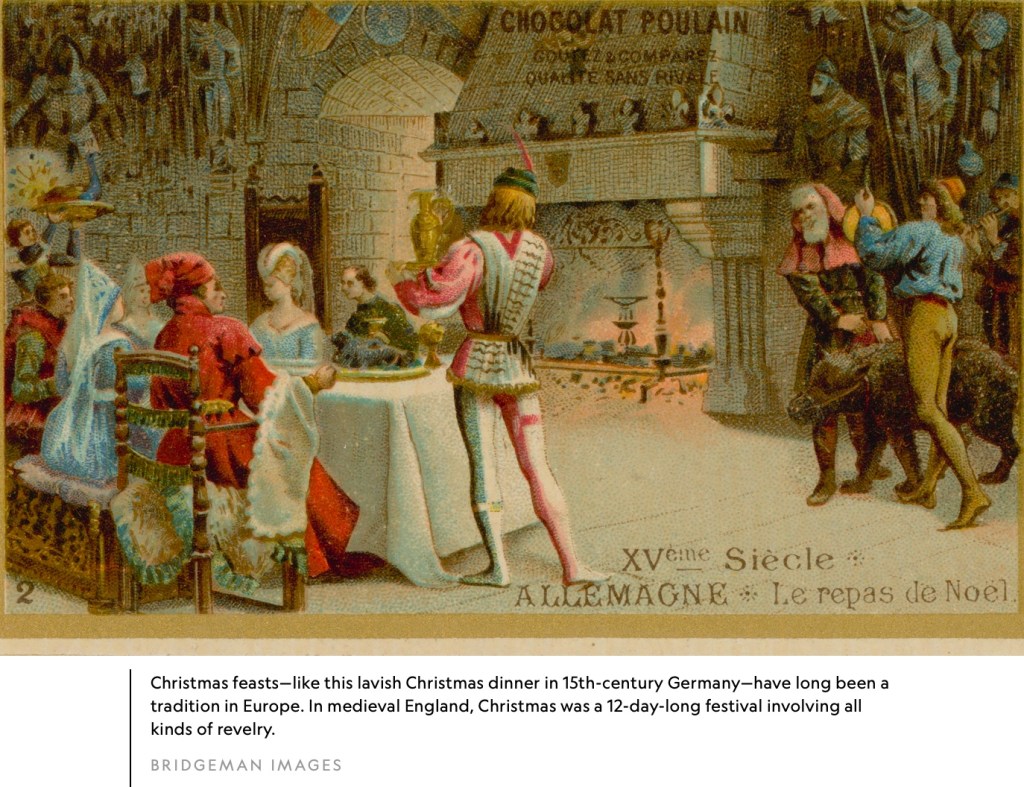
Winter festivals had existed worldwide since ancient times, and eventually many of those festivals’ traditions became linked with Christmas. For example, the Germanic solstice festival of Yule featured banquets and celebration, and Celtic Druids held a two-day solstice festival during which they lit candles and decorated their homes with holly and mistletoe. … Over time, Christmas gained popularity—and new traditions. In medieval England, Christmas was a 12-day festival involving all kinds of revelry, from plays to wild feasts to pageants celebrating Jesus’ birth. Music, gift giving, and decorations all became the norm.

“On the first day of Christmas . . . .”

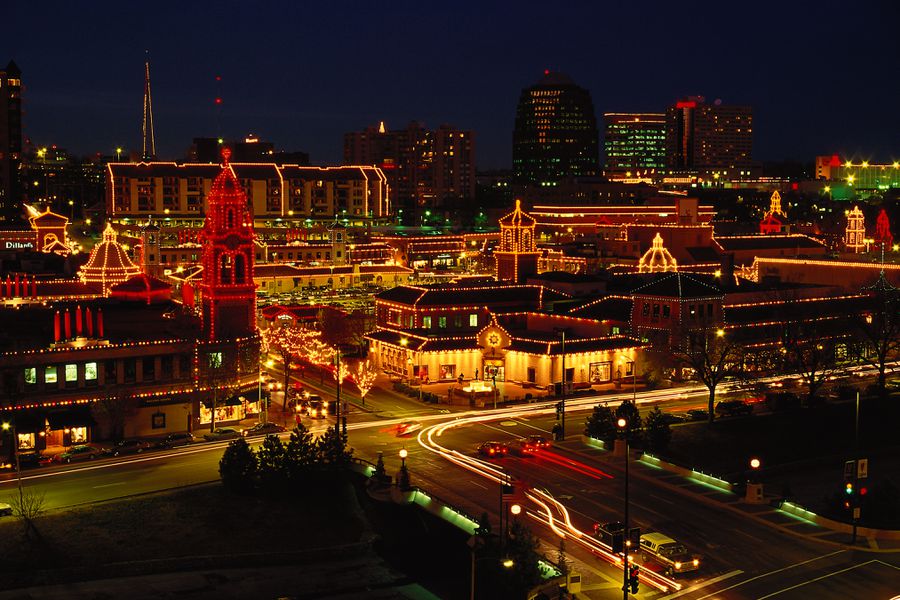
The unofficial launch of the “Christmas season” in Kansas City is the lighting on Thanksgiving night of approximately 80 miles of Christmas lights that outline every building in the historic Country Club Plaza shopping district.  Coincidentally, and perhaps conveniently, this is the eve of “Black Friday.”  An example of the evolving traditions, online shopping has now added “CyberMonday.”

  John Dominis/Getty Images

One of the most popular figures of a modern Christmas is Santa Claus, the round-bellied, white-bearded patriarch who takes a reindeer-driven sleigh to deliver presents to good children the world over. The character is based on St. Nicholas, a third-century Greek bishop who became associated with December gift-giving.  …  Santa came to the U.S. with German and Dutch immigrants in the 18th and 19th centuries.  …  Santa’s iconic look was propagated by illustrator Thomas Nast, who drew on European folk tales to create a Santa whose popularity soon spread around the globe. In 1890, merchant James Edgar started an indelible custom when he dressed as Santa and greeted children in the aisles of his Brockton, Massachusetts, department store. The idea took off, and Santas have frequented department stores … ever since.

Christmas began nearly 1,700 years ago as a religious holiday.  In the time since, its traditions have assimilated practices of different cultures.  America – the “melting pot” – was central to cultural blending.  As the world steamed into the Industrial Age, people began migrating to industrial hubs; the work was hard and the hours long, but the new jobs created greater economic wealth.

Mass production and distribution created opportunities for “store-bought” gifts.  Montgomery Ward, who published his first catalog in 1872, and the renamed Sears, Roebuck and Co., who expanded with their first general catalog in 1893, brought shopping into homes across America.  Their respective “wish books” could be found in many an outhouse; first, for shopping, then . . . um . . . let’s call it recycling!

The growing capacity for mass producing consumer goods required innovations in distribution to customers.  Montgomery Ward and Sears, Roebuck became examples of another opportunity in retailing – department stores.  In turn, the growth in retail outlets fueled the need for customers to buy more.  Along came eight tiny reindeer and a jolly old Saint Nick aka Kris Kringle aka Santa Claus.

As noted above, Santas became fixtures in department stores, just like the racks and shelves displaying merchandise.  What better way to stimulate Christmas giving than by having children tell Santa what they want.  Complaints about commercialism intensified.

Whether you observe Christmas in its truest sense as a celebration of Christ, treat it as a secular celebration presided over by a Jolly Red Elf and his eight tiny reindeer, or somewhere in between, the time is filled with traditions.  Enjoy those you have, adapt when it serves you better, and above all, enjoy.  As Clement Clarke Moore penned in his famous poem, “Happy Christmas to all, and to all a good night.”

I’ve Been Thinking … Random Thoughts

I occasionally catch myself in the midst of a random thought.  If it’s fleeting, I might simply forget it, or act spontaneously because of it.  Sometimes the thought transforms into a greater idea – thinking through options, considering and planning actions.

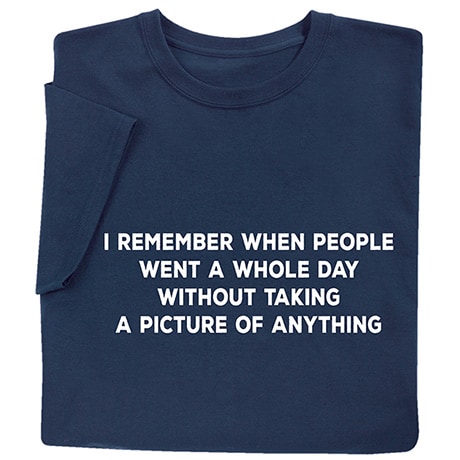
While they might seem random, one or more of our senses triggers the thought, consciously or subconsciously.  The aroma of a bakery, for instance, might trigger a thought about the rolls your grandmother made when you were young.  A song you hear playing in the car next to you at a stoplight.  Flavor in a restaurant meal reminds you to stop at the grocery store for a missing ingredient for your next meal.  A t-shirt whose message resonates with you.I enjoy reading t-shirts – they express something from and about a person.  At this point, I suppose that many of my random thoughts were stimulated by some type of t-shirt, but others come from bumper stickers, books/magazines/online news feeds, and so on.  Whatever and wherever, I’ll be brief (at least brief in my way of thinking).

How could I proceed if I don’t begin with an alternative to t-shirts!  As I typed “at least in my way of thinking” to end the preceding paragraph, I had a random thought of common and idiomatic phrases.  A very short internet search led me to Bored Panda.  The first on their list is “Cat Got Your Tongue.”  When I married Nancy she came with a cat, and as ornery as it was, it never got my tongue!  Here’s what Bored Panda had to say:

Meaning: Said to someone who remains silent when they are expected to speak.
Origin: There are two stories on how this saying came into being. The first one says that it could have come from a whip called “Cat-o’-nine-tails” that was used by the English Navy for flogging and often left the victims speechless. The second one may be from ancient Egypt, where liars’ tongues were cut out as punishment and fed to the cats.

Yikes!  I’m glad Nancy’s cat never got my tongue!

For some reason, I was reminded of this t-shirt.  That’s the opposite of how it normally occurs:  I usually see a t-shirt that causes me to think of something; in this case, something has caused me to think of a t-shirt!

I suspect each of us has days like that – I know I do!  You begin the day with a clear plan, yet you’re slapped in the face by a series of unanticipated events.  At the end of the day, you’re exhausted from dealing with all the distractions, and when you assess your day, you realize that you were so absorbed in addressing the unanticipated that you accomplished nearly nothing on your plan!

The developer is building out the last lot in our subdivision.  It’s close enough that we can walk over to the lot and watch.  A guy with a bulldozer dug the basement in about three days.  It would have been quicker, but he didn’t have enough space for all the dirt; he had to load it in dump trucks that came 10-15 minutes apart for the better part of two days.  I marveled as I compared what he was accomplishing by himself with machinery to some of the phenomenal construction projects completed before things like bulldozers existed.  How did they accomplish those feats with human power and simple physics like leverage?

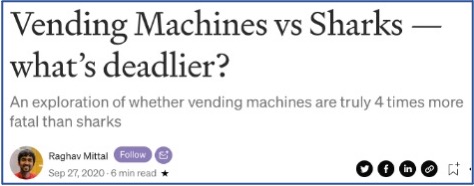
Talk about a random thought!  Were Raghav and his buddies sitting around playing drinking games one evening?  What are you smoking that this question even comes up?  “I’ll bet you a dollar that vending machines kill more people than sharks do.”  “I’ll take that bet!”

Honestly, I didn’t try to follow all the statistics he used, but the bottom line is that, indeed, vending machines do kill more people.  Some things to consider:  I, along with far greater than half the other people in the world, live nowhere near an ocean beach (there haven’t been any shark sightings in the small midwestern lake I frequent!), yet vending machines are pervasive, exposing most of the world’s population to their deadly ways.  And Mr. Mittal is only dealing with deaths.  Try to remember the last time someone died because of a shark bite; they usually are just maimed, so the mortality rate is low.

Shark attacks are gruesome events, and since the success of Jaws, they receive a lot of media attention.  Beaches are closed; helicopters fly around looking for more sharks; panic ensues.  Vending machine deaths – not so scary – no building evacuations, no helicopters, just some poor vending machine operator wondering about his liability insurance.  Most occur because someone was trying to rock or tip the machine while attempting to obtain a snack or drink, often illegally.  My advice:  use extreme caution if you’re at a beach with nearby vending machines!

I have an addiction.  I got hooked on Solitaire early during the Covid shut-downs in 2020.  After wearing out a deck of playing cards, I switched to playing online.  I had stepped away from my obsession last spring.  Vaccines were available, the weather was warming, I could get outside more.  I resumed this fall.  It’s like smoking.  You haven’t had a cigarette in so long you tell yourself you can have one, perhaps just to prove you don’t want or need them anymore.  Next thing you know, you’re a pack-a-day smoker!  Honestly, I don’t know why I do it.  I have better things to do, but they require thought or action.  Go figure.  (Be sure to watch the card trick in the accompanying video – amazing!)

We rescued a Miniature Australian Shepherd last spring.  She’s certainly a sweet and entertaining dog.  She wasn’t a pet, however, for her previous owners; she was intended to be “breeding stock.”  She lived in chaos.  The family had four children under the age of seven.  They had a Golden Retriever they kept breeding.  The mother in the household didn’t like dogs.  They kept her in a shock collar 24/7, and would shock her indiscriminately when she did anything they didn’t like.  The poor dog has PTSD.

She’s a pet to us; a member of the family.  We took her with us to Breckenridge in June.  Light, sudden rain showers are common in the mountains.  We were caught in a downpour one afternoon.  While I seized an opportunity to trot back to the truck of our rain gear, Nancy stayed with her nephew and niece, and together with our new dog, attempted to find shelter.

They found a restaurant, but Nancy knew a dog would not be allowed.  The server, recognizing the conundrum and knowing the restaurant was virtually empty during the mid-afternoon slump, assured Nancy that she could bring the dog in with her, as they allowed service animals.  Nancy pointed out that Lexi was not a service animal, to which the server more emphatically explained that service animals were permitted.

After that experience, Nancy said I should have Lexi designated to be my service animal.  The little dog has PTSD.  I explained that I would need to be designated as Lexi’s service animal!

I’ve Been Thinking . . . About Thanksgiving

Yum!  Turkey, dressing, mashed potatoes and gravy, sweet potato casserole, green beans, brussels sprouts (Nancy’s idea!  At least they will include bacon.), cranberry salad, rolls, pumpkin and apple pies.  The Thanksgiving feast.

The size of the gathering varies.  Sometimes it includes friends.  This year, family.  Nine.  We’ve had larger and smaller gatherings, perhaps as large as 20 when Nancy’s parents and my mother were still around to join us.  One year found Nancy, Michael, and I eating without the others.  (We completely broke tradition and ordered a super burrito and tacos from one of our favorite Mexican restaurants; I asked them to shape the burrito like a turkey – they thought I was joking!)

While we have generally maintained our traditional menu (except for the burrito which, by the way, was delicious), we have adjusted the process.  Rarely do we spend hours roasting the turkey (stuffed, of course) in the oven, boiling and mashing potatoes, and so on.  Many years ago, Nancy and I began ordering the dinner from Stroud’s, known for their delicious fried chicken (their motto: “We choke our own chickens”) and sides (their cottage fries and gravy – um, um, um!).  Their Thanksgiving dinner was centered around the traditional turkey, and you scheduled a pickup time; a line of three or four cars would be waiting when I showed up.

After one of the brothers who owned Stroud’s became seriously ill, they stopped their dinner program.  We returned to making our own.  Realizing how good we had it with Stroud’s, we began trying other restaurants that were, by this time, offering similar takeout dinners.  Some were better than others.  This year we’re trying the “Little Store,” which sells delicious Italian food – their turkeys are deep-fried.  We always supplement our core meal with sides that we particularly enjoy.

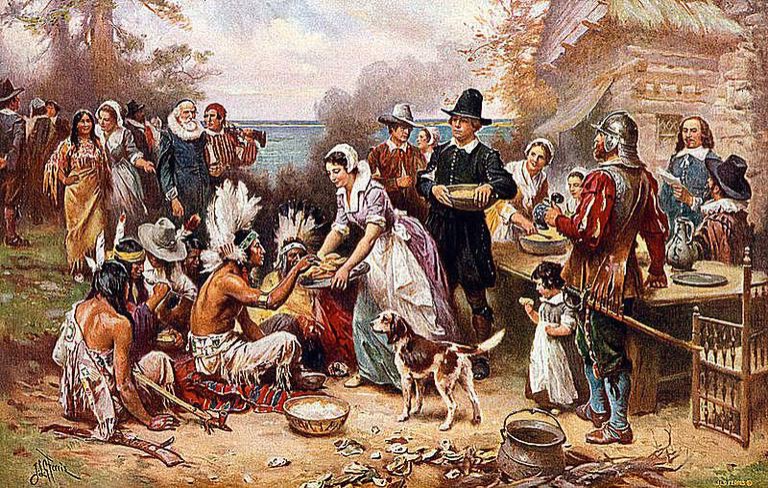
The tradition of Thanksgiving is steeped in history.  In the United States, its origins generally are attributed to the Pilgrims after their first harvest following their landing at Plymouth Rock.  No definitive account exists, but the celebration typically involves a feast with the Puritans and the Wampanoag Native American tribe that had taught the Pilgrims how to farm and hunt – how to survive – in their new home.  The following painting depicts “The first Thanksgiving as imagined by Jean Leon Gerome Ferris in the early 20th century. Photo courtesy Wikimedia Commons.”  Ironically, while turkey is the centerpiece of today’s feast, that first Thanksgiving more likely featured venison, lobster, and waterfowl; and no pies because sugar was not available.

Though considered the origin of Thanksgiving, the “Thanksgiving” celebrations were common in parts of Europe as a day of prayer and thanks.  Other countries – including our neighbor, Canada – have their own Thanksgiving holidays.  Evidence of feasts thanking the gods for bountiful harvests appear in Egyptian, Greek, and Roman histories. (I think the Romans feasted a lot!)

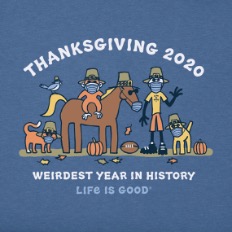
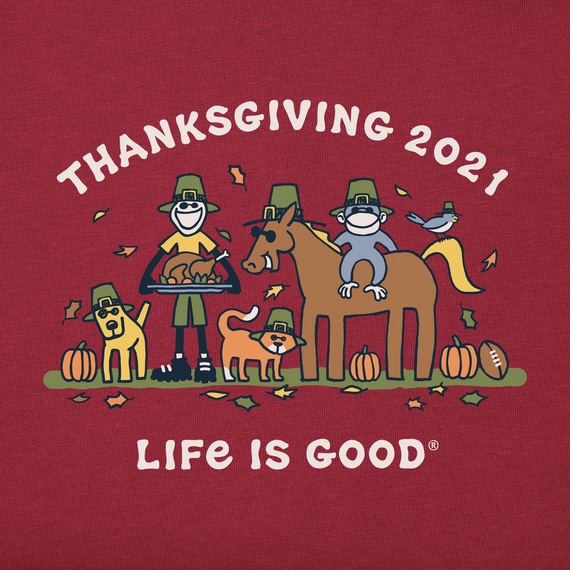
That first Thanksgiving occurred in the context of expanding settlement of America by Europeans seeking opportunities in “the new world.”  An unintended consequence was exposing indigenous people to foreign disease.  Native Americans were dying in great numbers in what might be considered a pandemic.  The parallel is not lost on me.  Thanksgiving 2020 was fraught with fear and consternation.  We assembled as a family, but masks and distancing were mandatory.  Vaccines are relieving some of those fears, but we will proceed with caution, albeit without the fear.

Thanksgiving has an interesting history in the United States.  George Washington called for a day of thanks following the success of the Revolutionary War.  It was not until 1863, however, when Abraham Lincoln proclaimed it a national holiday, after a decades-long campaign.  It was likewise proclaimed by succeeding presidents as occurring the last Thursday in November until Franklin Roosevelt moved it up to the third Thursday to extend the “Christmas shopping season,” and help the country climb out of the Great Depression.  (Do you recall President Bush’s direction following the 9/11 attacks?  Go shopping.  We are indeed a consumer economy!)  The holiday later was set as the fourth Thursday in November, whether last or not.

Many of us will hit the sofas and recliners, bellies full, to watch football.  Each year, the Detroit Lions and Dallas Cowboys host opponents in a Thanksgiving Day game.  The tradition of a Thanksgiving Day football game began in 1876 with Yale versus Princeton (not televised – you had to be there!).

Gimbel’s Department Store offered up the first parade in Philadelphia, but it was the Macy’s Thanksgiving Day Parade in New York City that set the standard, beginning in 1924.  A few million viewers line the parade route and it’s covered on national television networks.  It was somewhat immortalized by the movie, Miracle on 34th Street.  (The best version, in my humble opinion, is the original, filmed in 1947, and starring a young Natalie Wood and Edmund Gwenn as Kris Kringle.  An interesting tidbit is that the parade scenes were filmed at the parade in 1946, and Edmund Gwenn actually filled in for Santa in the parade.)

This Thanksgiving, I hope you can watch the Macy’s parade on TV, enjoy a delightful dinner with family and friends, catch a few short naps during lulls in the football games.  Or whatever your particular Thanksgiving tradition involves.  Enjoy.  Happy Thanksgiving.