I’ve Been Thinking . . . About Too Little . . . or Too Much

The Midwest has four seasons.  If you would like proof, buy an ice cream store!  As a proud former owner of a Baskin Robbins franchise, I can confirm that winter is not a good time to sell ice cream in the Midwest.  As far as I was concerned, the only reason for being open in February was Valentine’s Day.  We had a robust ice cream cake business; I particularly appreciated when the holiday fell mid-week because our cake sales would be strong from the weekend preceding to the weekend following.  Then the tumbleweeds would scamper across Main Street until the spring, when the sun shone bright and the temperatures reached the 60s and 70s.

The summer brought lines, sometimes out the door in the evening.  I likened the cycle to a bear:  you need to eat a lot of berries in the summer to get through the winter.  As summer faded into fall, business became more erratic.  Sometimes those warm Indian Summer days brought more people in, but both the weather and sales were unpredictable.

I also struggled more with scheduling employees in the fall.  For many of my employees, this was their first job.  When I hired someone, I always explained that they could not find a better job in retail food service:  every customer who walked through the door was either in a good mood, or they were in a bad mood and they came here to get into a good mood – all the employee had to do was be friendly and efficient and the customer would leave happier than when they came in.

The problem with fall scheduling was that almost all of my employees were in high school or college.  Guess what happens in the fall – football – high school Friday night, college Saturday afternoon, and the NFL on Sunday.  “Friday night lights” were particularly onerous because all the high schools played; in order to help hedge my bets, I had employees who attended six different high schools, with the knowledge that not all six schools would have home games the same week.

One aspect that pleased me was that many of my employees became friends.  We had two marriages result from relationships developed by working there.  That was nice.  It signaled to me that we had a positive and friendly workplace; and many was the time that customers would compliment me on that atmosphere.  It exacerbated the scheduling problem, though, as their friendships strengthened and they began doing things together (I had 2/3 of my employees go one time as a group to a concert.)

I once had three employees who were active in theater, particularly musicals.  I always struggled to schedule them during rehearsal periods leading up to the actual production, but when I could, it was not uncommon for them to break into song or dialog from the play, much to the delight of the customers in the store at the time.  We had an elementary school student choir come in as a treat following one of their performances and one of my musical theater employees led them in a song.  If only social media had been around. . ..

Now, I’m describing these things for a reason.  Having owned the franchise for eleven unpredictable Fall seasons, and working many shifts for high school and college employees who had a lot going on, as well as having a full family life myself, my wife and I used to observe that Fall was a busy time!  Well, it probably seems more pronounced, given that we have spent the previous two Falls hiding from Covid, but we have commented often this Fall that Falls are busy.  Hence, I am going to attribute my lack of Fall blog production to this busy-ness . . . and, no, I didn’t buy an ice cream store.

Hunting Season

Along with football season, Fall carries other seasons, such as hunting.  Did you know that coyote season lasts the entire year, except daylight hours for two weeks in April?  Go figure.  We also have a falconry season for hunting dove in the Fall.  And who wants to hunt skunks, in season or not?!  Do you really think skunk tastes like chicken?
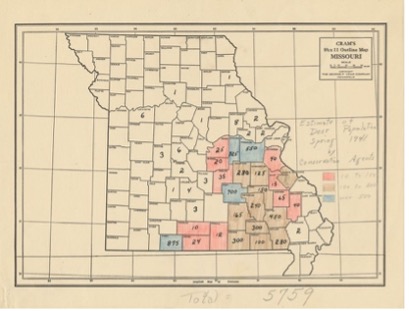
Deer season is most interesting and most popular.  Among the states with estimates of their deer population, Missouri ranks third with 1.5 million.  The deer harvest is generally around 20% of the population, so about 300,000.  The deer population has grown significantly over the years, and deer are becoming a common sight in suburban communities.  It wasn’t always like that:  nearly a hundred years ago, the state had 564 deer.  Two decades later, following multi-year hunting bans and two reintroduction efforts, the population grew to 5,759.

This is significant when you consider that much less land area was developed at the time.  The human population of the state has grown by about 73% from 1926 to 2021, while the deer population exploded by 2,659%.

My first – and last – deer hunting expedition was quite memorable.  There were five in our group and we had permission to hunt on private land.  We split up after identifying approximately where we were going to set up.  My friend and I climbed a couple of trees near an area where we could tell the deer had been bedding down.

As we waited, we heard dogs howling in the distance, heading our direction (hunting deer with dogs was illegal).  Within a few minutes, we heard a shot over a nearby ridge in the area where the others in our group were.  By the time we climbed out of the trees, we heard another shot – the first shot probably just wounded the deer and the second shot finished the job.

Then we heard another shot . . and another . . . and another . . . and boom, boom, boom.  We watched a doe crest the ridge (restricted hunting:  this was the first day of buck season and killing does was illegal).  She was wounded, so my friend decided to take her, or she would likely wander through the woods and die.  As he was lining up his shot, another shot went over our heads as someone across the gulley took a shot.  When our group reassembled, we could see other hunters scurrying off the land; including us, we counted 13 people in that field hunting – 13 who had inadvertently engaged in a crossfire because 8 hunters were trespassing with their locations unknown by anyone else.

Election Season

How ‘bout those midterms?!  “Election season” makes me reconsider deer hunting!  Don’t worry – I’m not going to discuss politics.  Instead, I’m going to let a couple of great humorists provide commentary:

  • “I don’t think either one of them knows what it’s all about, to be honest with you. Both sides are doing nothing but just looking towards the next election.” ~ Will Rogers
  • “Politicians and diapers must be changed often, and for the same reason.” ~ Mark Twain 
  • “The Democrats and the Republicans are equally corrupt where money is concerned. It’s only in the amount where the Republicans excel.” ~ Will Rogers
  • “Why waste your money looking up your family tree? Just go into politics and your opponent will do it for you.” ~ Mark Twain
  • “The 1928 Republican Convention opened with a prayer. If the Lord can see His way clear to bless the Republican Party the way it’s been carrying on, then the rest of us ought to get it without even asking.” ~ Will Rogers
  • “If voting made any difference they wouldn’t let us do it.” ~ Mark Twain
  • “One of the evils of democracy is, you have to put up with the man you elect whether you want him or not.” ~ Will Rogers
  • “Suppose you were an idiot, and suppose you were a member of Congress; but I repeat myself.” ~ Mark Twain

Trust me:  it was nearly impossible to limit myself to these.  If I address politics in a future blog, I hope to achieve a balance that represents my disdain for its current state, as both parties shoulder blame.  I tend to relate, however, to a lyric from Leon Russell’s “Magic Mirror”: “The Left ones think I’m Right, the Right ones think I’m wrong.”

 “Yes, and Eliza and I composed a precocious critique of the Constitution of the United States of America, too. We argued that it was a good scheme for misery as any, since its success in keeping the common people reasonably happy and proud depended on the strength of the people themselves– and yet it described no practical machinery which would tend to make the people, as opposed to their elected representatives, strong.” 
― Kurt Vonnegut, Slapstick, or Lonesome No More!

There are songs, movies, books, and so on, that I think people should experience as guides to understanding.  “In many ways, the writer uses the guise of fiction to speak the truth, and this world desperately needs the truth.”*  Stories are the secret reservoir of values: change the stories individuals and nations live by and tell themselves, and you change the individuals and nations.” —Ben Okri, A Way of Being Free (1997) *

An old movie – Mr. Smith Goes to Washington – illustrates politicians’ cynical fealty to money, and one man’s effort to restore a sense of representative decency and integrity to politics.  One scene might also cause you to consider returning to a former practice for a Senate filibuster.

Thanksgiving Holiday Season

Thanksgiving is figuratively “knocking on the door.”  It’s a time of sharing our bounty in repast with family and friends.  We are hosting Thanksgiving dinner this year, with as many as 15 relatives planning to enjoy.  We have long since ceased preparing the feast ourselves – far too much work – and instead buy a prepared feast from a restaurant or other caterer.  The meal is supplemented by each family bringing an additional side dish – if they want to – that represents something special they would enjoy.
We first tried the process when a famous fried chicken restaurant – Stroud’s: “we choke our own chickens” – offered a dinner.  Delicious!  We continued until the owner became seriously ill and they stopped the offering.  Back to preparing our own.  Too much work; not enough time to visit.

We experimented with others’ meals; some good, some not so good.  Following a particularly disappointing meal, both my mother and the neighbor widow, Jeneva, insisted that we return to preparing our own.  We weren’t going to, but we didn’t tell them that.  Instead, we hid the fact . . . misled . . . lied about ordering our dinner from the area hospital.  Yes, hospital.  They had a great chef and we had ordered other meals from them and found them to be delicious.  The meals were available only as an employee benefit; fortunately, Nancy was a part-time employee at the time.

To sell the ruse, we put the turkey and all the sides into our own roaster and pans.  (I’ll bet you have done that with at least one pot-luck dish!). As things were cooking (re-heating, actually), my mom and Jeneva asked how big of a turkey we got.  Neither of us remembered, so we muttered something about 8-10 pounds.  When my mom opened the roaster, she and Jeneva were stunned – it looked like the huge bird that Scrooge sent to Bob Cratchit (his assistant whose family included Tiny Tim) on Christmas morning – and they declared that our turkey was at least 14-16 pounds!

Mom and Jeneva raved about how delicious our Thanksgiving feast was.  They were thankful for insisting that we serve a home-cooked meal.  We were thankful they never figured out the truth.  Everyone was thankful for the delicious meal and the time we spent together.

Nancy found a prayer composed by Robert Louis Stevenson that I’m certain she will share as we assemble for this year’s feast:

Lord behold our family here assembled.  We thank Thee for this place in which we dwell, for the love that unites us, for the peace accorded us this day, for the hope with which we expect the morrow, for the health, the work, the food and the bright skies that make our lives delightful, for our friends in all parts of the earth.

Happy Thanksgiving
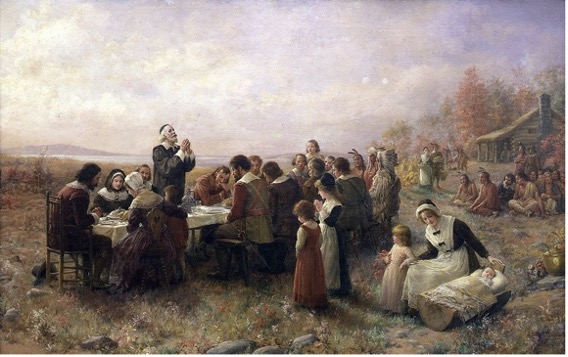
Jennie Augusta BrownscombeThe First Thanksgiving at Plymouth, 1914, Pilgrim Hall Museum, Plymouth, Massachusetts
I’ve Been Thinking . . . About Beavers

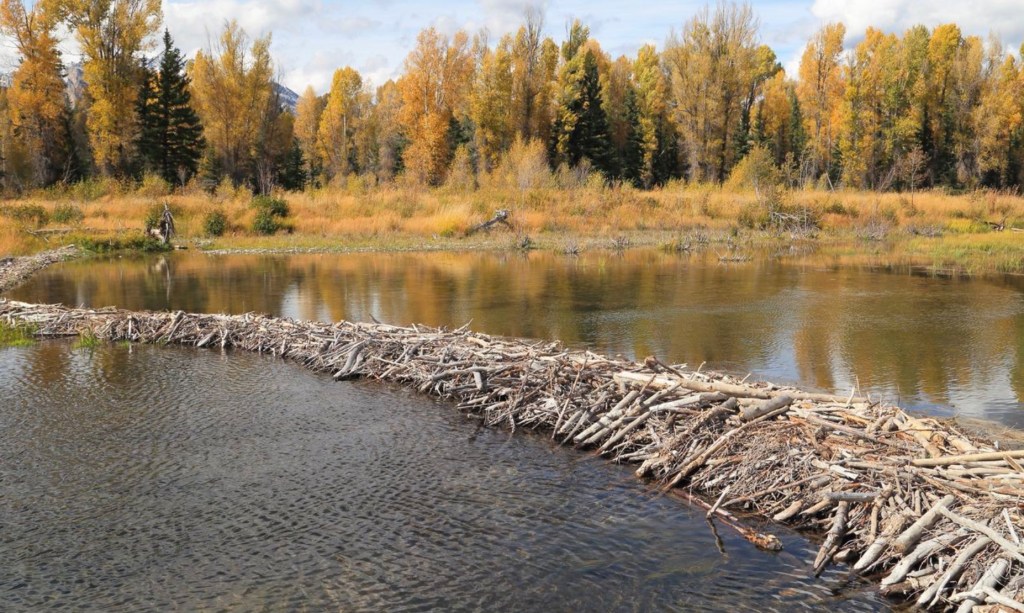
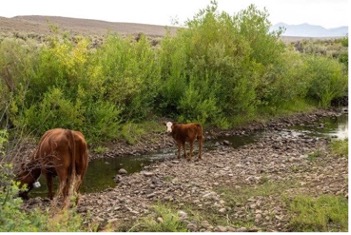
On our most recent trip to the Rockies, we saw a low-lying marshy area – just the type of environment where you might see a moose.  No matter how often we looked, nor what time of day, nor the angle from which we looked, we never saw a moose.  We did, however, see a succession of beaver dams and their resulting pools.  It was as if someone had engineered a system of locks to control the flow of water; that someone, of course, was a beaver, or more appropriately beavers.

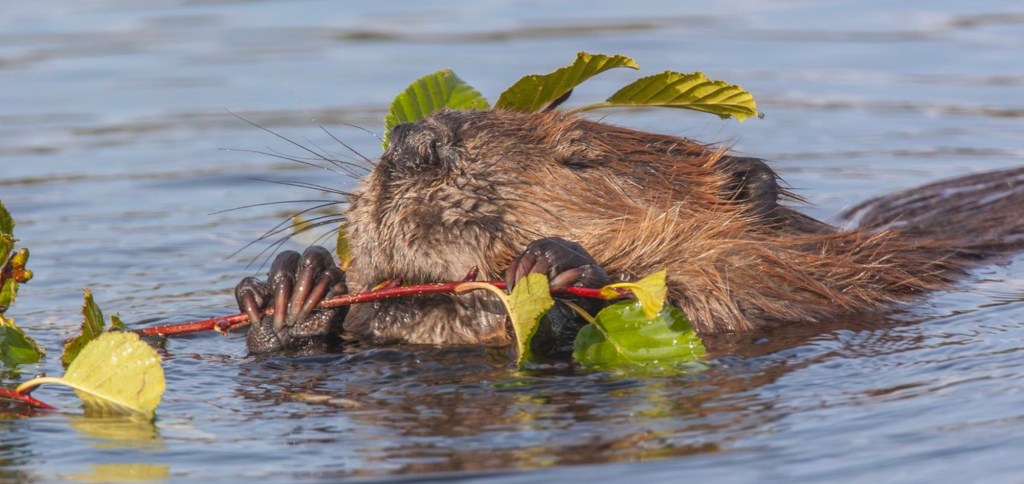
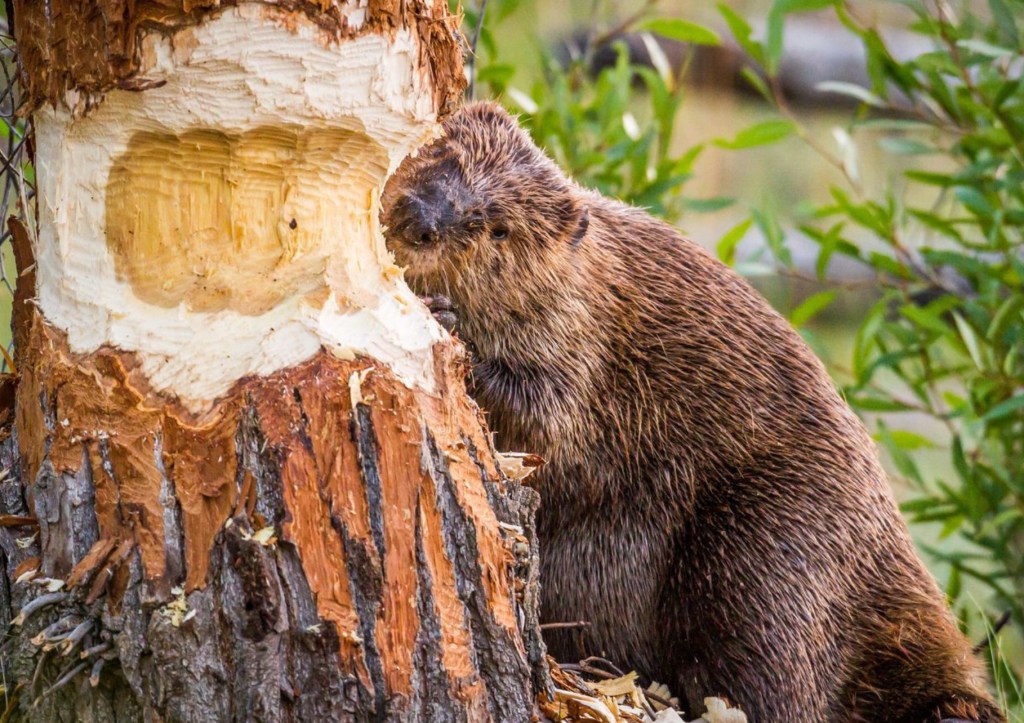
We also did not see the beavers – the flood control architectural engineers – but their work was fascinating.  We occasionally have seen beaver dams over the past few decades (and the beavers who built them), but never a succession like this.  I believe the increasing frequency of our sightings correlates with the change in understanding and attitudes toward the ecologic benefit of beaver dams.

I briefly mentioned that ecologic benefit in my previous blog.  Coincidentally, The New York Times published an article a day or two after my blog posting about a rancher who has seen the immense value of allowing beavers to do what they do naturally.  The rancher’s change of perspective is particularly stark considering that his father, who previously worked the ranch, used dynamite to destroy every beaver dam he found on the ranch.  Some of the article’s salient points/excerpts:

“As global warming intensifies droughts, floods and wildfires, Mr. Smith has become one of a growing number of ranchers, scientists and other ‘beaver believers’ who see the creatures not only as helpers, but as furry weapons of climate resilience.

Last year, when Nevada suffered one of the worst droughts on record, beaver pools kept his cattle with enough water. When rains came strangely hard and fast, the vast network of dams slowed a torrent of water raging down the mountain, protecting his hay crop. And with the beavers’ help, creeks have widened into wetlands that run through the sagebrush desert, cleaning water, birthing new meadows and creating a buffer against wildfires. . . .

“Beaver pools kept livestock with enough water during last year’s drought.”

But beavers also store lots of water for free, which is increasingly crucial in the parched West. And they don’t just help with drought. Their engineering subdues torrential floods from heavy rains or snowmelt by slowing water. It reduces erosion and recharges groundwater. And the wetlands beavers create may have the extra benefit of stashing carbon out of the atmosphere.

In addition to all that, the rodents do environmental double duty, because they also tackle another crisis unleashed by humans: rampant biodiversity loss. Their wetlands are increasingly recognized for creating habitat for myriad species, from salmon to sage grouse.”

An Apple News-curated Vox article noted that “Dams can deepen streams, and deeper layers of water tend to be cooler. … ‘That is really important for a lot of temperature-sensitive species like salmon and trout,’ Fairfax says.  In one recent study, scientists relocated 69 beavers to a river basin in northwestern Washington state, and found that, on average, their dams cooled the streams by more than 4 degrees Fahrenheit (2.3 Celsius) during certain times of the year.”

The relocation of 69 beavers in Washington reminded me of a story I read some time ago about a relocation effort that took place in the 1950s in Idaho.  Beavers had been hunted to near extinction in northern Idaho, creating problems with erosion and loss of natural habitat.  In the southern part of the state, where the human population was growing, beavers had become pests, building dams that were unintentionally destructive of “developed” land.

Relocation was the obvious solution.  The number of beavers to be relocated, and the rugged terrain, presented some obstacles.  The solution:  have the beavers go in via parachute.  Yes, parachuting beavers.

A family of six beavers has taken up temporary residence on the dock at the lake where we have a boat.  No, the beavers had nothing to do with building the dam that created the 7,000 surface acre lake, though wouldn’t that be a grand story if they did!  For a reason no one can explain, the beavers, like the river otters who previously took up residence three slips over, decided that they wanted to stay on the lifts that kept the boats out of the water.

We have dealt with a variety of wildlife that have staked out a claim to the docks:  birds are constant invaders, but other than what one slip-holder refers to as “a long-legged lake loon” (a heron), they are mostly benign; racoons ran amok a few years ago, taking up lodging under cover of mooring tarps, destroying seats and excreting everything they ate; the river otters took their turn, but seem now to have moved on.

The beavers, however, make no sense.  They aren’t building a dam.  Their specific location doesn’t provide much protection from predators (though their most dangerous predator at the time is the angry boat owner on whose lift they took up residence).  By whatever means, their numbers seem to be diminishing from the dock.

I agree that they have no business living on the dock – it’s not a natural habitat.  On the other hand, in recognition of their immense contributions to our environment, I am fascinated and wish them well.  Hopefully, they have moved upstream to the river tributaries that feed the lake, or they have been successfully relocated to where they can do what they do best.

As noted in The New York Times article, “ ‘We need to get beavers back to work,’ Wade Crowfoot, California’s secretary of natural resources, said in a webinar this year. ‘Full employment for beavers.’ (Beaver believers like to note that the animals work for free.)”

I’ve Been Thinking . . . About the Heat

I don’t know about you, but it’s hot!!  We went to my cousin’s birthday gathering in the latter part of July; when we left to return home, the temperature was 106° – the temperature!  We’ve had numerous days with temperatures around 100°, and several more with heat indices of more than 100°.  Perhaps it’s a function of my years of experience (read: old age!), but I think it’s getting hotter.  I can’t handle the heat the way I used to.

We moved into a new house in a burgeoning suburban neighborhood just before I turned four.  Brand-spanking-new house, but it didn’t have air conditioning!  Of course, I didn’t know the difference.  Most of my days were spent outside, playing.  Then came the bath before bed; I still remember those sweaty rings of dirt around my neck.  Ah – those were the days!

After a few years, my parents decided the heat bothered them.  We got a large window A/C unit that we put in the dining room window.  During the day, we would close the bedroom doors, reducing the volume of space to cool, and let the A/C do its job.  At night, we would turn off the A/C, open only one window in each bedroom, and turn on the attic fan (sometimes referred to as a “whole house fan”).  The attic fan would draw in the cool night air, so that by morning, we were pulling on light blankets.

We survived with that window A/C for several years.  As I was approaching high school, Dad decided it was time to expand to “central” air conditioning.  Of course, the house wasn’t ready for central air, so long-time family friends came to town and stayed with us while Todd adapted and installed the system.

If I heard an explanation of why we needed central air, I don’t recall what it was.  In retrospect, I suspect it had something to do with the summer nights not cooling off as much as they did before, causing the attic fan to be less effective; I remember sometimes waking in a sweat.  The suburbs were expanding rapidly, clearing trees that stood in the way of development, adding rooftops and asphalt streets that retained the heat of the day.

(I heard that, as people were flocking to the Phoenix area in the “early days” – 1960s/70s – when asked about the heat, they would invariably reply that the nights were downright chilly, a characteristic of the desert.  With the tremendous growth of the area – new houses, asphalt roads, loss of natural desert habitat, introduction of non-native plants and grass that required water – a heat dome gradually grew over the metro area, preventing nighttime temperatures from falling as much.  That stimulated the need for more air conditioners which in turn expanded the heat dome, thus requiring more air conditioning, and so the cycle continued until the point where the heat never really escapes.)

I honestly believe that some of my increasing intolerance to heat is a function of age.  I worked on a truck dock in the summer when I was in college.  I spent eight hours a day loading the back of 40’ trailers.  The temperature in those trailers normally ran about 140°.

I’m equally certain, however, that it’s getting hotter.  It’s a relative matter, but I also believe it’s a trend.  Just as my dad began feeling the heat as he was aging – moving from an attic fan to a window air conditioner to central air conditioning – the geographic area was becoming hotter due to the loss of trees and the increase of houses with asphalt roof shingles and the miles of asphalt roads to get more cars to those houses.  Today, I don’t know of any house in the area that doesn’t have some form of air conditioning.

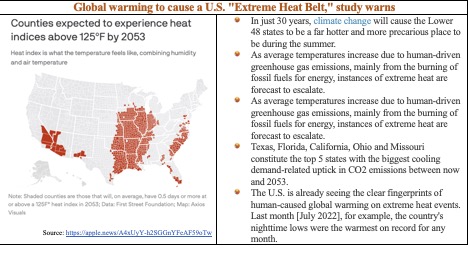
If the long-term trend illustrated in the “Extreme Heat Belt” graphic is close to being accurate, I have three significant concerns.  First, I live in that big swath of red up the middle of the map!  Second, it’s not like someone will flip a switch in 2053 – it will be a 30-year climb to those projected highs that I have to suffer through.  Finally, if I live to see these projections, I’m going to be broke because my financial planner isn’t planning for me to live that long!!

I must say, however, that it seems as if someone recently has flipped a switch.  I know we’ve had heat waves, periods of drought, and floods in the past; one of my earliest blogs was about the “Flood of ’93.”  (It makes me feel like an old-timer, leaning against the barn, holding a wheat straw between my teeth, slowly recounting that “Flood of ‘93”!)

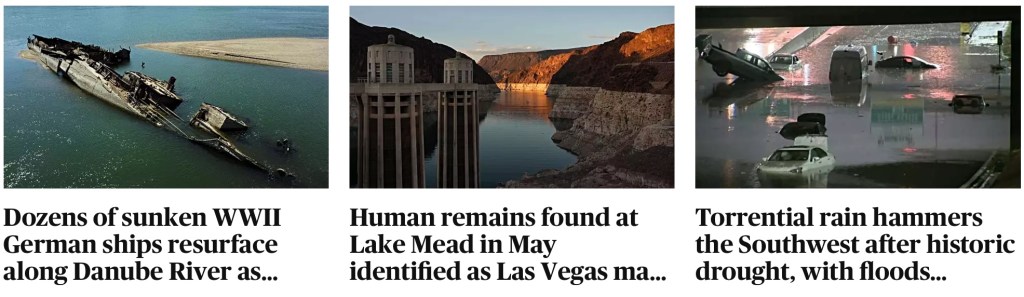
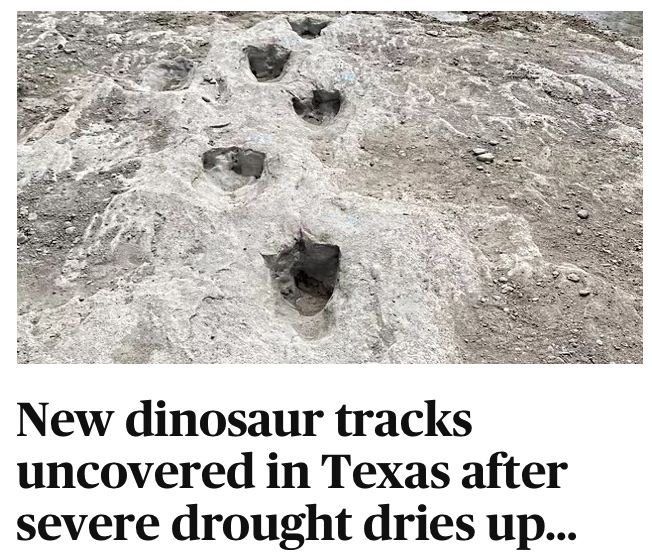
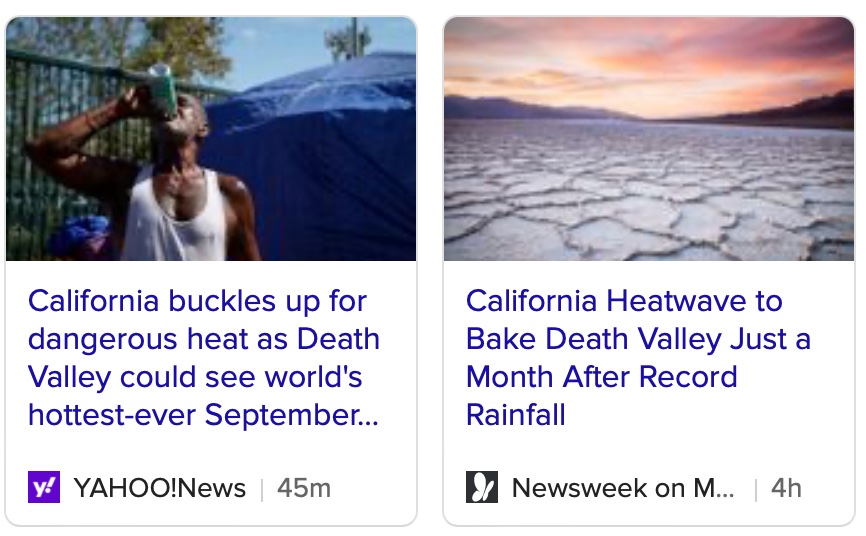
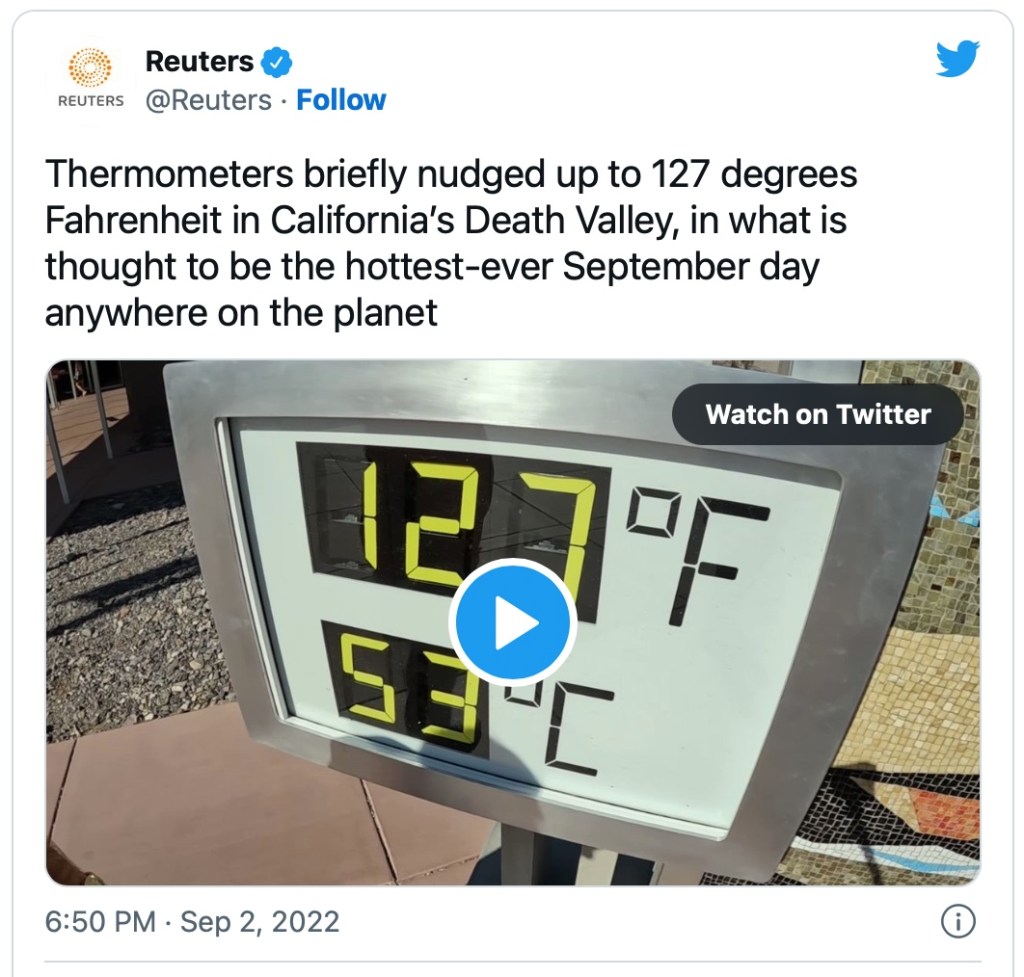
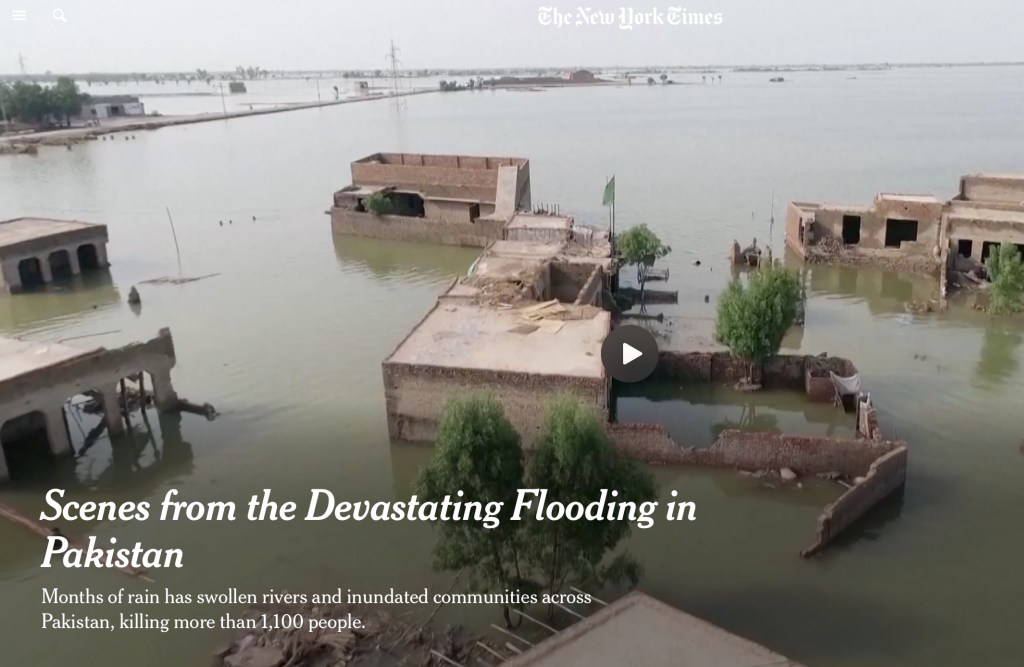
What I don’t remember is so many climate calamities occurring concurrently.  Texas had a 1,000-year flood, which was just 18 months on the heels of a polar vortex that wiped out the electrical power to most of the state.  Thousand-year flooding in Death Valley, which experiences the hottest temperatures on Earth.  Deadly floods in the southeast – Kentucky last month and Mississippi this month.  Extreme heat, droughts, and floods in areas around the globe.

It’s hard to know what to do.  I’ve always heard, “if you can’t stand the heat, get out of the kitchen.”  The problem might be a different one:  we might not have as much reason to heat the kitchen!

“Nearly three quarters of US farmers say this year’s drought is hurting their harvest — with significant crop and income loss, according to a new survey by the American Farm Bureau Federation. . . .  ‘The effects of this drought will be felt for years to come, not just by farmers and ranchers but also by consumers. Many farmers have had to make the devastating decision to sell off livestock they have spent years raising or destroy orchard trees that have grown for decades,’ said Zippy Duvall, AFBF president.”  You might not take him seriously because of his name, but Zippy offers a crucial insight: we might be shaking our collective heads in wonder over heat and drought conditions now, but the impact will be long-term as we go to the store for groceries.

We are resilient, though.  We can invest in infrastructure to capitalize on what nature provides:

  • pumping flood waters to aquifers or reservoirs so it can be used for irrigating crops (for example, when the Missouri River floods, siphon off as much of the flood levels as possible and pump the excess water into the Ogallala Aquifer, which would significantly reduce flood damage along the river while helping replenish the aquifer);
  • removing invasive and non-native plants and grasses to allow natural flora and fauna return to a state of balance in the environment;
  • planting native trees and grasses along interstate easements and medians (think of the money saved and pollutants reduced by not mowing, not to mention improved scenery);
  • developing and utilizing pervious materials in sidewalks and driveways to allow more rainwater to percolate into the ground, thus reducing the need for increasing capacity in existing groundwater drainage systems;
  • adding detention basins to slow overground water runoff and prevent flash flooding during heavy rains;
  • installing cisterns to collect water from roof gutters (this water could be utilized as non-potable water for flushing toilets, saving significant treated water; or it could be a source of water for sprinkling systems);
  • accelerating new initiatives to remove non-native grass from cities in the desert southwest;
  • developing pocket parks and community gardens in more densely populated areas of cities (not only with this have a cooling effect, it will strengthen the fabric of the community – you’ll probably get to know better the neighbor who offers you fresh tomatoes from their garden plot down the street);
  • adding “green roofs” on high-rise office and apartment/condominium buildings; and
  • reestablishing natural environments – for examples:
    • free-range bison will naturally restore prairies to their native conditions;
    • beaver dams assist in flood control, and the captured water has a natural cooling effect on the local environment; and
    • wetlands assist in reducing flooding, replenishing subsurface water, removing pollutants, and providing habitat for native animal species.

This list is by no means comprehensive – nothing more than a few thoughts I’ve had.  The point is, instead of competing with nature, and mistakenly thinking we can somehow control it, we must work with it.

As the old proverb goes, “When is the best time to plant a tree?  Twenty years ago.  When is the second-best time?  Today!”

I’ve Been Thinking . . . About Reunions

The Dog Days of Summer – pretty much the way I feel, too!

Road trip with friends:

A couple of weeks ago, my old high school friend, Dan, asked if Nancy and I would like to join him and his wife, Brenda, and our friends Steve and Cindy, on an overnight trip to Hutchinson, Kansas.  Dan, Steve, Cindy, and I were friends in high school.  I hadn’t seen Dan in at least 20 years when we reconnected at Steve’s and Cindy’s house for a 4th of July party several years ago.  In a small world example, I had never met Brenda, nor he Nancy, yet Brenda and Nancy immediately recognized each other from working together as nurses as they both were beginning their respective careers.

We drove to Hutchinson in Dan’s and Brenda’s motorhome.  They stayed in it, while the other four of us stayed in a motel.  After checking in, we walked about a block to Texas T-Bone Steakhouse for dinner.  Dinner certainly added to the good time we were having, with its good food and fun bartender (we ate at the bar).

We left dinner for the Red Shed, the venue of the concert.  It was truly out in the country (though you don’t necessarily need to drive far to qualify as being “out in the country”).  Dan maneuvered his motorhome through the trees hugging the long, winding driveway.  Upon arriving at the “parking lot” – a mix of grass and gravel – we laughed at the ridiculousness of this large motorhome out in the middle of nowhere; we wondered if people thought we were the band!

Dan and Brenda had seen the band in Nashville.  I’m not a fan of country music, though I enjoy some of the crossover hits.  I was concerned about the band’s music, particularly when I heard the opening lyrics of one of the songs they perform: “It takes a whole lotta liquor to like her, which is why I drink all the time”; indeed, the song title was “Liquor to Like Her.”  I reasoned that I really was there for the company, if not the music.

If you have the opportunity, go see this band:  David Graham and the Eskimo Brothers.  They were so much fun, and David Graham is great on the guitar – in my opinion, between his vocals and guitar work, he carried the show.  Their playlist included a blend of original compositions and covers of songs by other artists.  The mix leaned heavily on country, but included a blues song, Elvis, Glen Campbell, Johnny Cash, and one or two Roger Miller hits (I even remembered a lot of the lyrics to “Dang Me” as many of us joined in).

The six of us had a great time.  Good company.  Good food.  Great band.  Fun, albeit quirky, venue (they sold nothing but reasonably priced tickets; it was BYOB, and there was a food truck in case you didn’t bring food).  Great weather, as we had an evening in the 70s to break a heatwave.

During the drive down and back, one topic about which the four of us high school friends seemed to share was our ambivalence toward our upcoming class reunion.  None of us was committed to going; in fact, leaning toward not going.  We would venture that if so-and-so or who-and-who or him-and-her came to town, we would go.  Steve, who is pretty active on Facebook observed that he maintains some level of contact with just about anyone he might want to see.  But this is a milestone – our 50th – and that was the persistent tug that finally pushed me to commit.

The email sent by the reunion planning committee included a list of deceased classmates.  (I was pleased that I was able to have one name scratched off the list, as I knew she was alive and well!)  I had mostly lost touch with the new classmates whose names made the list, but it nonetheless evoked memories of times we spent together in school. The list added a renewed realization that we’re aging, and the list will most likely grow at an increasing rate.

When our son was in college, he shared with me his concern about maintaining his long-time friendships from growing up through high school.  I explained that as people “launch” into the world, his and his friends’ lives would change – careers, families, relocation, and so on.  And each individual’s circle of friends would adjust to their new circumstances.  They would carry their former bonds, and in some cases, they might continue to be actively engaged in their friendship, or their lives’ paths might bring them back together.

I used Steve as an example of how things circle back around.  Our friendship dates back to elementary school.  We’ve shared a lot of experiences together, most of which we can share publicly!   Our interests began to diverge as we went to different colleges.  He and Cindy married young and had a couple of kids.  I was happy for them, but as a young, single male, I wasn’t ready to marry and have kids; and their priorities changed.  We had our own career paths and each moved away from the area for periods of time in the process of developing our respective careers.  Our paths merged again as I was calling the roll on the first day of a class I was teaching at the university; when I looked up, curious about the name, I thought, “My God, it’s Steve!”  Of course, it wasn’t – it was his son whose looks made it apparent who his daddy was! That was the hook that pulled us back together on a frequent basis, and my life has been richer for it.

Despite having similarly gone on our own paths, I stayed in touch with Bill, another boyhood friend.  I cannot explain why our friendship winnowed down to Christmas cards and a couple of emails or phone calls each year – and I think I carry more of the burden for that decline – but we have fortunately recharged the frequency of our contact.  That’s what a Chiefs Super Bowl victory will do!

Finally, there’s Jeff.  Another boyhood friend, we were roommates one year in college.  We partied.  (We kept a tab of how much we spent on alcohol!  I don’t recall how much, but I wouldn’t admit it if I did!) We had a running game of two-handed Spades to 10,000.  As good of friends as we were, we began to drift apart after he dropped out of college to work full-time while I continued.  On the rare occasion we see each other now, our updates are cursory, and he dwells on how incredulous it is that I have changed so much – namely, quit drinking and smoking.

I use those three friends to illustrate for my son some possible directions his boyhood friendships might go.  Steve and I were close friends whose paths diverged but circled back around to being good friends again; our conversations occasionally revisit the past, but primarily exist in the “now.”  Bill and I also diverged but have resurrected our friendship based on current events with historical roots, though we don’t revisit those roots much.  Likewise, Jeff and I diverged, but I perceive him as stuck in a period of our common past from which I’ve moved on; we’re still friends, but not in the sense that either of us has reached out.

Of course, there are many other friends who have gone down paths different from mine.  Many of them have virtually disappeared from my life.  Perhaps the reunion will provide an opportunity to reconnect with someone and forge a new path we can travel together.  As the prophet Yogi Berra said, “If you come to a fork in the road, take it.”

As a postscript, I will tell you that my wife has become something of a David Graham and the Eskimo Brothers groupie. Here’s an example justifying it, based on his guitar work.  Watch him play and get your toes tapping!

I’ve Been Thinking . . . About “The Other Hand”

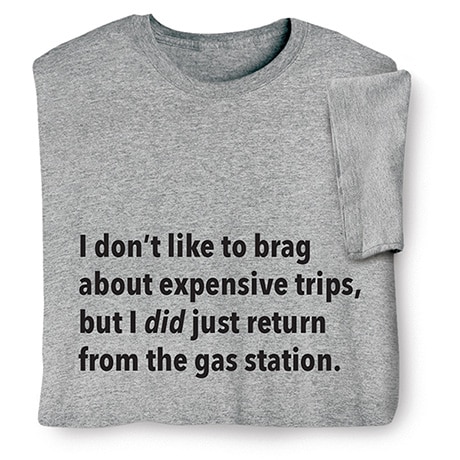
I think the gas stations are using tote boards for their prices.  Unlike Jerry Lewis, they aren’t raising money to find a cure for Muscular Dystrophy.

I have hypothesized for years that gas companies keep the price at their “normal” level going into a long holiday weekend (Memorial Day, for instance); then jack up the price after you’ve left on a holiday trip, as if to say Go ahead, add a vacation onto the long weekend, we’ll get you when you come home!  And we’ll get you the rest of the summer, as well!  Vacay away!

Nancy and I were going to Costco, with a stop for lunch on the way.  She needed gas in her car; we were going to fill it at Costco because it’s generally several cents less per gallon.  As we drove past QuikTrip, I noted that their price had jumped to $4.199 over the past day or two.  In the hour or so of our excursion, I was startled to see that QuikTrip had made another jump to $4.399 per gallon!!

An interesting observation was expressed in “The Climate Forward”:  

The war in Ukraine has been good for oil companies.

Look no further than Shell’s first quarter earnings. It made record profits in the first three months of the year: $9.1 billion, nearly three times what it made in the first quarter of 2021.

Shell, the world’s largest private oil trader, took advantage of high global energy prices and market volatility, my colleague Stanley Reed explained. The company’s chief executive, Ben van Beurden, made a note of the Russian invasion of Ukraine. He said it had shown “that secure, reliable and affordable energy simply cannot be taken for granted.”

The rest of us are paying for those profits in at least two ways. Gas prices are way up, which means the price of everything else that relies on gas to get from point A to point B, is way up — including food. I’m feeling the pinch at the grocery store.

Inflation has changed our shopping and buying behavior, such as planning a trip around our need for gas.  I worked at a gas station when I was in high school.  It was what was called “a full-service station”:  we pumped the gas in your car; we washed the windows; we checked the oil; we put air in the tires; and if there was a pretty girl in the car, we washed the windows again!  The price of gas for all this service? – it typically hovered between $0.199 and $0.259 per gallon. A year or two later, we had gas shortages, and the price skyrocketed, with increases in some cases of 50% . . . and that was if you could stay in line long enough to get gas before the station ran out!

According to the US Inflation Calculator, if we converted that $0.199 into 2022 dollars, the price of a gallon of gas would be approximately $1.40.  My hourly pay at the time was $1.50; today, that would equate to $10.49.  During my time pumping gas, Shell was #15 on the Fortune 500 list, with profits of $244.5 million for the year; as noted above, their first quarter profits – the first three months of 2022 – were $9.1 billion.  In case you wondered, the inflation adjusted profit for Shell would be $1.585 billion for the year, not $9.1 billion for the quarter.

We haven’t seen general market economy inflation like this since the early 80s when Reagan was president.  Numerous studies have documented the fact that the average “middle-class” worker’s pay has not kept pace with inflation since then.  Look around: how many of you and your friends have both spouses working, some more than one job, to maintain a middle-class lifestyle?  It has become increasingly difficult to keep up, unless. . ..

The Economic Policy Institute published an analysis in 2019 of executive compensation; the title tells the story: “CEO compensation has grown 940% since 1978 – Typical worker compensation has risen only 12% during that time.”  The ratio of executive compensation to worker pay provides interesting insight into the trend as it tends to neutralize the impact of inflation.  The EPI analysis noted: “CEO-to-worker compensation ratio was 20-to-1 in 1965. It peaked at 368-to-1 in 2000. In 2018 the ratio was 278-to-1, slightly down from 281-to-1 in 2017—but still far higher than at any point in the 1960s, 1970s, 1980s, or 1990s.” About the time I quit pumping gas, the ratio was 22.2-to-1.

Have you bought beef lately?  Oh my God!  I have something of a personal connection to meat.  When I was consulting full-time about 40 years ago, we had a project for a fairly large meat processor.  They were somewhat unique in that they processed sheep in addition to cows and pigs.  (I learned that a Judas Sheep was the one that led the rest of the sheep up the chute to slaughter; as a reward, he was sent back to the pen to live another day and lead the next group that came in.  What a life! I can imagine a conversation while the sheep are grazing in some bucolic meadow in the afterlife: “What did you do for a living?”  “I was a leader – a Judas Sheep, who led many of you to this promised land.”)

The first thing we did on that project was tour the plant.  We began in the pens, walked up the chute and followed the last cow into the kill room, and continued through the final processing point.  As we were stopped at one station, I noticed a large cauldron of indistinguishable stuff.  Looking at it I asked what they did with the waste.  Their wide-eyed answer was that that stuff was going to be hot dogs.  While it might make you reconsider what you’re putting on your grill this weekend, I will say the hot dogs they served in the plant cafeteria were fresh and tasty!

Thinking of hot dogs, we need to serve up more beer and fewer hot dogs at our summer cookouts:  the price of hot dogs has risen 10% over a year ago, but beer is up only 4%.  Or you might want to begin boiling water and drawing butter:  one grocery chain CEO reported seeing the price of lobsters starting to come down.

Beef prices present an interesting illustration of the market dynamics that are fueling some of the inflation.  An analysis of the beef industry illustrated a lack of competitive forces:

The beef industry is one of the most concentrated food sectors: Just four companies are in charge of about 85 percent of the processing and packaging of beef.

But it hasn’t always been this way. About 100 years ago, the industry was controlled by five companies, and the Justice Department stepped in to break up their power — spurring decades of competition. By 1980, the top four businesses controlled only 36 percent of cattle slaughters in the U.S. Yet a flurry of deals throughout the 1980s shifted the industry’s structure to where it is today.

During my early teens, my family would travel to Muldrow, Oklahoma.  Big Jim would have his annual antique sale in the large barn on his farm.  Before the sale, Big Jim would let me practice driving in the fields near the house and barn.  Even more memorable, though, was the stop we made on the way to Muldrow.

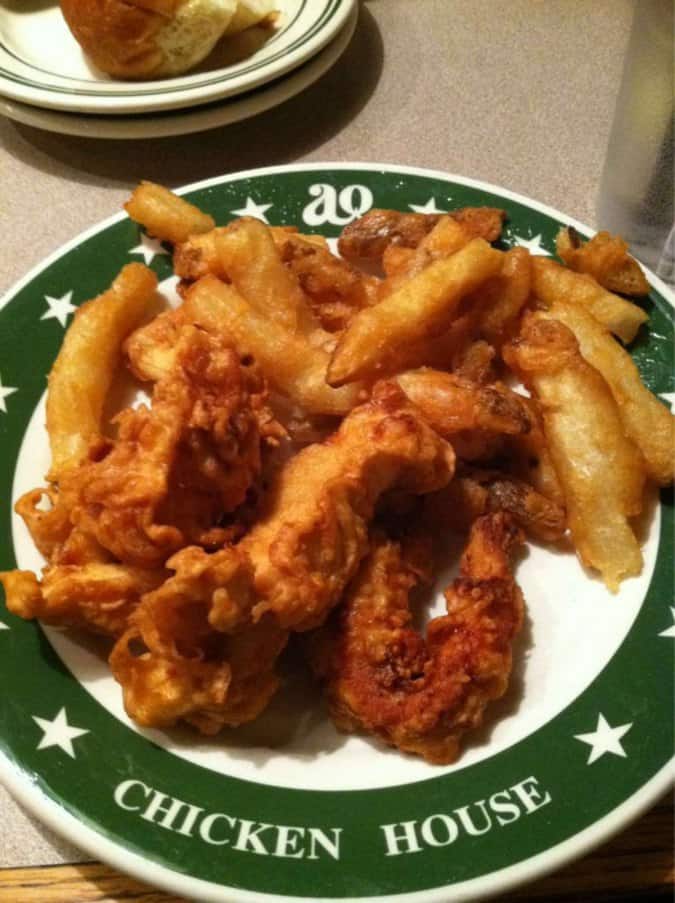
My mom had somehow connected with a woman who owned a motel in Springdale, Arkansas.  Mom would sell some special antique glassware that the woman collected while we were there.  The highlight, though, was dinner at the AQ Chicken House.  They used their own special batter on not only the chicken but also the fries.  The eatin’ just didn’t get much better than battered French fries and fried chicken.

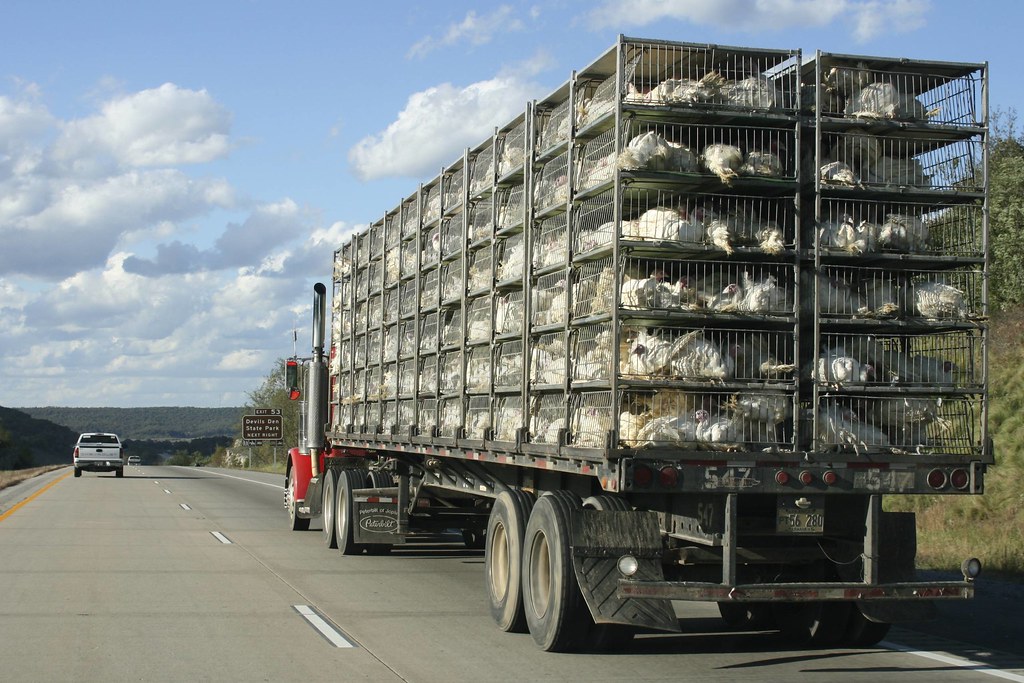
It also helped that the chicken, like those hot dogs at the plant, was fresh.  Everyone in the area who had enough space for a chicken coop was raising chickens.  If you got behind one of the trucks taking chickens to the processing plant, chicken feathers would be flying at you like you were in a blizzard!

Tyson Foods was the reason for all those chickens.  Tyson has been headquartered in Springdale since the company’s founding in 1935.  Tyson is big business, 79th on the Fortune 500 in 2020.  It has diversified and grown through acquisition.  According to Wikipedia, “Tyson produces about one-fifth of the beef, chicken, and pork sold in the United States.[10] . . . The company makes a wide variety of animal-based, prepared foods and plant-based products at its 123 food processing plants.  . . . Its plants slaughter approximately 155,000 cattle, 461,000 pigs, and 45,000,000 chickens every week.[11]

Tyson is best known for its chicken, and at a slaughter rate of 45 million chickens per week, there’s good reason.  But 155,000 cattle per week places it in the top four of beef producers who, as noted previously, control about 85% of the market.

We readily turn to economists to help explain inflation.  Let’s see, did they tell us that the Fed’s recent rate increase would cause inflation or curb it?  According to “Buttonwood’s Notebook” in The Economist, “Harry Truman famously asked to be sent a one-armed economist, having tired of exponents of the dismal science proclaiming ‘On the one hand, this’ and ‘On the other hand, that.’ Economists are more inclined to stock [sic] their neck out these days (being a celebrity pundit is a good living) but I am not sure that has reduced the confusion.”

Someone finally wrote a book about it!

I thought a government economist might help explain the numbers behind inflation. 

There are plenty of explanations, and plenty of fingers being pointed “on the other hands,” to explain why the costs of all the stuff we want are rising.  Of course, the granddaddy is Covid: worker shortages; illness; supply chain issues; and so on.  And then the spinoffs like the “great resignation” – once many of the employees weren’t working, they realized how badly work sucked and they wouldn’t return when things began picking back up.

The hospitality industry has been hit particularly hard.  The Corner Café is an example of the problem now being faced by the worker shortage.  They have always been one of those favorites where you waited for breakfast, lunch, and dinner. The wait-times have grown because they keep an entire section of their dining room closed due to lack of help.

When we go to The Corner Café for breakfast, unless I order their excellent biscuits and gravy, I ask for a toasted English muffin instead of their standard side of toast. A little orange marmalade on a toasted English muffin . . . um, um, um!  Granny uses orange marmalade for a quick explanation of inflation.

Granny must be younger than I.  When he was in high school, my son and a couple of his friends were complaining about their pay at their respective part-time jobs.  I shared with them that my first paycheck-job (as opposed to mowing lawns, etc.) paid me 25-cents per hour, and I worked a half-hour a day – that’s 12-½ cents per day.  Eyes wide and mouths open, they stopped complaining.

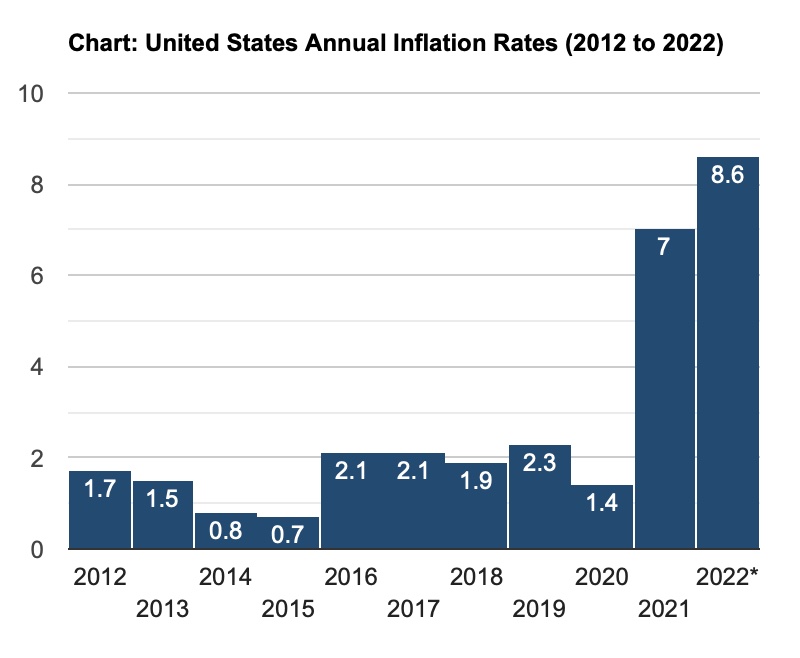
Inflation exists over time, and by design.  The U.S. Federal Reserve Bank strives to maintain a long-term average of 2% inflation because it “is most consistent with the Federal Reserve’s mandate for maximum employment and price stability.”  But the 2% goal is a long-run average.  The rate at any given time will fluctuate, as this recent headline describes our current situation:  U.S. Inflation Highest Since 1981 as CPI Hits 8.5% in March.

As you can see from the graph, the inflation rate was near that 2% mark for nine years before inflation began to kick in after the worst part of the pandemic, supply chain interruptions, rising wages to entice workers back into lower-wage positions, and so on.

Despite the graphs, and the math and science of economics, it really is little more than an attempt to quantify human social behavior.  The simplicity of that statement obscures the complexity of an economic model that assumes all of us behave in a rational manner (I don’t know about you, but I have some fine examples of irrational behavior in my past!).

The bottom line is to ask yourself if you are experiencing the quality of life you want.  If you’re not, make changes.  And as any economist with two arms would add, “on the other hand,” if life is good, enjoy the ride.

Enjoy a live performance of “Working Overtime.” Some nice guitar work, but you can skip forward to about 2:45 to miss the overly long introduction – what can I say? – it was a concert.

I’ve Been Thinking . . . About A Better Place

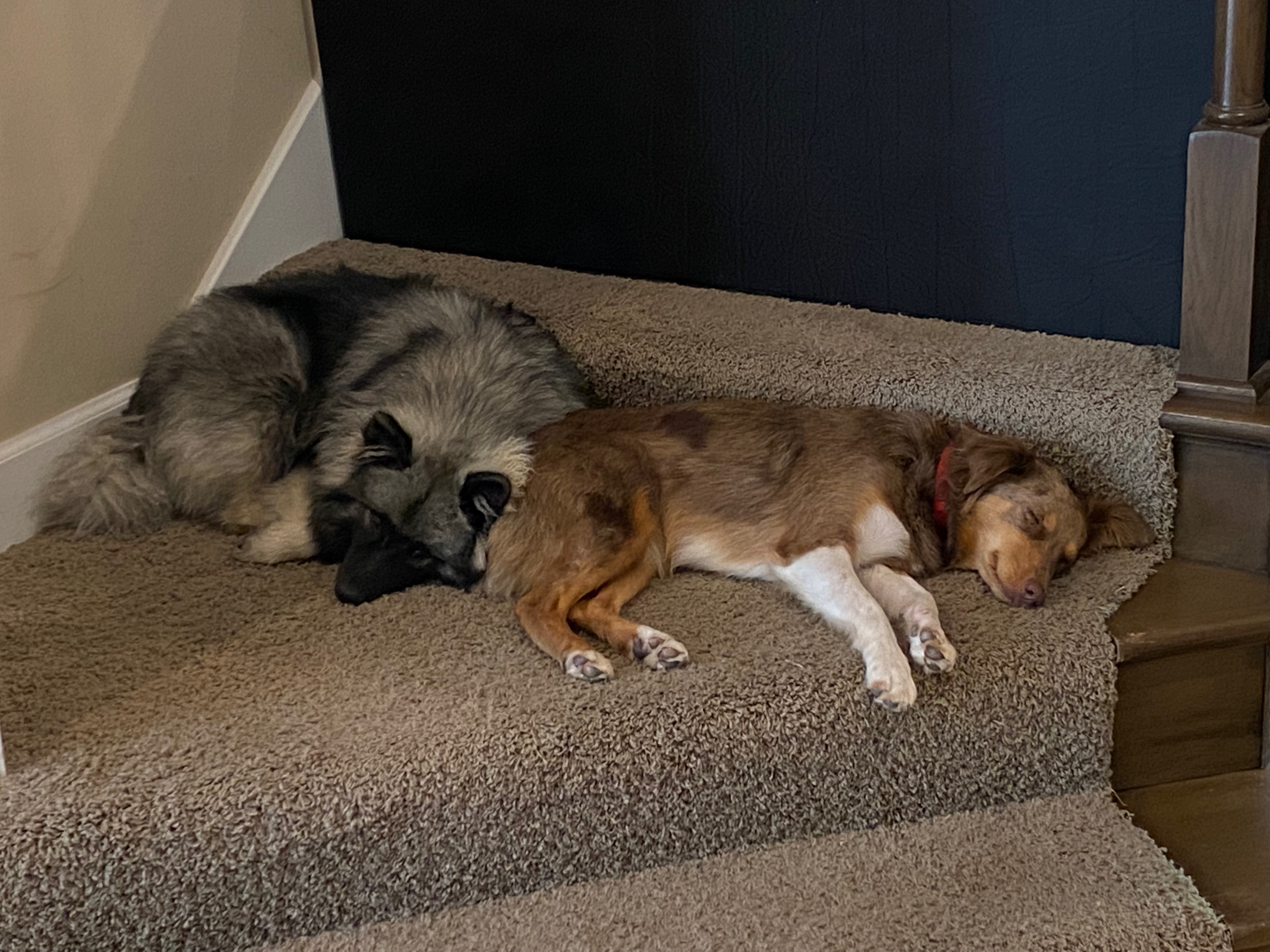
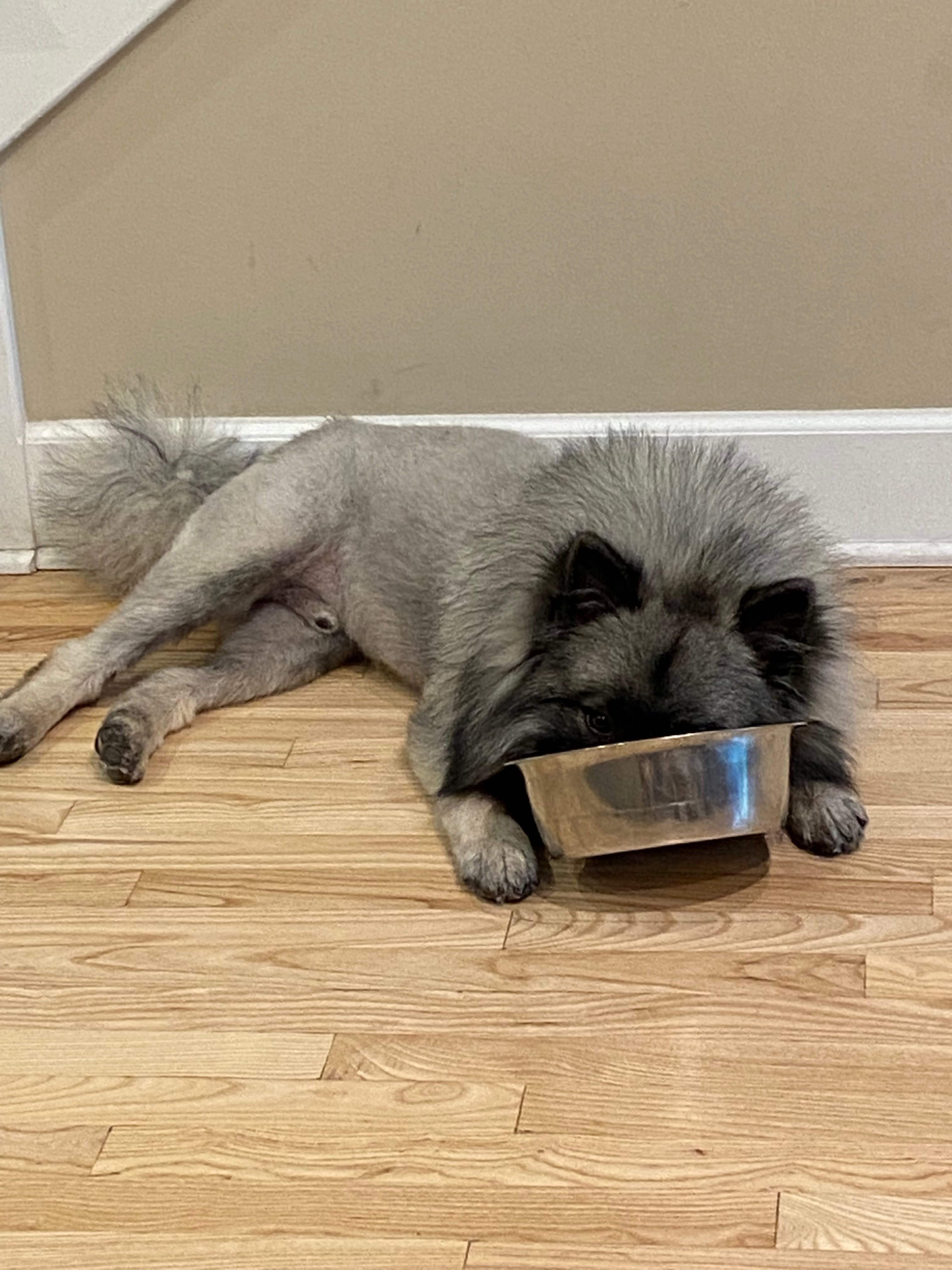
We returned last night from a trip to Breckenridge.  By a combination of departing later in the morning than normal, driving about eight of the eleven hours, and having my “passenger nap” interrupted multiple times by the buffeting of a strong crosswind, I got to bed later than normal; yet the dogs, being creatures of habit, awoke me at their prescribed time.  (Their naps across Kansas were not interrupted by the buffeting of the wind, so they were rested and ready.)

This was our fourth trip to Breck, though our first was a couple of day trips from Golden so we could snowshoe.  (First time snowshoeing and we discovered to our surprise that we loved it.  We love to hike the mountains in the summer; it was just like that in a physical sense, but with a completely different perspective in the snow.)  This was our first trip to Breck with two dogs.We have found over the years that Colorado is a dog-friendly place, and Breck particularly so.  When we stopped to look in a store window, the shopkeeper would invariably invite us to bring in the dogs.  Shops would keep water bowls on the sidewalk (dogs need to hydrate just as we do).  One of our dogs is a puppy who knows no strangers.  Lexi, on the other hand, is a rescue who is more traumatized by her previous situation than we realized.  She frequently barks somewhat aggressively at dogs she meets on the sidewalk, and unpredictably at some humans.

We were quick to apologize as we interspersed admonishments:  We’re sorry.  NO bark!  NO bark!  Sorry about that.  These episodes were almost always met with patience – even some attempts to help calm Lexi – whether a native or visitor to the area.  Never did anyone make a negative comment like “control your dog.”  That is dog-friendly.

Another thing we noticed this trip is that, not only were the people we encountered dog-friendly, but they were openly people-friendly.  More than once I agreed with Nancy’s assessment that the people there seemed happy, frequently smiling their way down the street.  It was pretty common for us to have brief conversations with strangers on the street or at the table next to us in a restaurant.

An extraordinary example of how thoughtful people were occurred when Nancy had been eyeing a particular backpack in a store.  When she took me over to show it, another woman was inspecting it and discussing it with her husband and mother.  We watched for a moment to see if they made a decision, until Nancy decided that if she was still thinking about it later, we could come back to see if it was still there.  As we were walking out of another store, we saw the group coming in and the woman carrying the backpack.  Overhearing my relatively low volume question to Nancy about whether that was the one she wanted, the woman suddenly stopped and asked if she had somehow purchased the backpack “out from under” Nancy.  The implication in my mind clearly was that she would work out an exchange with Nancy.  Nancy graciously declined.

Waitstaff and salesclerks were friendly beyond their managers’ training to treat the customer nicely.  Their friendliness is more remarkable in the context of their living arrangements.  The housing market in Breck is crazy.  Billionaires – some international – are scooping up properties sight-unseen and driving up prices.  Many are buying condos and townhouses they have no intention of staying in, only to use them as short-term rentals on Airbnb, VRBO, and local property management companies.  The result is a lack of affordable rental housing for the waitstaff and salesclerks.  Yet they’re happy to be there and friendly to those of us staying in a place that they might otherwise have rented as an apartment.

The friendliness of the customers and their waitstaff and salesclerks stood in dark contrast to a brief article I noticed online while we were there.  A customer at a MacDonalds drive-through was being extraordinarily demanding about his coffee drink, berating the employee and demanding multiple times that they remake it to his complete satisfaction.  Finally, the manager came to window and told the customer he needed to go find another place that could meet his expectations, and that he was banned from returning.  She explained when he asked why that she would not tolerate his treatment of the employees.

The story reminded of other stories over the past couple of years of bad behavior directed towards clerks and waitstaff.  Examples range from a note on a credit card receipt with a zero on the tip line that posed something to the effect, why should I give you 18% when I only give 10% to Jesus; an incident where three women physically assaulted a restaurant hostess because she wouldn’t seat them inside if they refused to wear masks, which was a city health requirement at the time; and most dramatically, a man who got into a heated argument with a grocery clerk over a mask requirement, then returned with a gun and killed her.Also while in Breck, I began reading Pity the Reader, which is a book of Kurt Vonnegut’s teachings about writing that was organized with commentary by Suzanne McConnell.  When Vonnegut was asked in an interview what was his favorite “work of art” by his children at that point in time, he indicated that it was a letter his youngest daughter wrote to an “irascible customer” while she was working as a waitress in the summer of 1978:

Dear Mr. X,

As a newly trained waitress I feel that I must respond to the letter of complaint which you recently wrote to the ABC Inn.  Your letter has caused more suffering to an innocent young woman this summer than the inconvenience you experienced in not receiving your soup on time and having your bread taken away prematurely and so on.

I believe that you did in fact receive poor service from this new waitress.  I recall her as being very flustered and upset that evening, but she hoped her errors, clumsy as they were, would be understood sympathetically as inexperience.  I myself have made mistakes in serving.  Fortunately, the customers were humorous and compassionate.  I have learned so much from these mistakes, and through the support and understanding of other waitresses and customers in the span of only one week, that I feel confident now about what I am doing, and seldom make mistakes.

There is no doubt in my mind that Katharine is on her way to becoming a competent waitress.  You must understand that learning how to waitress is very much the same as learning how to juggle.  It is difficult to find the correct balance and timing.  Once these are found, though, waitressing becomes a solid and unshakable skill.

There must be room for error even in such a finely tuned establishment as the ABC Inn.  There must be allowance for waitresses being human.  Maybe you did not realize that in naming this young woman you made it necessary for the management to fire her.  Katharine is now without a summer job on Cape Cod, and school is ahead.

Can you imagine how difficult it is to find jobs here now?  Do you know how hard it is for many young students to make ends meet these days?  I feel it is my duty as a human being to ask you to think twice about what is of importance in life.  I hope that in all fairness you will think about what I have said, and that in the future you will be more thoughtful and humane in your actions.

Sincerely, Nanette Vonnegut

How many times have you waited for a bottle of ketchup as the heat of your French fries dissipated into the air over your plate?  Did you angrily demand new fries?  Did you cause the server to be fired?  Did you pull out a gun and shoot them?  Of course not! (I hope)  Or did you gratefully thank the server after they handed you the ketchup bottle on their way to delivering all the food to the next table?

I remember being on a plane when I was consulting.  I had just closed my briefcase and had it setting on my lap as I was about to put it under the seat in front of me when the flight attendant appeared with a fresh pot of coffee.  As she was reaching across me to hand the cup to the passenger in the window seat, the pot fell over, delivering the steaming hot coffee into my lap.  I quickly tilted my briefcase so that the coffee ran off like a waterfall.  After seeing that I wasn’t upset, she joked that it was a good thing I had that briefcase on my lap or I would have been singing soprano.  Why wasn’t I mad?  It was an accident.  She was sorry.  I was lucky enough to have my briefcase to divert the coffee, I wasn’t going to sing soprano, which I thought was funny, and she shared my humor at the situation.  No harm, no foul, no negative consequences.

I wish I could report that I’ve always reacted in such a manner – it certainly would make me feel like a better person.  But there have been times when I reacted more negatively than a situation warranted.  Times when I was not friendly nor patient.  Times when I couldn’t find humor in the situation.  I regret not being a better person at those times, or as Nanette Vonnegut described it – more thoughtful and humane in [my] actions.

Life is full of wonderous and humorous things.  Perhaps if we can stop ruminating on the negative, our perceived grievances, if we can collectively engage our minds in those wondrous and humorous things, we can improve our lives and those of everyone around us.  We can make our world a better place.

I’ve Been Thinking . . . About A Place Called “Home”

What’s your favorite item on the menu?  (I’ve learned not to ask what’s best on the menu because you get some version of, “they’re all good.”  And if you ask for the best seller, you get a variety of the restaurant’s “specialty,” or “known for,” or “they’re all good,” but with a qualifier of “I probably sell more of.”  Asking a server for their personal favorite elicits a personal response.)

I’ve tried everything on the menu, and I like the lasagna best.  It is a little more Mediterranean than other lasagnas, which I like.

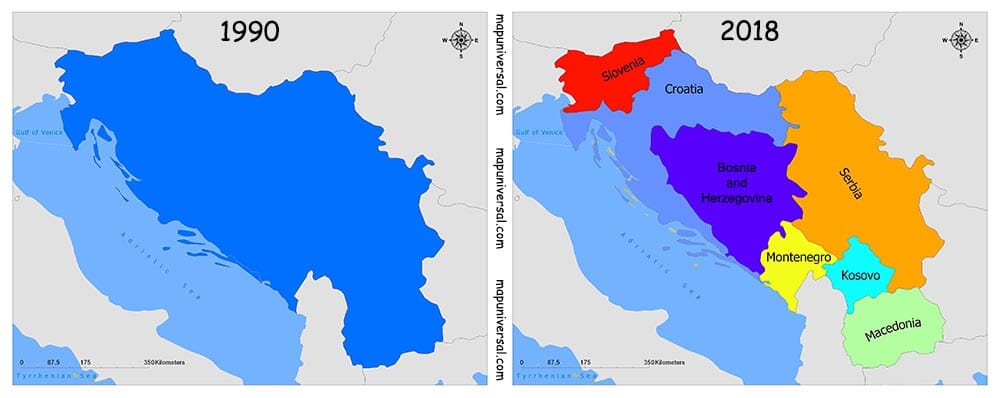
I asked how it compared to another entrée I was considering.  It’s very good, and he proceeded to compare the two entrées including why he still preferred the lasagna.Gabe’s accent was eastern European, and he was quite personable, so I asked.  He’s an Albanian refugee.  His family immigrated when he was a child during the wars in the 1990s as part of the breakup of Yugoslavia.  I learned, too, that the owner was an Albanian refugee and a friend of the server’s father.

Our server seemed tentative in telling us he was a refugee of the civil war.  Perhaps he was concerned which side we would come down on.  Seeing that we were impartial, interested, and empathetic to him on a personal level, he added a little more explanation before leaving for another table.

Reflecting later on the young man’s refugee status, I arrived at the disappointing realization of just how little I knew about the conflict.  Of course, I recall the conflict, but honestly, I didn’t pay attention to the what or why of it.  If anything, I was mildly frustrated by the changing names of post-Soviet countries.  (So much for that old globe I have!)

Yugoslavia Before and After the Breakup

I wondered about our son’s Bosnian friend in high school.  Was he a refugee whose family fled the war?  In a demonstration of my inability to decipher languages, (if it wasn’t English or French, it must be Spanish!), I was picking up my son after tennis practice one sunny afternoon.  As my son was getting into the car, a mother got out of the car next to me and called out in a foreign language to let her son know she was there.  I asked my son, That’s not Spanish, is it?  He looked at me and replied, Dad, that’s Bosnian.  His implication was clear:  You dumbass – don’t you know Bosnian when you hear it?!

Gabe’s status as an Albanian refugee resonated with me with a note of familiarity.  Part of our metropolitan area has a high concentration of Croatians.  We have friends who grew up in the area, one of Croatian descent and the other Slovakian.

One time in New Orleans we met the woman who owns a great restaurant – if you have the opportunity, be sure to eat at Drago’s. (Even if you don’t like oysters, try their charbroiled oysters.  Oh my God!  Our son was a teen when he ate there, and he had become a rather picky eater, so of course oysters would be worse than poison.  As we raved about them, he finally asked to try one; then he asked if he could get his own order.)  Other than having a mutual friend who took us to eat at Drago’s, we learned that the owner was Croatian and knew people in our metro’s Croatian area, whom she visited a couple of times a year.

Our server, Gabe, our friends who grew up in the Croatian area in town, my son’s Bosnian high school friend . . . my curiosity prompted me to do some cursory research.  In my casual reading, I consistently found references to the Ottoman Empire – an empire of which I knew very little.  Being more than a little curious now, I turned to The Columbia History of the World, a “brief” tome of nearly 1,200 pages . . . and it doesn’t even cover the past 50 years!

The Ottoman Empire grew in a manner similar to the Roman Empire, by conquering neighboring lands in an outward pattern.  As The Columbia History begins, “In the second half of the thirteenth century the shattered lands of Anatolia seemed a singularly unsuitable locale for the rise of a new world empire.” (p.604).  As they began their expansion, “the Ottomans turned first to the West, where they could exploit the enthusiasm they aroused for the holy war and the quarrels of Byzantine and Balkan rulers.” (pp. 604-7)

The next three centuries saw numerous Ottoman victories: “defeat of the Serbs” (1371); “first battle of Kossovo” (1389); “defeat of the Christian ‘Crusade’” (1444); “second battle of Kossovo” (1448); “capture of Constantinople” (1453); “capture of Cairo” (1517); “defeat of the Hungarians” (1526); to name a few.  Near the end of the 17th century, however, the Ottoman’s governing structure began to collapse under its own weight, and their fortunes turned: “capture of Azov by Peter the Great” (1696); “Russian annexation of the Crimea” (1783); “Russian annexation of Georgia” (1801); “Serbian revolt” (1804); and “Crimean War” (1853-56). (Full timeline, pp. 605-6)

I included The Crusades because they are commonly referred to in histories of Western Civilization.  Multiple Crusades attempted to capture the Holy Land from Muslim rule.  Interestingly, the attempt to allow religious law to coexist with administrative rule of the government contributed to the weakening of the Ottoman Empire: “A radical transformation of the government was theoretically possible through the assimilation of the new regulations to governmental kunans or decrees authorized by Muslim tradition, but as long as the sacred Shariat remained the law of the land, two mutually hostile systems were forced into uneasy coexistence.” (p.617)

I selected the other conquests and losses because of their magnitude, and mostly because of their association with the Baltic and Russian states.  Among them: Serbia, Kosovo, Hungary, Crimea, Georgia, and Azov (a small sea flanked on one side by Russia and the other side by Ukraine, with a narrow strait between Crimea and Turkey that moved into the Black Sea; Mariupol in Ukraine is a major port located on the Azov Sea).

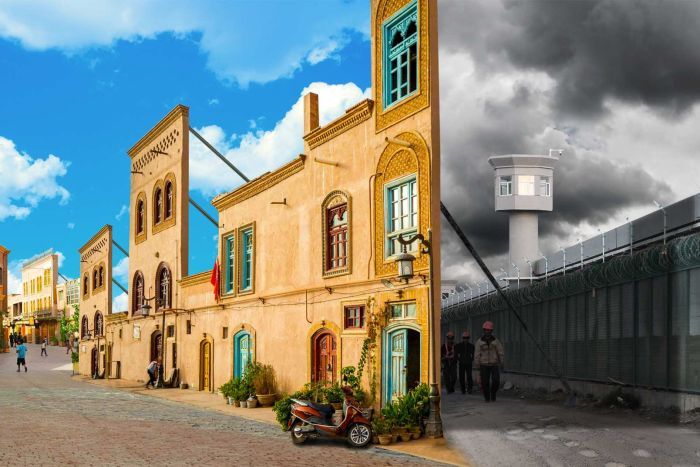
Prison hidden behind village facade

(An interesting side note is that the term Potemkin Villages originated as a consequence of the Crimean War.  Following the annexation of Crimea into what Russia referred to as “New Russia,” Grigory Potemkin was appointed Governor of the area.  When the Russian Empress Catherine II decided to visit to show interest to the people in the area, Potemkin built facades of buildings along the route to create villages for the Empress to visit; the “villages’ people” worked for Potemkin.  Once Catherine II’s visit at one village concluded, and she and her court would continue to the next village, the facades would be moved to the next stop on her journey.  Historians have mostly determined that the story is at best partially true, but the term Potemkin, referring to a false front, has persisted to this day, in politics and on Hollywood sets.)

Currently, we are three months into the Russian invasion of Ukraine.  Speculations for the reason behind the invasion abound, from Putin’s concern over further encroachment by the NATO alliance to Putin’s mental state.  One theory that seemed particularly interesting was Putin’s desire to return Russia to some historical level of greatness, signified by moving Ukraine back into the fold.  One of his early premises dealt with liberating Russians from the oppressive Ukraine; ironically, one of Potemkin’s objectives was to attract Russians to Ukraine to force assimilation of Ukrainians into the Russian state.

News videos show refugees fleeing, often with little more than the clothes on their backs, carrying their children and even a few dogs.  All of this as more apartment buildings, and even a maternity hospital, are being targeted and bombed by the Russians.  Regardless of Putin’s reasons, the war is displacing millions of refugees.  European Union heads of state are attempting to find ways to accommodate the massive, unexpected influx of Ukrainians.  The United States initially committed to allow 100,000 Ukrainian refugees with families in the US to immigrate to the country.

I recently had the good fortune to meet an uplifting man who survived the Holocaust.  Our server, Gabe, was a refugee from Albania.  I wonder how many more people with whom I have crossed paths also are refugees.  I wonder if any of them would say they aren’t better off.  I wonder when I’ll get to know the next Gabe.

The lasagna, by the way, was quite good.

I’ve Been Thinking . . . About Tornadoes

A typical spring evening, warm enough that we had the door to the deck open.  The wind had been blowing generally from the east – not a good sign as it tends to help bring about storms.  The forecast included a chance of rain.

We were about six minutes into episode eight.  Victim found, our intrepid detectives were on the case.  Their comic banter made them seem mismatched, but they have managed to solve seven cases thus far.

Settled into our show, the sirens began wailing.  Not an air raid.  A tornado warning.  The dogs didn’t understand the urgency as we snatched them off the floor, startled by our sudden movements, and scrambled to the basement.  We were streaming our show and didn’t know we had been under a tornado watch.

Laser Video Disk Player

Growing up – before streaming; before DVD and Blu-Ray; before VHS and Betamax; before laser video discs – if you wanted to watch a program on TV, you had to park your butt in front of the TV at a scheduled day and time.  A perennial spring movie was The Wizard of Oz.

Who can forget Dorothy escaping to save Toto from execution at the insistence of the mean old Miss Gulch?  Professor Marvel encouraging Dorothy to return home to a worried Auntie Em as the sky grew black and the wind blew more fiercely?  And the tornado – the one that lifted the farmhouse and carried it through time and space to drop it on the Wicked Witch of the East in Munchkinland, in the Land of Oz. 

Much as Memorial Day is the unofficial launch of summer, The Wizard of Oz marked “tornado season” in the Midwest.

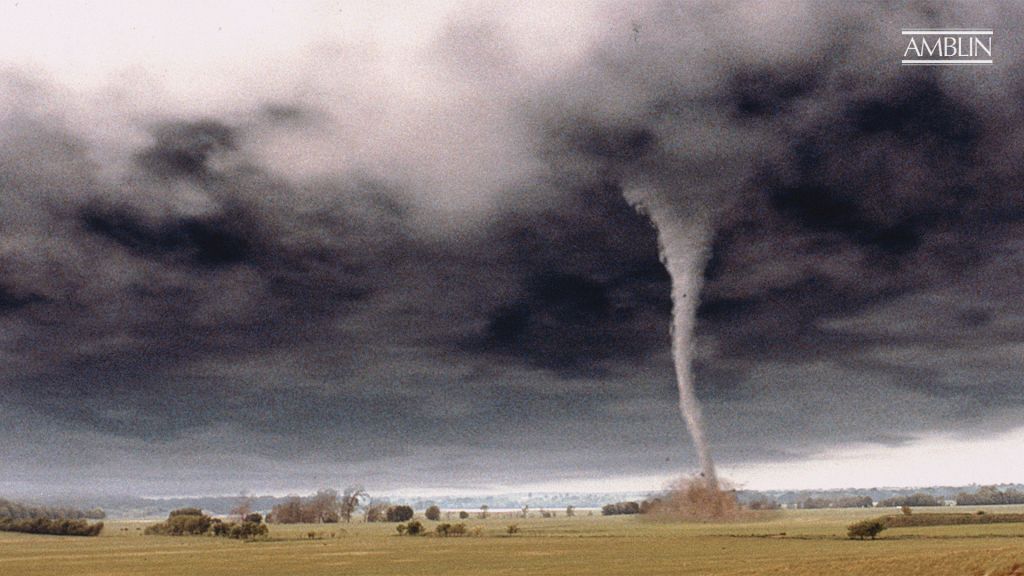
I saw my first tornado at five years old.  We were in our new house, in a new subdivision of the rapidly growing suburbs. We sheltered in our basement.  At one point, as we waited, I went out with Dad to survey the western sky.  We could see the tornado’s distinctive funnel in the distance, coming our way.  We returned to the basement.

The tornado missed us, but we felt the strong winds and torrential rain in its wake.  We surveyed the damage the next day.  Dad checked the house; I checked the mound of dirt where I had my little toy cars parked.  The house fared better than my car park, which had a sheet of plywood dislodged and displaced and missing cars!  The loss was devastating when scaled to the perspective of a five-year-old.

Dorothy couldn’t comprehend her situation.  At one moment she was in the farmhouse in Kansas; the next she was stepping out among the bright colors and a community of Munchkins who began celebrating the death of the Wicked Witch of the East, whose feet and lower legs were sticking out from under Dorothy’s farmhouse.

The Good Witch Glinda, encapsulated in a large bubble, floats in to explain.  Also arriving on the scene, in a puff of smoke, is the Wicked Witch of the West.  She is there to confirm her sister’s demise and to retrieve the ruby red slippers from her sister’s feet.  Glinda waves her wand and the slippers magically appear on Dorothy’s feet; and when the Wicked Witch attempts to take them, she receives a shock.

That single scene contains numerous metaphors.  Virtue triumphs over evil when Dorothy’s farmhouse kills the Wicked Witch of the East; yet, more evil exists in the world as the Wicked Witch of the West appears, set upon obtaining the ruby slippers that will provide unlimited capacity for more evil deeds.  Dorothy is innocence personified.  The Good Witch Glinda represents the good, nurturing presence in the world, providing guidance.  Some have suggested that Glinda represents Dorothy’s absent mother, and the bubble represents the womb.

Roger Ebert chose it as one of his Great Films, writing that “The Wizard of Oz has a wonderful surface of comedy and music, special effects and excitement, but we still watch it six decades later because its underlying story penetrates straight to the deepest insecurities of childhood, stirs them and then reassures them.”

Some historians and literary scholars have studied Baum’s book, on which the movie is based, and identified it as containing elements of political allegory.  A Populist movement was growing at the time Baum was writing the book, and numerous characters and events have been interpreted as supporting the allegory:

  • The tornado, which serves as a major plot device, is a metaphor for the turbulence of the Populist movement.  The movement responded to the growing sense of injustice at the hands of the ruling elite.
  • The Scarecrow represented the farmers of the Midwest whose farms and homes were being repossessed by bankers because they could not make their loan payments.  They were clamoring for a return to the gold and silver standard, silver representing the currency that would allow them to better meet their debt obligations.  (In the book, Dorothy’s slippers were silver; they were changed to ruby red in the movie to capitalize on the technology of Technicolor.)
  • The Tin Man represented “the dehumanization of American factory workers as a result of the industrial revolution.” 
  • The Cowardly Lion represented the Populist presidential candidate, William Jennings Bryan, who was described as roaring in his speeches.
  • The Wicked Witches symbolized powerful interests in American economic and political decisions, with the East representing banks and finance and the West representing industrial expansion.
  • Emerald City and its Wizard symbolize Washington D.C. and the President, respectively.  Dorothy journeys there in search of assistance, only to discover that the Wizard is a phony, and the Washington elite are not interested in solving the problems presented by the Populist movement.
  • As a Populist figure, Dorothy is the average citizen – the “everyman” or “everywoman,” so to speak.  An alternative interpretation of Dorothy is quite interesting:  “literary scholar Michael Patrick Hearn contended ‘The Wizard of Oz is now almost universally acknowledged to be the earliest truly feminist American children’s book, because of the spunky and tenacious Dorothy.’ . . . As an independent female character, … Dorothy ‘refreshingly goes out and solves her problem herself rather than waiting patiently like a beautiful heroine in a European fairy tale for someone else.’ Adequately protecting herself Dorothy, as the ‘first feminist role model,’ even assists the male characters she encounters during her quest, each of whom possesses an innate flaw or are found to be lacking in a vital quality.”

Put into the historical context of Baum’s life, I certainly understand how the story can be interpreted as a political allegory.  It is not uncommon for writers to imbed political and social commentary into literature and poetry.  Dante, for example, was exiled from Florence and used people and symbols in his Divine Comedy as metaphors for the political and social environment.  Perceval and the Holy Grail is suspected to be political allegory, as well as a Grail Quest.

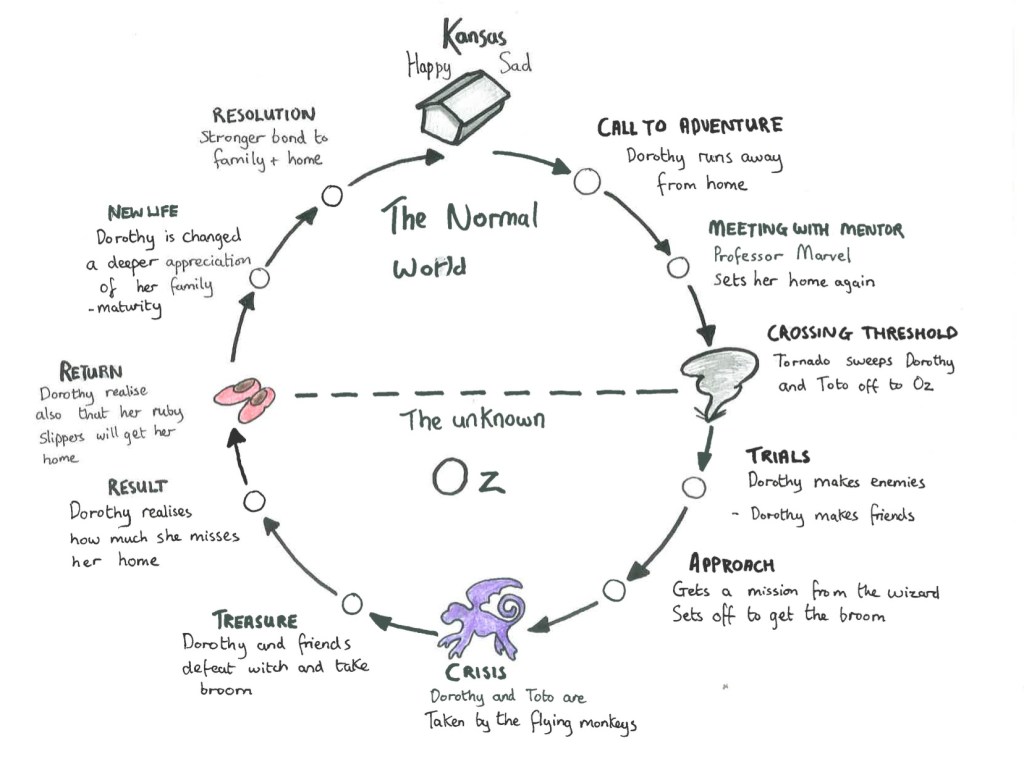
Perceval’s grail quest prompts me to consider The Wizard of Oz as indicative of the “Hero’s Journey/Quest.”  In such a journey, the hero – or heroine in the case of Oz – is called to service.  She begins the journey reluctantly and encounters supernatural forces.   Transformation occurs as she encounters serious challenges; it is complete when she realizes she possessed what she sought from the outset.  The transformation process – the challenges – were necessary for the goal to be adequately valued.

In Dorothy’s case, she was thrust involuntarily into finding her way “home.”  She encountered Munchkins and witches who pointed her toward the path – the Yellow Brick Road.  She grew in strength through her service to others:  the Scarecrow, the Tin Man, and the Cowardly Lion.  

Their journey took them through challenges:  an orchard of talking trees that throw apples at them; a dark forest filled with lions and tigers and bears (oh no!); a field of deadly poppies that knock you unconscious; and the evil Wicked Witch of the West and her army of flying monkeys.

The Wizard of Oz, of course, offers no solution, being nothing more than a charlatan.  Even when she has killed the witch (slayed the dragon) and returns with her broom, the Wizard tries to put off Dorothy and her compatriots until Toto sniffs him out.

The Wizard attempts to recover his status by issuing a diploma to the Scarecrow, a heart to the Tin Man, and a crown to the Lion.  Despite his proclamations, and his observation that the trio had those things the entire time, it was Dorothy who helped the trio realize their potential as fellow travelers on her journey, demonstrating the very characteristics each thought he lacked.

Similarly, facing one last obstacle on her quest, as the Wizard flies off in his balloon without her and Toto, the Good Witch Glinda tells Dorothy that she always possessed the power to return home – the ruby slippers were her grail, that were on her feet the entire time.  But she needed to confront the challenges on the quest so she could fully appreciate what she had: “If I ever go looking for my heart’s desire again, I won’t look any further than my own backyard, because if it isn’t there, I never really lost it to begin with.”

I don’t know about you, but my life hasn’t followed some neatly organized plan.  In retrospect, I don’t believe there was a plan.  My path has offered many challenges:  some resulted in disappointment, others in joy.  And, I dare say, the journey is not yet over.

There was never yet an uninteresting life. Such a thing is an impossibility. Inside of the dullest exterior there is a drama, a comedy, and a tragedy.” ~ Mark Twain

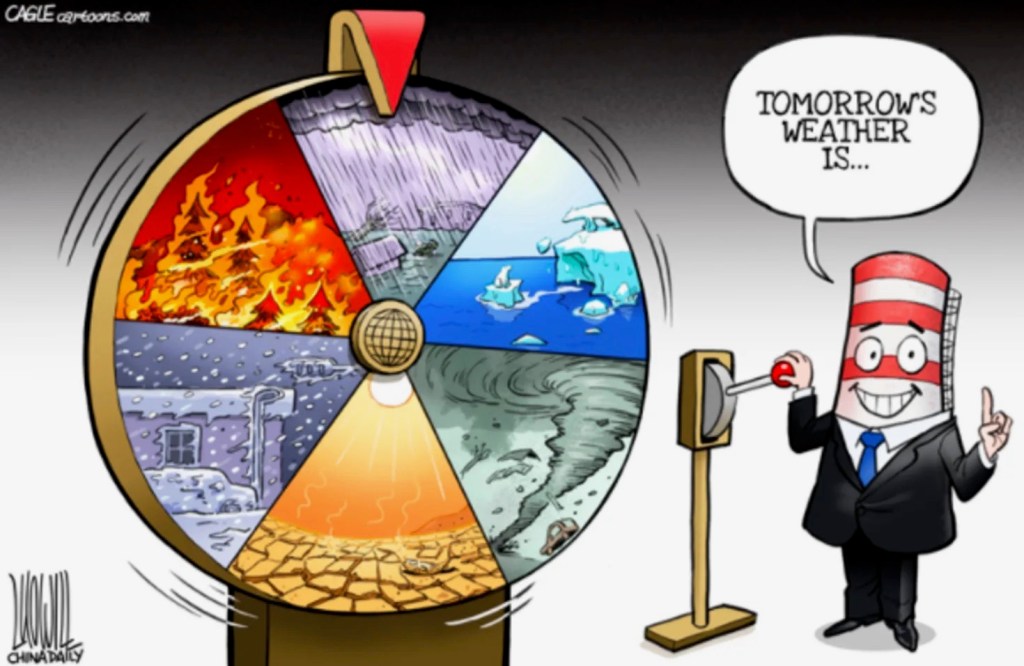
Postscript:  When I began this essay, my intent was to illustrate how weather patterns have changed so dramatically because of climate change (dare I say, global warming?!).  Tornadoes in the southeast that seem to be more common than in “tornado alley” in the Midwest.  Hurricanes that travel the entire length of the eastern seaboard, wreak havoc in the Gulf, and decimate Caribbean islands to the point that they don’t have time to fully recover from one before the next one hits.

Forest fires in the western third of the US that cover large swaths of land and have become common place.  I saw a documentary on the high school graduating class of Paradise, California – the town burned to the ground – that labeled the students “environmental refugees.

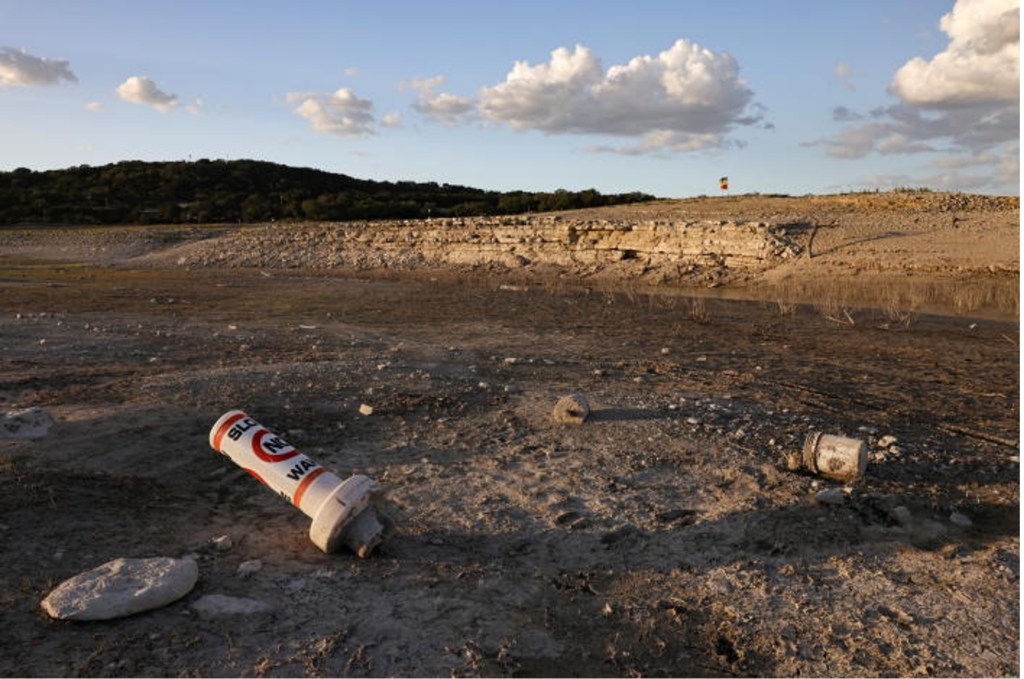
”Severe, protracted drought is causing serious water problems in the southwest (as of this writing, Lake Mead has dropped 170 feet – 170 feet!  It was estimated to be down 5.5 trillion gallons of water, when the surface level was down only 143 feet; 25 million people depend on water from Lake Mead.  Power generation from Hoover Dam is down 25% due to low water levels.  And adding more spectacle to the situation, bodies in 55-gallon steel drums are being exposed as the water levels continue to drop.

Weather reporters were notorious for their inaccuracies in forecasts.  As technology improved, though, they became increasingly accurate.  Accelerating turbulence in weather patterns has adversely affected their accuracy.  Hardly a day goes by when we say, “Gee, the weatherman sure called this one right.”

The changes and shifts in the weather offer perhaps a parallel illustration of the evolution of one’s life, suffering through times of turbulence that make the peaceful days seem all the better.

I’ve Been Thinking . . . Scattered Thoughts

I have been struggling to complete my next essay. I believe I am distracting myself with topics I’m not sure I want to include, causing me to be unable to complete the topics I have in progress. Since I want to keep posting content, I decided to post an original work, but not one that has flowed from my pen. I hope you enjoy.

I’ve Been Thinking . . . About Taxes

I just finished our taxes.  Honestly, I don’t mind paying them – I believe that we, personally, get a lot of value for our money:  roads, bridges, schools, and so on – did you realize, for example, that it costs about $400,000 to resurface a mile of two-lane residential street?  Certainly not in my budget!

Tax filing can be a stressful time.  Just trying to fill out the basic forms can be tough, and it gets worse the more you have to report, such as business income, investment income, and so on.

One way to deal with the stress, however, is with a little humor.  Following is an old joke about an IRS audit.  It’s floated around for a while (joke sites, social media, even a YouTube audio), so you might well have read one of the variations.  Here’s one that I cleaned up a little with a few edits.  I hope it puts a smile on your face when you finally sit down to pencil to paper . . . or cursor to data entry box! I’ve included a sing-along at the end to get you started. 🙂

The IRS decides to audit Grandpa and summons him to the IRS office.  The auditor wasn’t surprised when Grandpa showed up with his attorney.

The auditor said, “Well, sir, you have an extravagant lifestyle and no full-time employment, which you explain by saying that you win money gambling. I’m not sure the IRS finds that credible.”

“I’m a great gambler, and I can prove it,” says Grandpa. “How about a demonstration?”

The auditor thinks for a moment, and says, “Okay. Go ahead.”

Grandpa says, “I’ll bet you a thousand dollars that I can bite my own eye.”

The auditor thinks a moment, decides it’s not possible, and says, ‘It’s a bet.’

Grandpa removes his glass eye and bites it. The auditor’s jaw drops.  He certainly didn’t see that coming.

Grandpa says, “Now, I’ll bet you two thousand dollars that I can bite my other eye.”

The auditor can tell Grandpa isn’t blind, and he quickly checks Grandpa’s tax filing status to confirm it, so he takes the bet.

Grandpa removes his dentures and bites his good eye.

The stunned auditor realizes he has wagered and lost three grand, with Grandpa’s attorney as a witness. He starts to get nervous now, both about the amount of money and his career if this gets out.


“Want to go double or nothing?” Grandpa asks.  “I’ll bet you six thousand dollars that I can stand on one side of your desk, and pee into that wastebasket on the other side, and never get a drop anywhere in between.”

The auditor, twice burned, is very cautious now, but he looks carefully and decides there’s no way this old guy could possibly manage that stunt, so he agrees again.

Grandpa stands beside the desk and unzips his pants, but although he strains mightily, he can’t make the stream reach the wastebasket on the other side, so he pretty much pees all over the auditor’s desk.

The auditor leaps with joy, fist pumping victoriously into the air, realizing that he has just turned a major loss into a huge win.

But Grandpa’s own attorney moans and puts his head in his hands.

“Are you okay?” the auditor asks.

“Not really,” says the attorney. “This morning, when came for the audit, he bet me twenty-five thousand dollars that he could come in here and pee all over your desk and that you’d be happy about it!”