I had never snow-skied before, but Nancy liked it and wanted to go. We made reservations and headed toward the Rockies in my fancy little sports car – two-seater, all black with tan leather interior, and t-tops – a sweet ride. Our progress slowed dramatically the farther west we got, so that by west-central Kansas, we were in a single line of cars crawling through blizzard-like conditions. Occasionally, a car would speed past the line in the “passing lane,” only to be seen in the median a short distance later.
Eventually, the blizzard-like conditions were deemed to be an actual blizzard and the interstate was shut down. We were directed to the exit for Oakley, Kansas.
Oakley is a typical town in rural Kansas – a small nucleus of population, with a variety of small shops and a few restaurants, surrounded by expanses of farmland. The population peaked at 2,343 in 1980, and we were stranded when the town had the most going for it. The population has declined by 297 people since then.
As one might expect of a small town in a smattering of small towns along I-70, Oakley had very limited motel space. By the time we arrived, there was no room at the inn! We found shelter in a church with more than 200 people, 40+ dogs, and a handful of cats. We slept on the vestibule floor, where we were awakened frequently throughout the night as people went out to smoke, and we shivered under the blast of cold air each time the door was opened. (I was a smoker at the time; I never got up during the night to have cigarette! Not that night, nor any other night.)
Our sleeping arrangements resulted in an early morning. We snagged a booth at the local restaurant, where we began hearing reports from the night before: unable to find shelter, people slept in their cars, some with their engines on, others afraid to do so; the Pizza Hut ran out of dough. We decided we would leave in whichever direction the highway opened first. A few hours later, we were eastbound toward home.
Returning home was almost certainly the best option for us. It’s a “small world”: I was talking to an acquaintance a few weeks ago and mentioned our recent stay at an RV park in WaKeeney, Kansas. She said she was familiar with WaKeeney because they passed it and had to stop in Oakley due to a blizzard as they were going on a ski trip to Colorado. Comparing notes, we concluded that we were stranded in Oakley during the same blizzard, but they were ahead of us, made it to the second Oakley exit, and got one of the last motel rooms in town.
While we proceeded east, they proceeded west when I-70 finally reopened in that direction. The roads in Denver consisted primarily of ruts of packed snow and ice where the succession of cars passed – something reminiscent of the ruts carved into the dirt throughout Europe as Roman chariots moved toward new conquests – and those ruts in Denver, no doubt, were something that my fancy little low-to-the-ground sports car would not have been able to navigate. And if chains were required in the mountains, as they are now under such conditions, we would not have been allowed to proceed – that might have resulted in another night on the floor of another church!
Oakley’s decline in population over the past 40 years (from a peak of 2,343 in 1980 to 2,046 in 2020*) is symbolic of a pattern that many rural communities have experienced. Residents, particularly young adults, are leaving for metropolitan areas where greater job opportunities and cultural attractions beckon them. Family farms are struggling to survive, while farm bills and economies of scale create advantages for corporate farms.
Myth of the Family Farm
If the acquisition of family farms, and their conversion to corporate farms weren’t enough, billionaires are buying land at a record pace. Axios.com reports:
The wealthy are often buying the land from “asset-rich, cash poor” small farmers whose families have owned the land for decades. The purchases put money in the farmers’ pockets as many struggle with tough times. . . Compared to other luxury assets, land can be enjoyed without losing its value.
- 100 families own about 42 million acres across the country. The amount of land owned by these families has jumped 50% since 2007, reports the New York Times.
- Businessman John Malone owns the most landin the U.S. with 2.20 million acres — most of it is ranch land.
- Media giant Ted Turner owns 2 million acres spread across Montana, Nebraska and other states. [He also has the largest privately owned buffalo herd.]
According to multiple sources, Bill Gates owns more acres of farmland than any other individual in the United States – “as in, about 270,000 acres.”* Chinese acquisition of land in the United States has drawn an increasing amount of scrutiny. Such concern is warranted in those instances where land is near military installations. In total, however, Gates’ total acres of farmland is nearly 75% of the total number – 380,000 acres – owned by Chinese interests.
Work in a Small Town
I was consulting during the time of my excursion in the blizzard in Kansas. When I would tell people how much I flew for that work – one flight attendant noted that I flew more than she did! – they frequently equated it with glamorous trips to major metropolitan areas, where I could visit the many cultural and historic attractions. Wrong. I was working long hours, and if I saw something of significance, it was as we drove past on the way between the hotel and the project site.
I occasionally went on projects in cities, such as New York, where I was able to attend New Year’s Eve on Times Square (one-and-done on that experience; glad I got to do it, but never plan to do it again!). A majority of my projects, however, were in smaller communities, where our clients had production and distribution facilities.
I received a speeding ticket in Marshall, Minnesota, that I ignored. Not realizing Minnesota had reciprocity with Missouri, my driver’s license was suspended, and I learned about it when I was shopping for new insurance. I spent a couple weeks in a rendering plant in I-don’t-remember-where. The smell of blood oozed from my pores for weeks. Seeing the way hot dogs were made would make you think I would never eat them again, but served fresh in the plant’s cafeteria, they proved to be quite tasty.
With some projects spread across Texas, I saw the diversity of the state’s geography and industry. Two of my projects – one in Olney; one in Brownfield – were in north central and west Texas. The land was flat! I used to say I could lay face-down in the dirt and see for 200 miles. I wasn’t in the middle of nowhere, but I could see it from there.
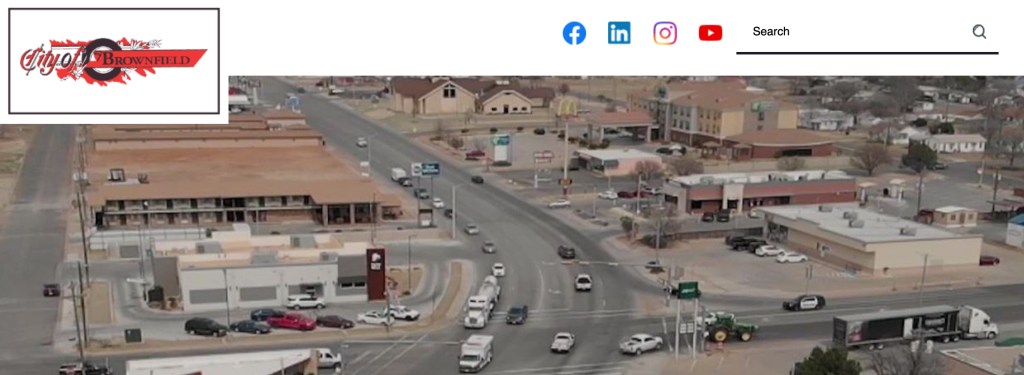
On the first project, after I could finally get a line at the motel to call my boss, I asked what I had done to piss her off. She didn’t believe it could be as desolate as I described. I appropriated a phone book from the motel and sent it to her. It was about 100 5×8 pages, including Yellow Pages. I noted that it included not one, but 13 communities, and that the communities were as much as 75 miles apart. I told her to look under restaurants in the Yellow Pages; there she would find 12 restaurants – one of which was closed – listed for those 13 communities.
One of the plants processed bleach. It was located several miles from town because of the odor and somewhat potentially dangerous nature of a spill of thousands of gallons of bleach. The other plant processed rubber – such as old tires – that were being shredded for reuse. The work was nasty-dirty.
The rubber company had three plants, each of which was in an equally desolate part of the country. Their placement was essential to their strategy of finding workers. Most of the workers were farmers. They struggled to support their families with their farms. They were accustomed to hard, dirty work. They appreciated the opportunity to have steady pay from the plant, then spent the rest of the daylight hours and scratching the dirt on their farms.
I am almost certain that both of those plants in Texas have closed in the 40 years since my projects, but I think they illustrate the struggles of the family farm in rural areas. If I grew up watching my father work his ass off in that rubber plant, then helping him when he came home to scratch the dry land of the Texas plain, I would sell the family farm in a heartbeat when Jeff Bezos wanted to accumulate 400,000 acres for his space station. Then I would move to the city. With my family’s size, the population in that small town would decline by three people and two dogs!
Rural Life on TV
Beverly Hillbillies was one of the most popular shows during its run from 1962 to 1971: “ranked among the top 20 most-watched programs on television for eight of its nine seasons, ranking as the No. 1 series of the year during its first two seasons . . . .”* I watched as Jed, Granny, Elly May, and Jethro lived according to their homespun way of life borne of the Ozark Mountains in rural southwest Missouri. The line that existed between their simple way of life in the backwoods and the sophistication of Beverly Hills created many points of humor: they called their swimming pool the “cement pond”; they hunted on their expansive property; Granny’s moonshine was her special elixir for whatever ailed you; and one of the funniest episodes was when Granny kept mistaking a kangaroo that had escaped the zoo for a giant jackrabbit (that moonshine will do it to you).
The immediate and overwhelming success of Beverly Hillbillies led to Petticoat Junction, which took place in Hooterville, a very small town in the same area of the Ozark Mountains that gave us the Clampetts in Beverly Hillbillies. Petticoat Junction is the stop on the railroad spur that was cut off from the main line. Hooterville was so removed from the mainstream that the residents went to Drucker’s General Store to use the telephone.
Nancy grew up on a farm in a relatively small town in southeast Kansas. Its somewhat diverse economy included a manufacturer of quality workwear, a label making manufacturer, and the headquarters for an insurance company. But the lifeline was the railroad. When it ceased stopping there, a gradual economic decline began. The good railroad jobs disappeared and those who worked on the railroad were forced to move to retain their jobs. As those good-paying jobs left, demand for goods and services declined, reducing workforce demand. Families, particularly young ones, began a slow exodus.
Beverly Hillbillies portrayed the lives of people who moved from the backwoods of America to the sophisticated metropolis. The tension between the simple ways of the hills and the complexities of modern society was used masterfully for comedic effect. Petticoat Junction retained the setting of rural America, virtually cut-off from “civilized” life – a disconnected railroad spur and one phone at the general store.
Green Acres was a spinoff of Petticoat Junction. Its context was one of taking Oliver Wendell Douglas, a successful Manhattan attorney, and having him pursue his dream of a life connected to the earth; and, of course, he took his Hungarian immigrant wife who longed to remain a New York socialite. The farm he unwittingly bought was as decrepit as the Clampett’s mansion was grand. Green Acres’s context was the opposite of Beverly Hillbillies.
Mr. Douglas was a phone pole away from contact with “civilization” – he had to climb the pole to get to his phone. He wore three-piece suits to work on the farm; the folks in town thought he was sullying their reputations and insisted that he should wear overalls. In keeping with high society’s civility, he and Mrs. Douglas referred to their neighbors formally: Mr. Drucker, Mr. Haney, Mr. Ziffel, and so on. Oh, and Fred and Doris Ziffel had a “son,” Arnold, who was a pig who carried his book bag to school and loved to watch TV westerns while sitting on the sofa.
Despite their continued popularity, CBS canceled its trio of rural comedies in the early 1970s. “CBS at the time was under mounting pressure from sponsors to have more urban-themed programs on its schedule. To make room for the newer shows, nearly all of the rural-themed shows were cancelled, later known as the ‘rural purge,’ of which Pat Buttram [who played Eustace Haney on Green Acres] said, ‘CBS cancelled everything with a tree – including Lassie.’”* It seems the network was following the population migration to the city.
Small Town Life in Music
Small town life has been depicted in music, in addition to the many television shows and movies. Country music is the genre that most frequently is associated with the simpler, more virtuous life of rural living. Perhaps it’s a revisiting of our agrarian roots, when families worked hard to eke out a living: growing crops and worrying about the weather; raising cows and hogs for slaughter; milking cows . . . from sunup to sundown, seven days a week, 365 days a year.
John Mellencamp began his music career as a rock artist named John Cougar; but he reclaimed his roots as a product of a small town and took back his real name. One of his many hits is a song that celebrates his small-town roots, appropriately called “Small Town.” As an expression of his concern for the family farms that were being bought and converted to corporate farms, he performed the hit at the Farm Aid concert in 1987. John Mellencamp, Live at Farm Aid, 1987: “Small Town”
In the three-and-a-half decades since, as a nation, we have become increasingly polarized – culturally, politically, economically, and socially. This polarization also is expressed in music. The most recent example is Jason Aldean’s #1 hit, “Try That in a Small Town.” Its lyrics have been interpreted as supporting violence and vigilantism against any people whose values you disagree with, of symbolically glorifying racial discrimination.
The ultimate contradiction of “Try That in a Small Town’s” message seems to be missed by his fans and others who share the underlying sentiments of the song: strip away the freedoms for others to live their lives as they have chosen; instead, demand that they adhere to your concept of the world. He rants about cancel culture as he systematically attempts to cancel others’ cultures as invalid – “if you’re not with us, you’re against us!”
In the essay, “Bruce Springsteen and John Mellencamp can teach Jason Aldean a thing or two about small towns,” David Masciotra opines, “One of the many absurdities of present political discourse is that the people who most obnoxiously declare their love for America hate most of its institutions, people and traditions.”
Masciotra contrasts the approaches taken by Mellencamp and Aldean, and casts them in something of a political divide and lack of understanding: “The left too often dismisses patriotism as naïve or central to destructive right-wing politics of hatred and exclusion. But people have a healthy desire to feel proud of their homes and heritage. Mellencamp’s thoughtful love for his ‘small town,’ as opposed to Aldean’s reactionary tantrum, provides an artistic model for how to balance patriotism and protest.”
A Renaissance?
I recently had lunch with a couple of my economic development friends. Among other things, I asked Jeff, who analyzes virtual mountains of data state and national trends, what he was seeing, particularly as it related to rural areas. Interestingly, he reported increases in rural populations during Covid. He wasn’t talking about those towns with views of mountain vistas or clear lakes and rivers, where highly compensated workers bought second homes; he was referring to small towns next to no place.
It seems that as technology has spread to the rural communities, and given the opportunities for remote work during Age of Covid, people began the return trip home. People might have initially left for cultural and career opportunities in the urban areas, but their hearts are still connected to “home” in those small towns. Mellencamp wonderfully captures the sentiment of “home” in a small town.
No, I cannot forget from where it is that I come from
I cannot forget the people who love me
Yeah, I can be myself here in this small town
And people let me be just what I want to be
I know that Nancy harbors a special connection to her hometown. We’re fortunate to live close enough to make a day trip for visiting her relatives and friends, attending weddings and funerals and reunions, and to simply drive around town observing what has changed and what has remained the same. When she and her sister, or her hometown friends get together, they exchange updates of those they knew as they review the family trees of everyone from the town. As Gary Portnoy and Judy Hart Angelo penned in the lyrics of the theme song for “Cheers,” “Sometimes you want to go where everybody knows your name.”
 Mike's Fountain Pen