A typical spring evening, warm enough that we had the door to the deck open. The wind had been blowing generally from the east – not a good sign as it tends to help bring about storms. The forecast included a chance of rain.
We were about six minutes into episode eight. Victim found, our intrepid detectives were on the case. Their comic banter made them seem mismatched, but they have managed to solve seven cases thus far.
Settled into our show, the sirens began wailing. Not an air raid. A tornado warning. The dogs didn’t understand the urgency as we snatched them off the floor, startled by our sudden movements, and scrambled to the basement. We were streaming our show and didn’t know we had been under a tornado watch.
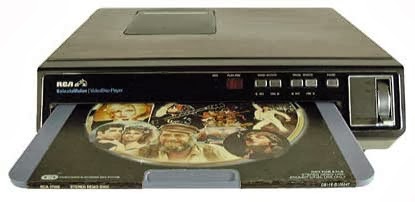
Growing up – before streaming; before DVD and Blu-Ray; before VHS and Betamax; before laser video discs – if you wanted to watch a program on TV, you had to park your butt in front of the TV at a scheduled day and time. A perennial spring movie was The Wizard of Oz.
Who can forget Dorothy escaping to save Toto from execution at the insistence of the mean old Miss Gulch? Professor Marvel encouraging Dorothy to return home to a worried Auntie Em as the sky grew black and the wind blew more fiercely? And the tornado – the one that lifted the farmhouse and carried it through time and space to drop it on the Wicked Witch of the East in Munchkinland, in the Land of Oz.
Much as Memorial Day is the unofficial launch of summer, The Wizard of Oz marked “tornado season” in the Midwest.
I saw my first tornado at five years old. We were in our new house, in a new subdivision of the rapidly growing suburbs. We sheltered in our basement. At one point, as we waited, I went out with Dad to survey the western sky. We could see the tornado’s distinctive funnel in the distance, coming our way. We returned to the basement.
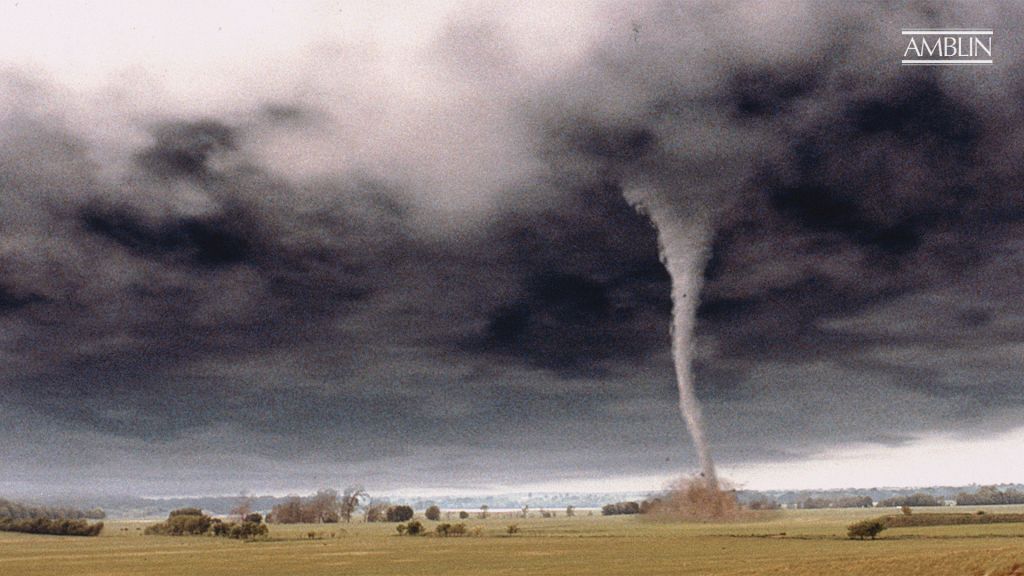
The tornado missed us, but we felt the strong winds and torrential rain in its wake. We surveyed the damage the next day. Dad checked the house; I checked the mound of dirt where I had my little toy cars parked. The house fared better than my car park, which had a sheet of plywood dislodged and displaced and missing cars! The loss was devastating when scaled to the perspective of a five-year-old.
Dorothy couldn’t comprehend her situation. At one moment she was in the farmhouse in Kansas; the next she was stepping out among the bright colors and a community of Munchkins who began celebrating the death of the Wicked Witch of the East, whose feet and lower legs were sticking out from under Dorothy’s farmhouse.
The Good Witch Glinda, encapsulated in a large bubble, floats in to explain. Also arriving on the scene, in a puff of smoke, is the Wicked Witch of the West. She is there to confirm her sister’s demise and to retrieve the ruby red slippers from her sister’s feet. Glinda waves her wand and the slippers magically appear on Dorothy’s feet; and when the Wicked Witch attempts to take them, she receives a shock.
That single scene contains numerous metaphors. Virtue triumphs over evil when Dorothy’s farmhouse kills the Wicked Witch of the East; yet, more evil exists in the world as the Wicked Witch of the West appears, set upon obtaining the ruby slippers that will provide unlimited capacity for more evil deeds. Dorothy is innocence personified. The Good Witch Glinda represents the good, nurturing presence in the world, providing guidance. Some have suggested that Glinda represents Dorothy’s absent mother, and the bubble represents the womb.
Roger Ebert chose it as one of his Great Films, writing that “The Wizard of Oz has a wonderful surface of comedy and music, special effects and excitement, but we still watch it six decades later because its underlying story penetrates straight to the deepest insecurities of childhood, stirs them and then reassures them.”
Some historians and literary scholars have studied Baum’s book, on which the movie is based, and identified it as containing elements of political allegory. A Populist movement was growing at the time Baum was writing the book, and numerous characters and events have been interpreted as supporting the allegory:
- The tornado, which serves as a major plot device, is a metaphor for the turbulence of the Populist movement. The movement responded to the growing sense of injustice at the hands of the ruling elite.
- The Scarecrow represented the farmers of the Midwest whose farms and homes were being repossessed by bankers because they could not make their loan payments. They were clamoring for a return to the gold and silver standard, silver representing the currency that would allow them to better meet their debt obligations. (In the book, Dorothy’s slippers were silver; they were changed to ruby red in the movie to capitalize on the technology of Technicolor.)
- The Tin Man represented “the dehumanization of American factory workers as a result of the industrial revolution.”
- The Cowardly Lion represented the Populist presidential candidate, William Jennings Bryan, who was described as roaring in his speeches.
- The Wicked Witches symbolized powerful interests in American economic and political decisions, with the East representing banks and finance and the West representing industrial expansion.
- Emerald City and its Wizard symbolize Washington D.C. and the President, respectively. Dorothy journeys there in search of assistance, only to discover that the Wizard is a phony, and the Washington elite are not interested in solving the problems presented by the Populist movement.
- As a Populist figure, Dorothy is the average citizen – the “everyman” or “everywoman,” so to speak. An alternative interpretation of Dorothy is quite interesting: “literary scholar Michael Patrick Hearn contended ‘The Wizard of Oz is now almost universally acknowledged to be the earliest truly feminist American children’s book, because of the spunky and tenacious Dorothy.’ . . . As an independent female character, … Dorothy ‘refreshingly goes out and solves her problem herself rather than waiting patiently like a beautiful heroine in a European fairy tale for someone else.’ Adequately protecting herself Dorothy, as the ‘first feminist role model,’ even assists the male characters she encounters during her quest, each of whom possesses an innate flaw or are found to be lacking in a vital quality.”
Put into the historical context of Baum’s life, I certainly understand how the story can be interpreted as a political allegory. It is not uncommon for writers to imbed political and social commentary into literature and poetry. Dante, for example, was exiled from Florence and used people and symbols in his Divine Comedy as metaphors for the political and social environment. Perceval and the Holy Grail is suspected to be political allegory, as well as a Grail Quest.
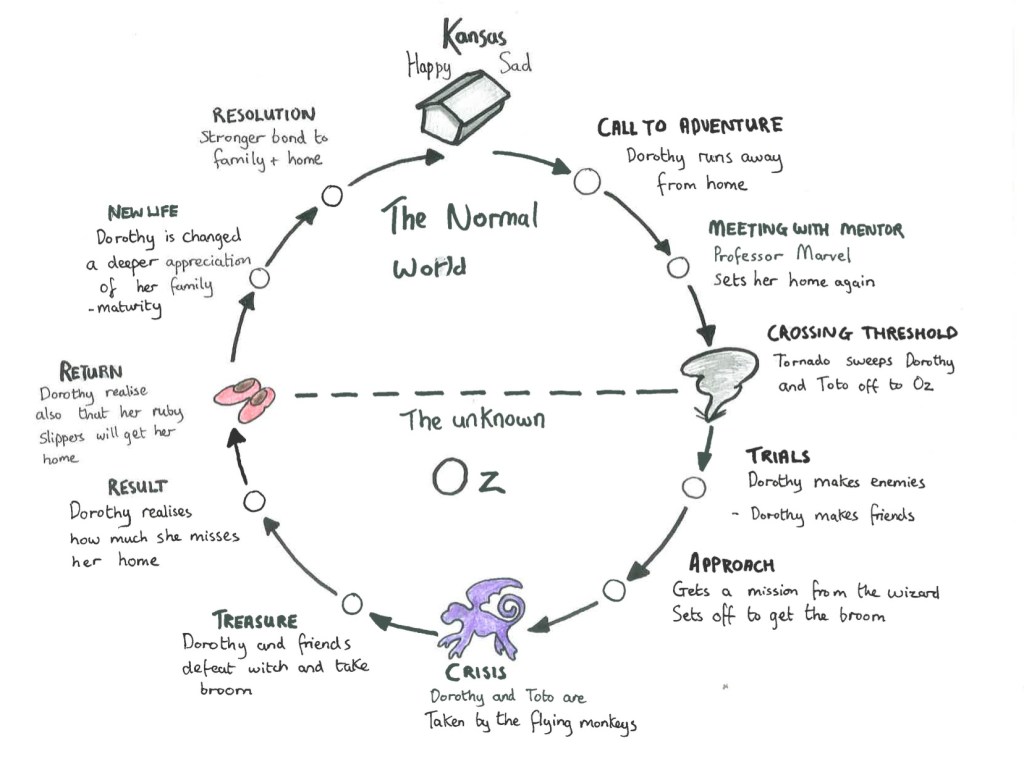
Perceval’s grail quest prompts me to consider The Wizard of Oz as indicative of the “Hero’s Journey/Quest.” In such a journey, the hero – or heroine in the case of Oz – is called to service. She begins the journey reluctantly and encounters supernatural forces. Transformation occurs as she encounters serious challenges; it is complete when she realizes she possessed what she sought from the outset. The transformation process – the challenges – were necessary for the goal to be adequately valued.
In Dorothy’s case, she was thrust involuntarily into finding her way “home.” She encountered Munchkins and witches who pointed her toward the path – the Yellow Brick Road. She grew in strength through her service to others: the Scarecrow, the Tin Man, and the Cowardly Lion.
Their journey took them through challenges: an orchard of talking trees that throw apples at them; a dark forest filled with lions and tigers and bears (oh no!); a field of deadly poppies that knock you unconscious; and the evil Wicked Witch of the West and her army of flying monkeys.
The Wizard of Oz, of course, offers no solution, being nothing more than a charlatan. Even when she has killed the witch (slayed the dragon) and returns with her broom, the Wizard tries to put off Dorothy and her compatriots until Toto sniffs him out.
The Wizard attempts to recover his status by issuing a diploma to the Scarecrow, a heart to the Tin Man, and a crown to the Lion. Despite his proclamations, and his observation that the trio had those things the entire time, it was Dorothy who helped the trio realize their potential as fellow travelers on her journey, demonstrating the very characteristics each thought he lacked.
Similarly, facing one last obstacle on her quest, as the Wizard flies off in his balloon without her and Toto, the Good Witch Glinda tells Dorothy that she always possessed the power to return home – the ruby slippers were her grail, that were on her feet the entire time. But she needed to confront the challenges on the quest so she could fully appreciate what she had: “If I ever go looking for my heart’s desire again, I won’t look any further than my own backyard, because if it isn’t there, I never really lost it to begin with.”
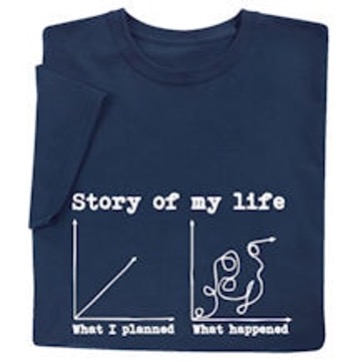
I don’t know about you, but my life hasn’t followed some neatly organized plan. In retrospect, I don’t believe there was a plan. My path has offered many challenges: some resulted in disappointment, others in joy. And, I dare say, the journey is not yet over.
“There was never yet an uninteresting life. Such a thing is an impossibility. Inside of the dullest exterior there is a drama, a comedy, and a tragedy.” ~ Mark Twain
Postscript: When I began this essay, my intent was to illustrate how weather patterns have changed so dramatically because of climate change (dare I say, global warming?!). Tornadoes in the southeast that seem to be more common than in “tornado alley” in the Midwest. Hurricanes that travel the entire length of the eastern seaboard, wreak havoc in the Gulf, and decimate Caribbean islands to the point that they don’t have time to fully recover from one before the next one hits.
Forest fires in the western third of the US that cover large swaths of land and have become common place. I saw a documentary on the high school graduating class of Paradise, California – the town burned to the ground – that labeled the students “environmental refugees.
”Severe, protracted drought is causing serious water problems in the southwest (as of this writing, Lake Mead has dropped 170 feet – 170 feet! It was estimated to be down 5.5 trillion gallons of water, when the surface level was down only 143 feet; 25 million people depend on water from Lake Mead. Power generation from Hoover Dam is down 25% due to low water levels. And adding more spectacle to the situation, bodies in 55-gallon steel drums are being exposed as the water levels continue to drop.
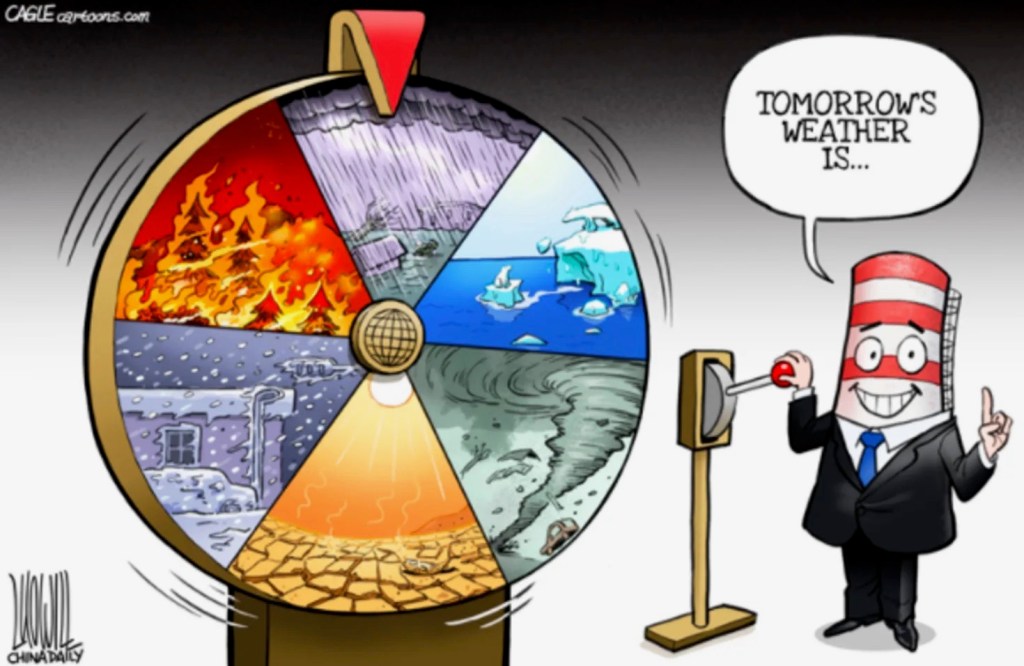
Weather reporters were notorious for their inaccuracies in forecasts. As technology improved, though, they became increasingly accurate. Accelerating turbulence in weather patterns has adversely affected their accuracy. Hardly a day goes by when we say, “Gee, the weatherman sure called this one right.”
The changes and shifts in the weather offer perhaps a parallel illustration of the evolution of one’s life, suffering through times of turbulence that make the peaceful days seem all the better.
 Mike's Fountain Pen
What a trip down memory lane. I loved the commentary on the symbolic meanings in the story. It gives one a lot to think about.
Go Dorothy!
LikeLike
Mike: The Wizard of Oz gave me a terrific fear of tornadoes (I probably first watched the movie around age 5 or 6 – when we first had a color TV). As a child, a tornado watch would send me to the basement hoping the watch would be over before bedtime. And we still go to the basement if the sirens go off. (And then as a young adult both of my sister’s homes – in different states – were severely damaged by tornadoes one month a part – 1980 I believe – so I was 20) Had a tornado near us in Briarcliff in 2000 – Maureen was pregnant at the time – no damage on our street other than limbs down – but a few blocks to the east of us there was more damage to homes and an apartment complex). I enjoyed the analysis of the movie….but I will always remember the movie as the source of my fear of tornadoes (and flying monkeys – but don’t see those in the neighborhood).
LikeLike
Isn’t it interesting how movies, books, and other story forms can stimulate fears like what you experience? Then to validate your fears by the damage to your sisters’ homes. “Jaws” is another movie that stoked fear in a lot of people; I can still hear in my mind the “du dum” music that signaled the shark’s presence. And, of course, being afraid of heights, any kind of climbing movie causes my stomach to flip-flop! Glad you enjoyed the analysis. Hope your trip was good. I read that all of the recent forest fires are beginning to add a smoky flavor to the wine; could you taste it?
LikeLike