I traveled full-time when I was consulting years ago. Being young and single, I occasionally stayed near my project rather than flying home for the weekend. This was during the halcyon days of air travel, before deregulation. Tickets were like currency. If I arrived at the airport early and Delta had a flight to my destination, I could take it instead of waiting for my scheduled flight on a different carrier; Delta simply accepted my ticket and settled with the other airline. If I exchanged my ticket to Kansas City for a ticket to Boston, and the flight to Boston was cheaper, the airline refunded the difference in cash . . . at the ticket counter!
It was just such an exchange – a ticket to KC for one to Boston – to visit my sister and her family for the weekend, and I think they refunded $32 and change to me. I always enjoyed visiting my sister. She’s seven years older, and growing up, was frequently assigned the task of watching her little brother.
She introduced me to In-A-Tub in the early 60’s. They were famous for their tacos, where the shell was fried with the meat in it (some call the technique “pinned tacos”). After frying, they would pry open the shell, stuff in a little shredded lettuce, a little taco sauce, then cover it with an orange-colored powdered cheese. They were an acquired taste, but if you acquired it, you kept it!
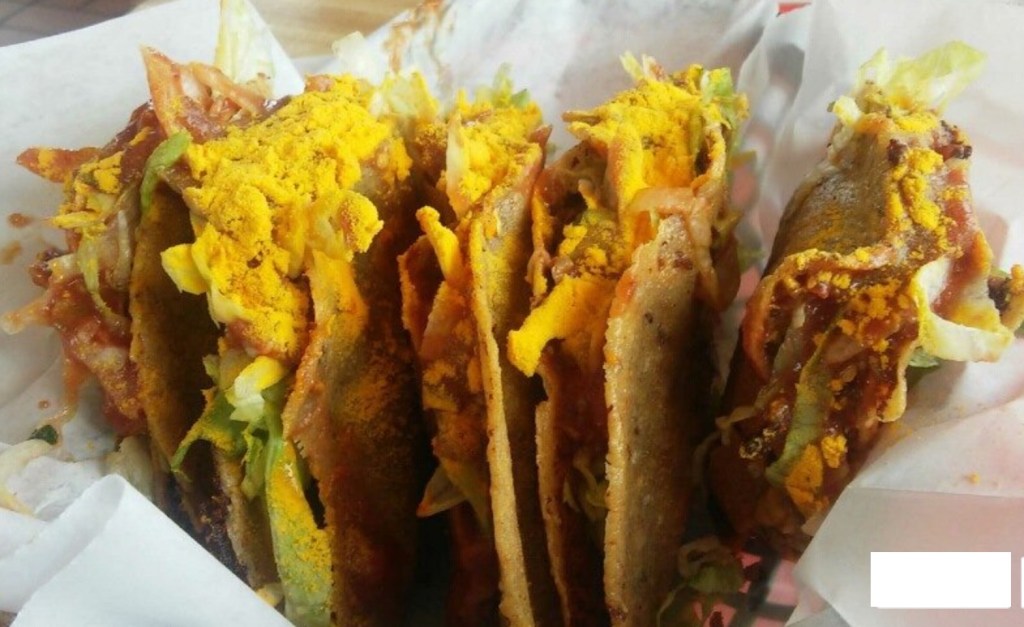

The original location was on the side of North Oak Trafficway. Cars would pull up somewhat haphazardly to park, and you would walk up to a window to order. As I realized later, when I was in high school, going to In-A-Tub wasn’t just for the tacos, but was also for seeing and being seen. By then, the street had been widened to four lanes, and In-A-Tub had moved about a half-mile south, but the new building offered the same walk-up service; it had a gigantic parking lot, though, and the line to order must have gotten as many as a hundred people in it on busy nights. Visiting with friends. Seeing. Being seen.
It was on these occasional visits to Boston to see my sister – ever the tour guide, but now staying upright behind the wheel – that I came to appreciate the area. She lived in Concord, home to Ralph Waldo Emerson, Henry David Thoreau, Nathanial Hawthorne, and many others you were required to read in school; and you can visit Walden Pond, the Old Manse (where Nathaniel Hawthorne lived and wrote), and the Old North Bridge, starting place of the Revolutionary War, with what Emerson described as “the shot heard round the world.”
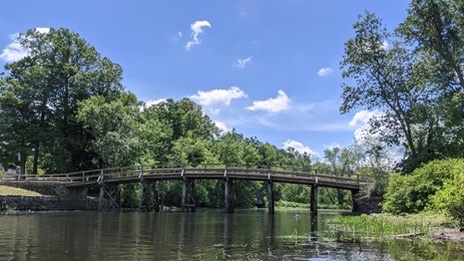
BY THE RUDE BRIDGE THAT
ARCHED THE FLOOD,
THEIR FLAG TO APRIL’S
BREEZE UNFURLED,
HERE ONCE THE EMBATTLED
FARMERS STOOD,
AND FIRED THE SHOT HEARD
ROUND THE WORLD.
“The Concord Hymn” by Ralph Waldo Emerson
Boston, itself, was home to the Old North Church (one if by land, two if by sea), Boston Harbor, Union Oyster House, and Faneuil Hall. Maneuvering the narrow cobblestone streets in a car was a test of skill and daring. Owning a car in Boston is something of a disadvantage; my nephew and his wife rued the day her grandmother gave her car to them because they rarely drove it and had to pay to park it. Boston is a very walkable city and has great public transportation. (Kansas City, by contrast, brags about its streetcar route that stretches a whopping 2.2 miles! The metro area has/had the most miles of highway per capita of any major metropolitan area in the US. We drive everywhere.)
Boston scores high on walkability largely because it is so dense. The historic places that mean so much to the early history of the United States are scattered among modern, vibrant high-rise office buildings towering above, sheltering the history that resides below. The city also provides ample living spaces to accommodate the residents of the city.
During these weekend visits, I enjoyed Boston’s offerings as a vibrant city with historical significance. It’s contrast to Kansas City’s sprawl captivated me, yet the brevity of my visits obscured the true density of life in the city – where did the people go when they simply wanted to “get away from it” for a few hours? I could easily jump into my car and drive out of the city; heck, I could walk into my yard and have more greenspace than the typical resident in Boston.

One weekend, I met a co-worker and some of her friends for dinner and an evening visit. The weather was glorious. How could we fully capitalize on the beauty of the evening in the denseness of the city? After dinner, we returned to the old “brownstone” she and one of her friends lived in, not to sit around the small apartment, but to go up on the roof.

The rooftops of some of these buildings provided outdoor living space to their residents. Although only a few flights up, we were above the streetlights and had a wonderful view of the night sky with its twinkling stars and moon shining brightly, and a somewhat panoramic view of large swaths of the city. The air somehow seemed fresher. It was an escape – an island with its own tree and potted plants. A respite from the denseness of the city below.
As I drive through Kansas City’s downtown – which has had a resurgence thanks in part to that 2.2-mile streetcar, and conversion of older buildings to lofts – I occasionally glance up looking for signs of a rooftop space, and I’m pleased when I spot a tree or two rising above the walls of the roof. It’s not a walk in the woods, but it provides a connection to nature in a simple way.
Note: The t-shirt graphic in this essay is from Life is Good®. I love their shirts and highly recommend them. Quality materials and creative messages. This is not a paid endorsement . . . though I’m open to consideration! 🙂
 Mike's Fountain Pen