The Nature of Work
My brother sells real estate. Throughout the pandemic, he was busy every time I talked to him, telling me he was on his way to a closing, or that he just got a contract for $23,000 more than the listing price. He’s good, but he’s not that good! How can that be, I wondered. Millions of people were suddenly unemployed, and the number increased each week. We’re supposed to stay at home; how are people out buying houses, and able to afford to pay a premium.
He explained that “the inventory of available housing” was low. Builders had already cut back on new projects because the costs of construction were rising. One builder told him in 2019 that a house he sold for $275,000 in 2018 would cost about 18% more to build a year later. That was pre-pandemic!
The pandemic exposed many weaknesses in our economy’s supply chain. In some industries, production has stopped due to unavailability of parts – for example, the local Ford plant is shut down until the supply of microchips resumes. And I don’t know about you – I love Grape-Nuts, but not at up to $110 a box on the black market! (CBS News noted the irony: “Maybe it’s only fitting that a pandemic that rapidly brought on hoarding and shortages of toilet paper would eventually lead to one of America’s best-known high-fiber cereals disappearing from store shelves.”)
Another factor, it turns out, was the unseen employment. Many of the suddenly unemployed worked in the service and hospitality industries. I’ve been going to the same barber for nearly 40 years, but I began giving myself haircuts during Covid. And while liquor stores became essential, bars became public health risks. (Yes, I recall from my younger days that my inhibitions would sometimes relax with each new round, and that personal space boundaries diminished, particularly if you met new friends. I’m just sayin’. )
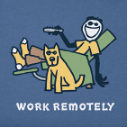
While the obvious “essential workers” found sheets of plexiglass separating them from their customers, legions of workers who plowed the cube farms were simply sent home to work. Why not? If they spent the bulk of their work hunched over a computer, they could hunch more comfortably at home. Over the last several years, as internet service improved in quality and speed, some companies had dipped the proverbial toe into remote work arrangements. With the pandemic, it became the model virtually overnight.
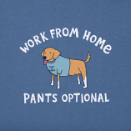
The new work environment – home – changed the dress code for work. Pajamas and sweatpants became common work wear. Not only did working from home save time and money by not needing to buy new clothes for work and not doing laundry so often – three or four consecutive days in pajamas or sweatpants is doable – but think of the time and gas saved by not having to commute. And all those “water cooler” conversations – gone! These significant time savings provided much greater opportunities for Facebook and YouTube videos.
Remote work created some interesting changes in the geographic definition of “from home.” If you could work from home anywhere, why not make home elsewhere. Stories of technology executives and hedge fund managers renting exclusive villas in tropical locations – for rents I found staggering – began to make it to news outlets seeking new angles on life during the pandemic. Buying homes in less congested areas – near mountains or forests or lakes – was another escape. Small and mid-size city administrators and planners grew concerned about increasing demands for services and potential changes in community culture. Were the moves permanent; were they buying second homes, or what would become primary homes? Life after Covid is beginning to answer many of those questions.

Not all work from home can be done in isolation, however. Zoom bailed us out. It was the means for face-to-face meetings, whether the participants were a block away or a continent apart. The problem: not everyone was capable of transitioning from sitting around a conference room table to sitting at their own dining room table using video conferencing technology. Stories of mishaps abounded: every call begins with someone having difficulty logging in; a participant is talking while muted and everyone else is trying to convey that; kids, cats, dogs, spouses make unplanned guest appearances; a participant goes to the bathroom during a call (SNL spoofed that one); and some people have put moments of their very, very, very personal lives on display under the mistaken impression that they were off the call!
Like it or not, it added a new dimension to the “workplace.” And that dimension has added some good humor and fun to our work lexicon. Here are a couple of Twitter memes I found funny as individuals displayed an ability to take themselves lightly. I’m sure that you have some favorite stories of remote work.


Note: The t-shirt graphics for all three in this essay are from Life is Good®. I love their shirts and highly recommend them. Quality materials and creative messages.
 Mike's Fountain Pen